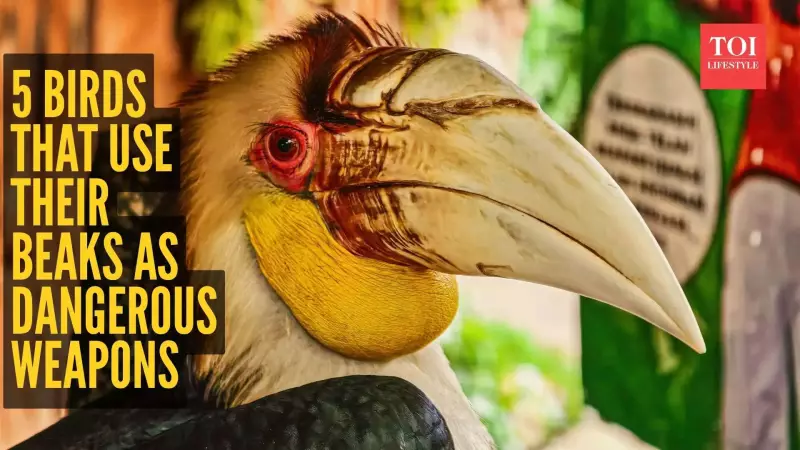
In the natural world, survival demands more than just speed or strength. It requires mastering the tools one is born with. For birds, the most critical tool is often their beak. While many perceive a bird's beak as a gentle instrument for pecking seeds, the reality for several species is far more dramatic and lethal.
Beaks: More Than Just a Feeding Tool
For countless birds, the beak is a multi-purpose survival instrument. It serves as their primary weapon for hunting, a crucial line of defence against predators, and a tool for establishing dominance over rivals. The design of a beak can literally mean the difference between life and death in a harsh encounter. Not all beaks are created equal; while some are delicate, others are engineered by evolution to be thick, sharp, and immensely powerful.
This article, based on online sources and ecological studies, explores five remarkable birds that have turned their beaks into formidable weapons. It is important to note that specific behaviours can vary by species and region.

Five Feathered Warriors and Their Lethal Beaks
The Harpy Eagle: The Apex Predator's Bone Crusher
Topping the list is the majestic yet fearsome harpy eagle, one of the world's largest and most powerful birds of prey. Its beak is a masterpiece of predatory design: thick, sharply curved, and backed by immense jaw strength. This formidable tool is used to tear apart large prey like sloths and monkeys after they are captured by the eagle's massive talons. The beak efficiently rips through tough skin, flesh, and even bone, making it an essential part of this raptor's hunting arsenal.
The Shoebill: The Prehistoric-Like Crusher
The shoebill stork appears almost mythical, largely due to its enormous, shoe-shaped beak. This beak is wide, heavy, and equipped with sharp edges that culminate in a sharp, hooked tip. It functions like a pair of powerful shears, allowing the shoebill to grab and crush substantial prey that other water birds cannot manage. While lungfish are a staple, its diet confidently includes frogs, snakes, and even young crocodiles, showcasing the sheer power of its unique beak.
The Southern Cassowary: The Dagger in the Forest
Renowned as one of the most dangerous birds in the world, the southern cassowary is famous for its powerful, dagger-like claws. However, its beak is a significant secondary weapon. Long, pointed, and sharp, it can deliver swift, stabbing strikes when the bird feels threatened or cornered. Although human encounters are rare, they can turn serious quickly, with the beak playing a potential role in the bird's defensive strategy.
The Lammergeier: The Bone-Eating Specialist
The lammergeier, or bearded vulture, has a uniquely specialised diet that sets it apart from other scavengers. It primarily feeds on bones. The bird drops large bones from great heights onto rocky terrain to crack them open. It then uses its strong, adapted beak to expertly extract the nutritious marrow inside—a food source few other animals can access, demonstrating a highly evolved use of the beak as a tool.
The Goliath Heron: The Spearfisher
The goliath heron wields its long, pointed beak like a precision spear. This sharp, spear-shaped beak is used to strike at aquatic prey with deadly accuracy. A single, well-aimed jab can instantly kill large fish, reptiles, and amphibians, proving that in the wild, precision can be just as dangerous as raw power.
Conclusion: Beaks as Instruments of Survival
For these five birds, the beak is far from a simple eating utensil. It is an integral, evolved weapon critical for their survival. From crushing bone and tearing flesh to spearing fish and establishing dominance, these beaks highlight the incredible diversity and specialization of nature's designs. They remind us that in the animal kingdom, everyday tools can often be the most dangerous weapons of all.