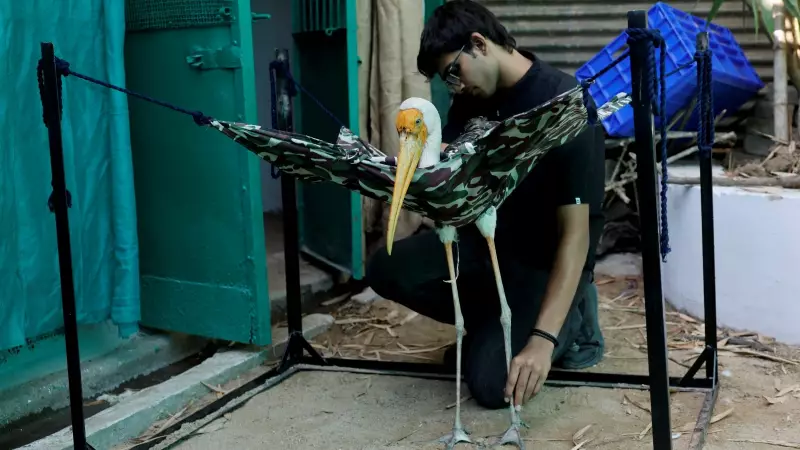
Avian Crisis in Ahmedabad as Kite Strings Wound Hundreds of Birds
Ahmedabad witnessed a distressing surge in bird injuries during the recent Uttrayan festival. The Jivdaya Charitable Trust hospital registered over 600 birds harmed by deadly kite strings, known as manjha. This alarming number highlights a growing threat to both local and migratory avian populations.
Protected Species Among the Victims
Injured birds included several protected species. The hospital received multiple painted storks, pelicans, and barn owls. Coordinator Dhrumil Shah reported the admission of two booted eagles, a rare migratory species, from the airport area and Bavla. Four barn owls also needed treatment.
By Thursday afternoon, the center had officially registered 612 injured birds. Dr. Parth Pandya, a doctor with JCT, detailed the variety of affected birds. "We have received birds like pigeons, kites, eagles, bats, barn owls, mynahs," he said. The hospital treated two pelicans and twelve to thirteen painted storks over the week.

Widespread Rescue Efforts Across Regions
Birds arrived from numerous regions around Ahmedabad, including Mehsana, Sanand, and Vijapur. Once treated, they move to specialized aviaries. The facility features both standard aviaries for flying practice and water aviaries for aquatic birds.
Shah explained the fate of severely injured birds. "The permanently disabled birds are kept here with us and not released as they are not fit for the wild," he stated. JCT is taking proactive legal steps against the use of Chinese manjha, displaying samples retrieved from injured birds.
Severe Injuries and Lengthy Recovery
Dr. Pandya described the common injuries. Wing damage tops the list, often requiring surgical intervention. Recovery can take fifteen to twenty days. Some birds suffer fractures from high falls or cuts to their crop, a stomach area, leading to eating difficulties and potential death.
Migratory birds face extended stays. "Some birds have to stay with us for even eight months," Dr. Pandya noted. They arrive during the migratory season, but by the time they heal, their flocks have departed. These birds remain at the center until the next migratory period.
Critical Situation at Nal Sarovar Sanctuary
Rescue teams brought six to seven painted storks for treatment on Thursday afternoon. Meet Shah, part of the Shree Ahmedabad Jain Active Group rescue team, reported urgent calls from Nal Sarovar village near Sanand. "Since the last four days we have been getting calls about migratory birds being injured and in need of urgent care due to Chinese manjha," he said.
The team rescued over twenty migratory birds in four days, with seven more en route. Tragically, four to five painted storks die daily in the Nal Sarovar area from kite string injuries. Nal Sarovar, a bird sanctuary sixty kilometers from Ahmedabad, hosts many migratory birds each winter.
Following the storks, a barn owl, bat, kite, and eagle also arrived for treatment. JCT and the government-run Bodakdev Wildlife Care Centre are the primary facilities for major treatments from surrounding small cities and districts.
Massive Volunteer and Medical Response
Coordinator Janak Nayak revealed staggering statistics. From January 1, more than 1,900 injured birds have arrived at JCT. About 2,000 rescue volunteers work across Ahmedabad, supported by over forty-three bird rescue centers and NGOs in West Ahmedabad and other Gujarat locations.
"As the awareness increases so does the number of cases registered," Nayak explained. This heightened reporting aids in saving more lives. The collective effort involves 120 volunteers, 65 doctors, and 100 staff members—nearly 300 people in total. Their teamwork enables an 86% rescue rate for birds brought to the center.
Expert Guidance for Bird Rescuers
Dr. Pandya provided crucial instructions to veterinary students from Maharashtra, Rajasthan, and Uttarakhand. He warned against pouring water on injured birds to prevent hypothermia. Instead, rescuers should cover the bird's head with socks to reduce stress and apply cloth pressure to wounds to stop bleeding. Avoiding tight holds around the ribcage is essential.

Student Sakshi emphasized the emotional toll. "We treat hundreds of birds in a day and the sheer number and the pain if witnessed by anyone would affect them emotionally," she said. The motivation to save lives drives the team forward despite the challenges.
This year has seen more migratory bird injuries compared to last year, underscoring an urgent need for greater public awareness and stricter regulations on kite flying materials during festivals.