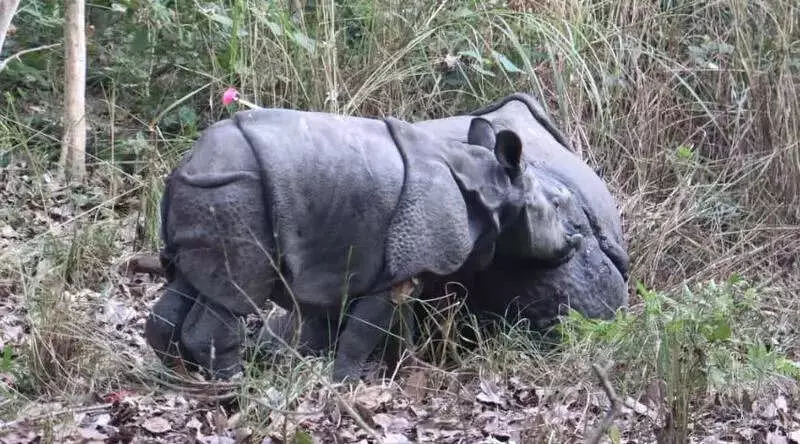
Pilibhit's Dudhwa Tiger Reserve Grapples with Conservation Crisis After Second Rhino Calf Death
The Dudhwa Tiger Reserve in Pilibhit is facing a severe conservation emergency following the tragic death of a second young rhinoceros calf at the hands of an aggressive adult male named Napoleon. This incident marks the second such fatality within a span of six months, raising urgent concerns about the safety of vulnerable rhinos within the protected area.
Details of the Latest Tragic Incident
Living up to his formidable namesake, the 18-year-old rhino unleashed devastation once again when an eight-month-old female calf succumbed to multiple injuries on January 24. The attack occurred three days prior inside Rhino Rehabilitation Enclosure II, where the calf was brutally assaulted.
DTR field director H Rajamohan provided crucial insights into the circumstances surrounding the attack. He explained that Napoleon turned violent while attempting to mate with the calf's mother, Kalpana, as the young one remained in close proximity. "This was deemed to be the key reason for Napoleon's attack on the calf," Rajamohan stated, noting that female rhinos typically become ready for mating again only after 18 to 24 months from giving birth. Since Kalpana's calf was merely seven to eight months old, it clearly indicated that she was not inclined to mating at that time.

Medical Efforts and Tragic Outcome
The injured calf suffered a deep wound on her nose along with injuries to both hind legs. Field staff noticed her condition on January 21, prompting immediate action. A panel of the reserve's veterinarians tranquillised and shifted her for medical treatment on January 22.
Rajamohan revealed that the reserve maintained constant communication through video and picture sharing with Padma Shri awardee and renowned Assam-based veterinarian Dr KK Sarma to administer appropriate treatment to the wounded calf. After the calf regained the ability to walk, she was released back into the enclosure on January 23 to rejoin her mother, as she was still a suckling calf dependent on maternal care.
"But suddenly her condition deteriorated and she died from her injuries," Rajamohan lamented, highlighting the unpredictable nature of wildlife trauma recovery. A panel of three veterinary officers conducted the autopsy on January 25, after which the carcass was properly disposed of following protocol.
Napoleon's Violent History and Population Impact
This tragic event represents Napoleon's second victim in recent months. In August 2025, the raging pachyderm killed a four-year-old male rhino calf named Himanshu, establishing a disturbing pattern of aggression toward younger rhinos.
The population dynamics within DTR reveal the significant impact of these losses:
- Until November 2024, DTR housed 51 one-horned rhinos across two rehabilitation enclosures spanning 27 square kilometers and 13.4 square kilometers respectively
- The population consisted of 39 adults (15 males, 23 females and one unsexed), six sub-adults (two males, two females and two unsexed), and six calves aged between one and three years
- Four rhinos—one male and three females—were allowed to range freely between November 2024 and March 2025
The reserve's rhino population dipped to 50 following Himanshu's death, rose again to 51 after a female rhino gave birth in early October 2025, and has now fallen back to 50 after Napoleon's latest rampage. This fluctuation underscores the fragility of conservation efforts in the face of such aggressive behavior.
Authorities Seek Solutions to Protect Vulnerable Rhinos
DTR authorities are now actively grappling with strategies to protect calves and adolescent rhinos from Napoleon's continued attacks. Rajamohan confirmed that guidelines have been formally sought from the state's chief wildlife warden to isolate the aggressive male rhino.
"We shall immediately apply the strategy as soon as we receive detailed instructions in the matter," he added, emphasizing the urgency of implementing protective measures. The conservation community awaits these directives with anticipation, hoping for a solution that balances individual animal welfare with broader population protection.

This developing situation highlights the complex challenges wildlife managers face when dealing with aggressive individuals within endangered species populations, particularly in confined conservation spaces where natural dispersal mechanisms are limited.