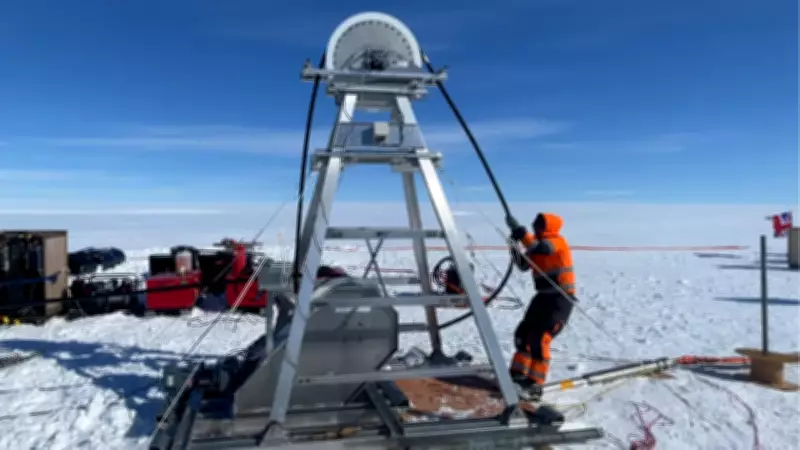
Antarctica's Doomsday Glacier Mission Ends in Failure After Instruments Get Trapped
A daring international scientific mission to investigate the ocean waters beneath Antarctica's most unstable glacier has ended abruptly after critical instruments became trapped deep within the ice. The ambitious project, which aimed to install long-term monitoring equipment on the Thwaites Glacier, collapsed during its final stages despite days of intensive drilling through over 3,300 feet of ice.
International Team's Race Against Time in Hostile Environment
Led by researchers from the British Antarctic Survey and South Korea's polar research programme, the expedition faced one of Earth's most challenging environments. Using hot-water drilling technology, scientists melted a narrow, one-foot-wide borehole through nearly half a mile of ice on the fast-moving main trunk of Thwaites Glacier, often called the "doomsday glacier" due to its potential to dramatically raise global sea levels if it collapses.
"You get your window of opportunity. You don't have forever," explained Keith Makinson, a drilling engineer with the British Antarctic Survey. The team worked against multiple constraints, including strong winds that delayed operations, dangerous crevasses, and shifting ice formations. Once drilling began, they had approximately 48 hours before the borehole would start refreezing unless kept open with continuous hot water circulation.

Critical Measurements Reveal Warming Waters Beneath Glacier
Before the equipment failure, researchers successfully lowered temporary instruments through the borehole into the ocean cavity beneath the glacier's main trunk. These instruments provided the first direct observations from this critical section of Thwaites, long suspected to be a key weak point in the glacier's stability.
The measurements revealed turbulent seawater with temperatures high enough to drive rapid melting from below. "There's plenty of heat to drive melting," noted Peter Davis as data streamed in from beneath the ice. These findings confirmed scientists' fears that warm, dynamic ocean waters are actively eroding Thwaites Glacier from its base, potentially accelerating its retreat.
Where the Mission Unraveled: Equipment Gets Stuck
The mission's collapse occurred when researchers attempted to install heavier, long-term mooring equipment designed to transmit data by satellite for up to two years. As the cable was lowered, part of the equipment became stuck approximately three-quarters of the way down the borehole.
The team believes refreezing ice or subtle shifts in the glacier narrowed the shaft just enough to trap a bulky chain at the bottom, causing the remaining instruments to jam above it. "Realistically, whatever's stuck there is frozen," Makinson told colleagues as they assessed their limited options. With no way to retrieve the trapped equipment, scientists were forced to abandon the instruments and evacuate the site.
Scientific Value Despite Technical Failure
Despite the loss of long-term monitoring capabilities, researchers emphasize the expedition still yielded valuable scientific insights. "This is not the end," declared Won Sang Lee, the expedition's chief scientist from South Korea. The preliminary data confirmed that warm ocean waters are actively eroding Thwaites from below, reinforcing concerns that further retreat could destabilize much of West Antarctica's ice sheet.
The team plans to return to Thwaites Glacier, arguing that their brief glimpse beneath the ice proved both how dangerous the glacier is and how vital continued research efforts remain. The mission demonstrated the extreme challenges of working in polar environments while providing crucial data about one of Earth's most significant climate change indicators.