

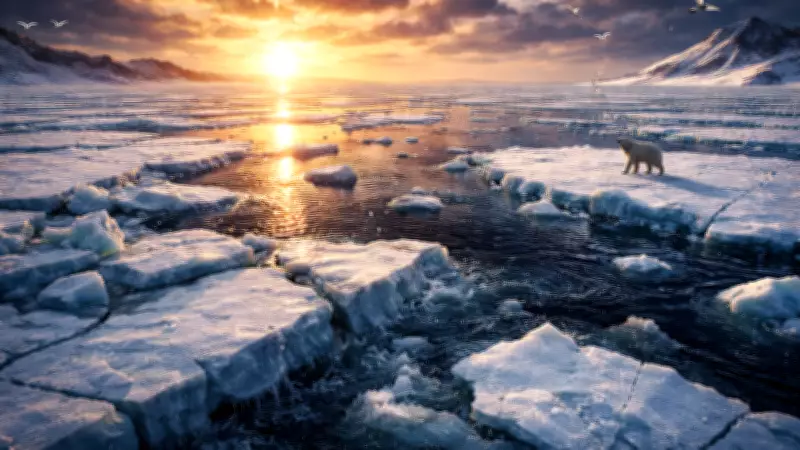
Arctic Sea Ice Winter Peak Could Hit Record Low, Raising Alarms
Arctic sea ice is on track to record one of its smallest winter peaks since satellite monitoring started over four decades ago, according to data analyzed by the news agency AFP. This development raises fresh concerns about the accelerating impacts of climate change and its far-reaching geopolitical implications.
Figures from the National Snow and Ice Data Center reveal that Arctic sea ice extent reached approximately 14.22 million square kilometers on March 10. If current trends persist until the winter maximum later this month, this level could rank among the five lowest ever recorded in history.
Risk of Record-Low Winter Peak
Seamus McAfee noted that while the situation might change slightly, current data strongly suggests the Arctic is approaching a historically low winter extent. "But so far, it is looking like it could be a very significant extent, perhaps one of, if not the lowest, in the record," McAfee stated, as quoted by AFP.

Last year, Arctic sea ice achieved its lowest winter maximum on March 22, covering 14.31 million square kilometers, according to the NSIDC. Previous lows were documented in 2016, 2017, and 2018. Samantha Burgess indicated that the 2026 level would likely fall within the five lowest years on record.
Meanwhile, polar oceanographer Gilles Garric emphasized that the current winter has already positioned itself among the "top three" lowest levels observed so far.
Arctic Warming Far Faster Than Global Average
Scientists assert that the shrinking ice cover reflects a broader warming trend in the Arctic, which is heating up at a rate three to four times faster than the global average. The last three years have been the hottest globally on record, driven by rising greenhouse gas emissions.
"Given that the Arctic is warming at 3–4 times the global average rate, we are likely to continue to observe continued Arctic warming, loss of multi-year ice," Burgess told AFP. Experts also caution that the return of the El Nino phenomenon later this year could further elevate global temperatures.
Low winter sea ice levels could accelerate melting during the summer months, exacerbating environmental risks.
Threat to Ecosystems and Wildlife
Although melting sea ice does not directly raise sea levels—unlike melting glaciers or ice sheets—scientists warn that the loss of frozen ocean cover threatens fragile polar ecosystems. Species such as polar bears and emperor penguins depend on sea ice for breeding, hunting, and survival.
Shaye Wolf issued a stark warning about the shrinking ice cover, suggesting it signals deeper climate dangers. "The sirens are blaring that we're headed for a hothouse planet with massive devastation around the world," Wolf told AFP. "But Arctic warming, driven by fossil fuels, puts us all in peril. We're closer than ever to irreversible tipping points that will forever alter the world we know."
In contrast to the Arctic's record low, Antarctica has shown improvement, with its sea ice extent approaching typical summer averages after four years of significant lows, according to an NSIDC report.
Melting Ice Reshaping Geopolitics
Beyond environmental risks, the loss of Arctic ice is reshaping global geopolitics. As ice retreats, new shipping lanes and access to untapped mineral and energy resources could emerge across the region.
Elizabeth Chalecki explained that the melting Arctic could transform the area into a contested maritime zone. "From a geopolitical perspective, the climate change-induced melting of sea ice is turning the Arctic into the new Mediterranean: a common shared maritime resource surrounded by competing states," she told AFP.
Russia is already expanding its economic and military presence along the Northern Sea Route, while the United States and Canada may need to increase their activity in the region. Former US President Donald Trump has previously expressed interest in acquiring Greenland, citing the Arctic territory's strategic importance amid growing competition with Russia and China.
Scientists warn that while new economic opportunities may arise from the melting ice, the environmental consequences could be far more severe if global emissions are not rapidly reduced.






