

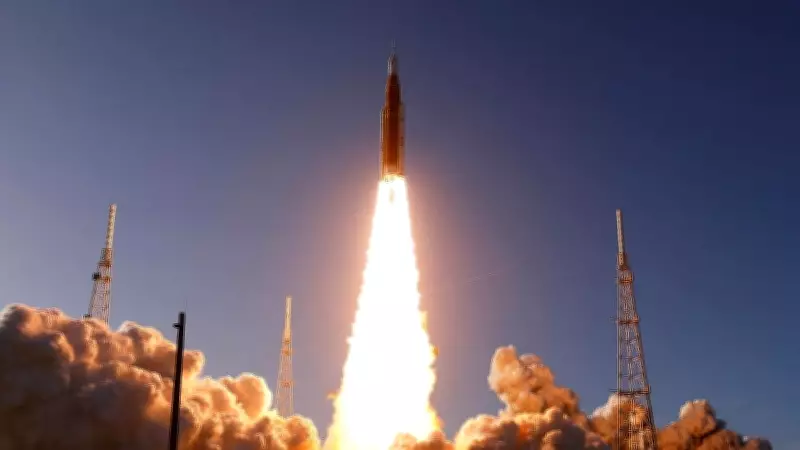
NASA's Artemis II Mission: Journey to the Moon's Sphere of Influence
NASA's upcoming Artemis II mission is set to embark on a historic journey to the moon, with a key milestone expected within just three days of launch. According to the International New York Times, the mission's capsule will take approximately three days to enter what NASA refers to as the lunar sphere of influence. This critical point marks where the moon's gravitational pull becomes stronger than Earth's, a pivotal moment in the spacecraft's trajectory toward lunar orbit.
Understanding the Lunar Sphere of Influence
The lunar sphere of influence is a defined region in space where the moon's gravity dominates over Earth's. For the Artemis II capsule, reaching this zone is a significant step in its mission, as it transitions from Earth's gravitational hold to the moon's. This process involves precise navigation and timing, with NASA engineers calculating the three-day window based on current propulsion technologies and orbital mechanics. The mission aims to build on the success of previous Artemis flights, advancing human exploration of the moon.
Implications for Future Lunar Missions
This three-day journey to the lunar sphere of influence highlights the efficiency of modern space travel techniques. As NASA prepares for Artemis II, scheduled for launch in the coming years, this timeline underscores the agency's progress in reducing travel times and enhancing mission safety. The data gathered from this phase will be crucial for planning future manned missions, including potential lunar landings and long-term habitat establishment. Experts note that achieving this milestone quickly could pave the way for more frequent and sustainable lunar expeditions.

Key Facts:
- The Artemis II capsule will take around three days to enter the lunar sphere of influence.
- This point is where the moon's gravity exceeds Earth's, a critical transition in space travel.
- NASA's mission aims to advance lunar exploration and prepare for future manned landings.
- The International New York Times reported this update on April 2, 2026, at 05:39 IST.
As space agencies worldwide ramp up their lunar ambitions, NASA's Artemis II serves as a benchmark for international collaboration and technological innovation. The mission's success could inspire new discoveries and foster global partnerships in space science.






