

Asia's Climate Imperative: Why Green Transition is Non-Negotiable
Asia, contributing two-thirds of global economic growth, now faces a critical juncture where climate change threatens to undermine its hard-won economic stability. The continent, responsible for over half of global greenhouse gas emissions due to heavy coal dependence, lacks the adaptive capacity to handle mounting climate threats. This combination poses fundamental risks to macroeconomic and financial stability across the region.
The Staggering Climate Finance Challenge
According to International Monetary Fund (IMF) data from 2024, Asia's emerging markets and developing economies face an enormous annual climate finance gap of at least $800 billion. The private sector must cover 80-90% of these investment needs, yet structural barriers including sub-investment grade credit ratings, underdeveloped domestic capital markets, and inconsistent climate disclosure standards hinder progress.
A regional stakeholder dialogue organized by the International Monetary Fund, Niti Aayog, and the Council of Energy, Environment and Water (CEEW) this year revealed growing private and venture capital interest in funding innovative green projects. Participants from across Southeast Asia, China, and India concluded that "the train has left the station" - signaling that the energy transition has become irreversible.

Practical Solutions for a Sustainable Future
The solution lies in embracing sustainable energy transition while building adaptive capacity. Analysis by CEEW finds that 75% of India's districts have become extreme climate hotspots, vulnerable to cyclones, floods, and droughts. This makes energy transition not just an environmental necessity but a growth imperative.
Price signals and effective regulation are crucial catalysts. There's broad consensus on eliminating explicit fossil fuel subsidies, which total $1.3 trillion globally. Expanding carbon pricing and emissions trading systems could create level playing fields to attract investment into low-carbon technologies.
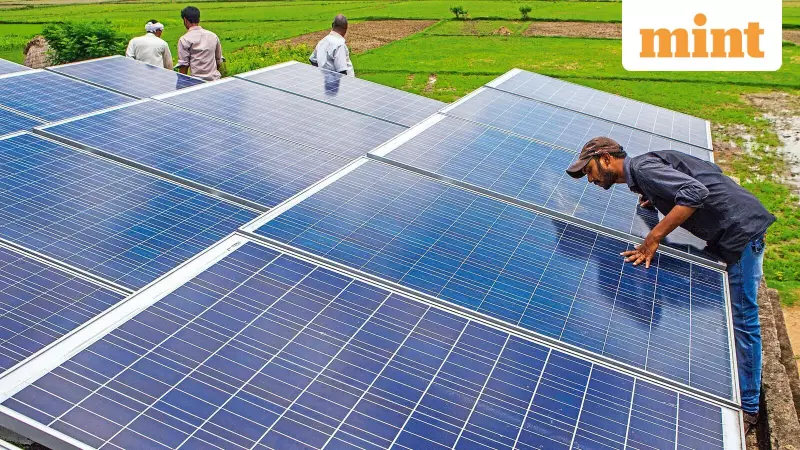
India demonstrates the potential: utility-scale solar power costs have plummeted from ₹5 per unit a decade ago to just ₹2–2.5 now. Solar-plus-storage now delivers round-the-clock power at ₹2.7/kWh - cheaper than new coal capacity.
According to the International Energy Agency, deploying existing technologies can deliver over 80% of the emissions reduction needed by 2030. For India specifically, CEEW analysis indicates the country can meet its 2030 power demand with about 876 gigawatts of total capacity, including 600GW from non-fossil sources.
The authors, Krishna Srinivasan (Director, Asia & Pacific Department, IMF) and Arunabha Ghosh (Founder-CEO, Council on Energy, Environment and Water), emphasize that coherent policies will shape Asia's future. Climate action not only safeguards the environment but protects the macroeconomic stability that drives Asia's role as the global growth engine.






