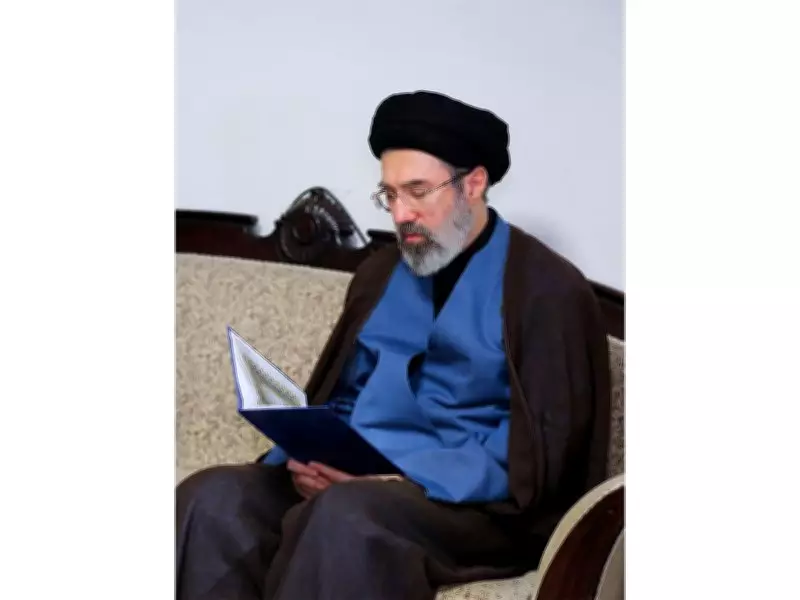
Ayatollah Khamenei's Son Mojtaba Chosen as Successor, Formal Announcement Expected Soon
In a significant development in Iranian politics, Mojtaba Khamenei, the son of Iran's Supreme Leader Ayatollah Ali Khamenei, has been chosen as his successor. According to recent reports, a formal announcement regarding this succession is expected to be made in the near future. This decision marks a pivotal moment in the leadership structure of the Islamic Republic of Iran, potentially shaping the country's political and religious landscape for years to come.
Details of the Succession Plan
The selection of Mojtaba Khamenei as the successor to his father, Ayatollah Ali Khamenei, has been a topic of speculation and discussion among political analysts and observers for some time. Ayatollah Khamenei, who has served as Iran's Supreme Leader since 1989, holds a position of immense authority, combining both political and religious power. The process of choosing a successor is typically handled by the Assembly of Experts, a body of clerics responsible for appointing and overseeing the Supreme Leader.
Reports indicate that the decision to name Mojtaba Khamenei as the successor has been finalized, with an official announcement pending. This move is seen as a strategic step to ensure continuity in leadership and maintain stability within Iran's governance framework. Mojtaba Khamenei, who has been involved in various religious and political activities, is believed to have the support of key factions within the Iranian establishment.

Implications for Iran and the Region
The appointment of Mojtaba Khamenei as the successor to Ayatollah Ali Khamenei could have far-reaching implications for Iran's domestic and foreign policies. As Supreme Leader, the role involves overseeing the country's armed forces, foreign policy, and religious directives. A smooth transition of power is crucial for maintaining internal cohesion and addressing external challenges, including diplomatic relations with other nations and regional conflicts.
This development may also influence Iran's approach to international affairs, particularly in the context of ongoing negotiations and tensions with global powers. The succession plan underscores the importance of leadership continuity in a nation where the Supreme Leader plays a central role in decision-making processes. Observers will be closely watching for any shifts in policy or governance style under Mojtaba Khamenei's potential leadership.
Background and Context
Ayatollah Ali Khamenei has been a dominant figure in Iranian politics for decades, succeeding Ayatollah Ruhollah Khomeini after his death in 1989. During his tenure, he has navigated Iran through various challenges, including economic sanctions, political unrest, and regional conflicts. The selection of a successor is a critical aspect of Iran's political system, designed to prevent power vacuums and ensure the longevity of the Islamic Republic's principles.
Mojtaba Khamenei, while less publicly prominent than his father, has been active in religious circles and has reportedly played a role in behind-the-scenes political maneuvers. His appointment as successor reflects a preference for maintaining familial and ideological continuity within the leadership. This decision is likely to be met with mixed reactions, both domestically and internationally, as it could shape Iran's future trajectory in significant ways.
As the formal announcement approaches, stakeholders within Iran and around the world are preparing for potential changes in the country's leadership dynamics. The succession of Mojtaba Khamenei, if confirmed, will mark a new chapter in Iran's history, with implications that extend beyond its borders.