

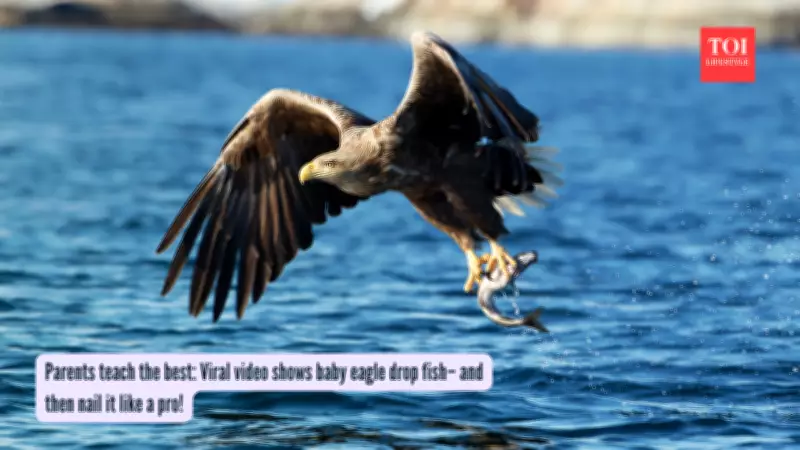
Bald Eagle Parenting: How Adults Teach Juveniles Hunting Skills Through Aerial Training
The bald eagle, America's iconic symbol of strength and freedom, soars with unmatched grace across North America's skies. With their striking white heads, vibrant yellow beaks, and massive seven-foot wingspans, these majestic raptors dominate waterways from Alaska's rugged coasts to Florida's serene rivers.
Viral Video Captures Aerial Training Session
A stunning viral video has captivated millions, showing a parent bald eagle teaching a juvenile how to hunt through a mid-air fish drop. The footage reveals an adult eagle releasing a fish in flight for the young one to catch. The first attempt doesn't go smoothly, but the fledgling quickly recovers, securing a rewarding meal after initial failure.
This incredible training session demonstrates how parent eagles impart crucial aerial food-handling skills to their offspring while they're still dependent. For a young bald eagle, mastering the ability to grab and carry fish mid-flight is an essential survival skill that must be learned early.

The Hard Way: How Juveniles Learn Through Trial and Error
Parent eagles begin training their chicks around four months old, transitioning them from small nest scraps to whole fish to build independence. Fledglings often follow adults to feeding spots, observing hunting techniques before attempting to scavenge dead fish on their own.
According to wildlife experts cited by Journey North, it can take up to 42 weeks after fledging for young eagles to fully master hunting, with specialized skills developing even later. Trial and error plays a significant role in this learning process. Early attempts frequently fail, but those juveniles that survive continue practicing relentlessly until they achieve proficiency.
Why Eagles Thrive Near Water Edges
Bald eagles prefer living near lakes, rivers, and coastal areas where fish are plentiful, as these make up the majority of their diet. They skillfully grab fish from the water's surface using sharp talons without fully diving in, though they'll also consume birds, carrion, or even scraps from landfills when necessary.
Special spicules on their toes help them grip slippery fish securely, enhancing their hunting efficiency. These magnificent birds are found across Alaska, Canada, the lower United States, northern Mexico, and locations like Saint Pierre and Miquelon, primarily inhabiting areas near open water.
During winter months, they gather at dams, fish processing plants, or dumpsites, while their nests are typically positioned high in tall trees, occasionally on cliffs or utility poles. The combination of their preferred habitat and specialized adaptations makes bald eagles supremely equipped for their role as apex predators in North America's aquatic ecosystems.






