India's Responsibility Score Under Scrutiny
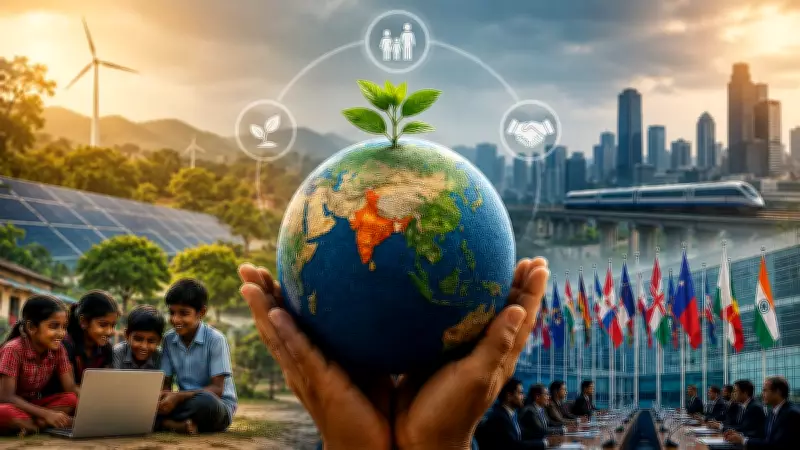
In an era marked by climate change, growing inequality, and complex global interdependence, the question is no longer merely how powerful a country is but how responsibly it exercises that power. This shift in focus has brought India's 'responsible' score into the spotlight, as analysts and policymakers debate the nation's role on the world stage.
What Defines a Responsible Power?
According to D Jeevan Kumar, writing in an opinion piece published on July 5, 2026, the concept of responsible power extends beyond traditional metrics such as military strength or economic output. It encompasses a country's commitment to global norms, environmental stewardship, and equitable development. India, as a rising power, faces increasing expectations to align its actions with these ideals.
Climate Change Commitments and Challenges
India's stance on climate change is a key component of its responsibility score. The country has pledged to achieve net-zero emissions by 2070 and has aggressively expanded renewable energy capacity. However, critics point out that India remains one of the world's largest coal consumers, and its per capita carbon emissions, though low, are rising. Balancing development needs with environmental goals remains a persistent challenge.

Inequality at Home and Abroad
Growing inequality within India and its global implications also factor into the responsibility assessment. While India has lifted millions out of poverty, the gap between the rich and poor has widened. Internationally, India advocates for the Global South but has faced criticism for its stance on trade agreements and intellectual property rights that affect access to medicines and technology for developing nations.
Global Interdependence and Diplomatic Choices
India's foreign policy decisions, such as its strategic partnerships with both Western democracies and authoritarian regimes, are scrutinized for their impact on global governance. The country's non-alignment stance has evolved into a more pragmatic approach, but this has sometimes led to accusations of inconsistency on issues like human rights and democratic values.
The Path Forward
As the world grapples with overlapping crises, India's responsible score will depend on its ability to translate its growing power into constructive global leadership. The opinion piece concludes that India must move beyond rhetoric and demonstrate tangible commitments to climate action, inequality reduction, and multilateral cooperation to truly earn its 'responsible' label.