Bengaluru loses 19,268 trees in three years due to development and private property actions
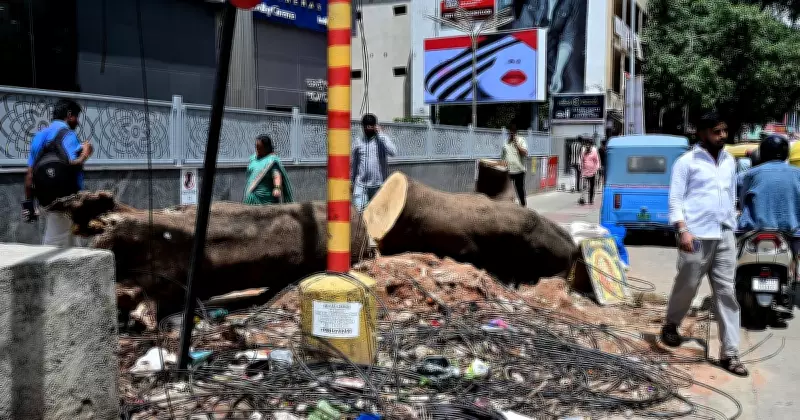
Bengaluru has lost a staggering 19,268 trees between March 2023 and June 2025, according to data compiled from civic authorities. The losses stem from public infrastructure projects, private property redevelopment, and preventive felling by the civic body. Environmentalists warn that compensatory planting efforts, while large in number, fail to replace the ecological value of mature trees.
Development projects account for 7,683 trees lost
Public infrastructure projects including metro rail extensions, road-widening, and flyovers have destroyed 7,683 trees since 2023. In 2023-24 alone, 5,430 trees were felled for development. The pace slowed slightly in 2024-25 with 1,533 trees removed, but 720 trees have already been lost in the first quarter of 2025-26. The Bangalore Metro Rail Corporation Limited (BMRCL) and the Bruhat Bengaluru Mahanagara Palike (BBMP) are the primary agencies involved.
Private property owners remove 7,902 trees
Rising real-estate prices and construction needs have driven private property owners to remove 7,902 trees over the three-year period. In 2023-24, 3,725 trees were cut on private land; this rose to 3,434 in 2024-25 and 743 in 2025-26. Many of these trees were mature and healthy, removed to clear space for new buildings or to increase property value.

Civic authorities cut 1,215 trees as preventive measure
To prevent monsoon-related tree falls, BBMP felled 1,215 trees in 2025-26 alone. The civic body granted permissions for the removal of 1,956 trees, citing safety concerns. This preventive felling has drawn criticism from residents and activists who argue that better maintenance could save many trees.
Compensatory planting fails to offset loss
Authorities claim to plant one lakh (100,000) saplings annually, including 15 lakh trees planted in a single-day drive. However, experts argue that saplings cannot replace the ecological functions of mature trees, such as carbon sequestration, shade, and biodiversity support. Environmentalist D. R. Nagaraj said, "Compensatory afforestation often fails due to poor monitoring and accountability. Many saplings die within months, and the loss of a single mature tree cannot be offset by planting dozens of young ones." The survival rate of planted saplings is estimated to be below 30% in many areas.
Environmentalists call for better oversight
Activists demand stricter enforcement of tree protection laws, real-time tracking of tree felling, and independent audits of compensatory planting. They also urge the government to prioritize tree preservation in urban planning. The data highlights a growing crisis in Bengaluru, where rapid urbanization continues to erode green cover despite official pledges to increase it.