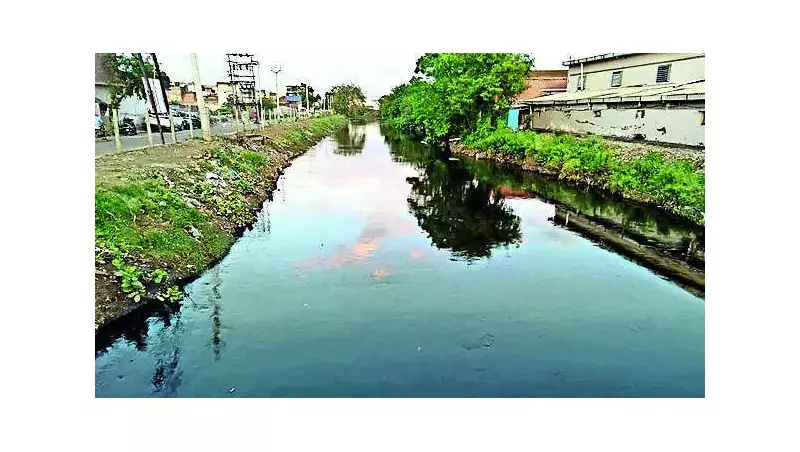
After years of grappling with severe pollution, the rivers and aquifers of Bihar are finally showing promising signs of recovery. The Bihar State Pollution Control Board (BSPCB) has confirmed a steady improvement in both surface and groundwater quality across the state, including in the revered Ganga river.
Statewide Water Quality Status and Government Initiatives
BSPCB Chairman Devendra Kumar Shukla stated that the overall quality of water, encompassing both surface and subsurface sources, is now satisfactory in most regions of Bihar. The board has actively addressed reports of groundwater contamination from harmful substances like arsenic, fluoride, and nitrate, implementing necessary corrective measures in the affected areas.
Further bolstering these efforts, the state government's Jal, Jeevan, Hariyali scheme has played a pivotal role in ensuring the supply of fresh and clean drinking water to every village and town, contributing significantly to public health and resource sustainability.

Focus on the Ganga: Monitoring and Pollution Sources
The Ganga remains a central focus for pollution control authorities. BSPCB conducts rigorous and frequent monitoring at 34 locations along the river in Bihar every fortnight. This is supplemented by monthly checks at 64 spots on the Ganga's tributaries, assessments at 10 pond and lake locations, and half-yearly evaluations at 70 groundwater sites.
Detailed analysis, however, continues to reveal elevated levels of bacteriological pollution, specifically total coliform and faecal coliform. This data clearly identifies untreated sewage and domestic wastewater as the primary culprits behind the river's contamination. Encouragingly, other key water quality parameters are now within prescribed safety limits.
Sewage Treatment Infrastructure: A Game Changer for the Ganga
The expansion of sewage treatment infrastructure is directly linked to the Ganga's improving health. The situation has transformed dramatically in a few years:
- Until 2021-22: Only 3 Sewage Treatment Plants (STPs) existed with a capacity of 140 Million Liters per Day (MLD). The average faecal coliform level was a staggering 66,854 MPN per 100 mL.
- By 2024-25: The number of operational STPs rose to 12, with a 324 MLD capacity. This intervention caused the faecal coliform count to plummet to 9,381 MPN.
- In 2025-26 (till August): A total of 18 functional STPs with a combined capacity of 552 MLD have driven faecal coliform levels down further to approximately 2,116 MPN.
With the maximum permissible limit for faecal coliform set at 2,500 MPN and the desirable limit at 500 MPN, this progress means the Ganga's water is now deemed fit for bathing purposes, marking a major milestone in its cleanup.
New Challenges: Soft Drink Plants and Groundwater
Despite the positive trends, new concerns are emerging. The reported plans by several companies to establish soft drink manufacturing plants in the state have raised alarms. BSPCB Chairman Shukla highlighted that such plants typically extract massive volumes of groundwater, leading to significant aquifer depletion.
This over-extraction can trigger a dual crisis: scarcity of water for domestic use and irrigation, coupled with a degradation in the quality of the remaining groundwater. He noted that many other Indian states have become cautious, often refusing permission for such water-intensive private ventures to protect their local water security.
The journey to fully restore Bihar's water bodies is ongoing, but the data indicates a clear and positive trajectory, offering hope for a sustainable water future for the state.