

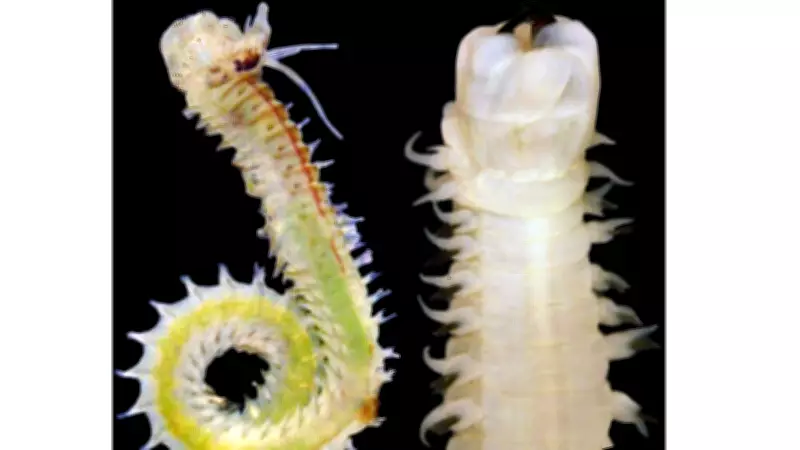
Discovery of Resilient Marine Worms in Bay of Bengal's Polluted Waters
In a groundbreaking find, researchers from the Zoological Survey of India (ZSI), collaborating with international experts, have identified two new marine worm species in the Bay of Bengal. These species, named Namalycastis solenotognatha and Nereis dhritiae, were discovered in the Digha and Bankiput regions of Purba Medinipur, West Bengal, areas heavily impacted by human activity and industrial pollution.
Unveiling the 'Bio-Warriors' of Fragile Ecosystems
The discovery, announced in a recent ZSI statement, sheds light on the rich yet fragile marine biodiversity along India's northern shores. Dubbed "bio-warriors," these polychaete worms thrive in extreme conditions where other life forms struggle to survive, offering new insights into coastal resilience.
Detailed Characteristics and Habitat Conditions
The study, titled 'Description of Two New Species of Nereidids (Annelida: Neredidae) from West Bengal, India, Bay of Bengal', details the unique features of these worms. Namalycastis solenotognatha derives its name from Greek words meaning "channeled jaw," referring to its unusual jaw structure with numerous canals emerging from the pulp cavity. It inhabits sulfide-rich, foul-smelling mudflats and decomposing mangrove wood.

Nereis dhritiae is named in honor of Dhriti Banerjee, the first woman director of ZSI. This species resides inside wooden dock piles on sandy beaches, submerged during high tides. Both species play crucial roles in nutrient cycling and sediment aeration, essential for maintaining coastal health.
Resilience in Polluted Environments
The research team, including Jyoshna Pradhan, Dr. Anil Mohapatra from ZSI, and Dr. Tulio F. Villalobos-Guerrero from CICESE, Mexico, noted that these worms were found in highly polluted habitats. Their presence underscores the remarkable resilience of polychaetes and their potential as bioindicators for monitoring coastal ecosystems.
Implications for Conservation and Future Research
Despite significant pollution in marine habitats, this discovery highlights the hidden biodiversity awaiting exploration. Further studies are needed to fully understand these species and their conservation potential, emphasizing the importance of protecting fragile coastal environments.






