

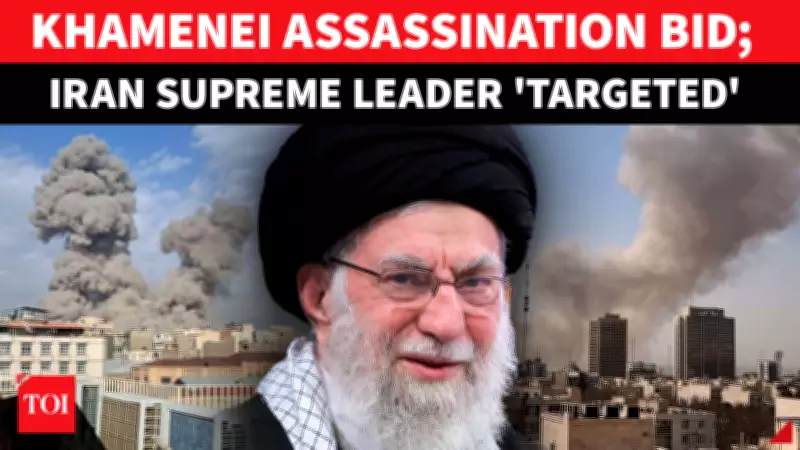
Explosions Target Iranian Supreme Leader's Office in Coordinated Attack
Multiple explosions have rocked the Iranian capital of Tehran and other regions across the country following coordinated military strikes carried out by the United States and Israel on Saturday. Among the targets were areas near the offices of Iran's Supreme Leader, Ayatollah Ali Khamenei, in what appears to be a significant escalation in regional tensions.
Details of the Attack and Conflicting Reports
According to initial reports, powerful blasts were heard in central Tehran, with specific explosions occurring in proximity to the administrative offices used by Supreme Leader Khamenei. An Israeli defense official, speaking on condition of anonymity, stated that this operation had been meticulously planned over an extended period, targeting key Iranian infrastructure and leadership locations.
However, Iranian state media has issued a contradictory narrative, asserting that Ayatollah Khamenei was not present in Tehran during the time of the attacks. Officials claim he had been relocated to a secure, undisclosed location as a precautionary measure prior to the strikes, thereby avoiding any direct threat to his safety.

Broader Context of the Strikes
The aerial strikes represent a major military action by the US and Israel against the Islamic Republic, marking a severe deterioration in diplomatic relations. Explosions were reported not only in Tehran but also in several other Iranian cities, indicating a widespread assault aimed at multiple strategic points across the nation.
Key Points from the Incident:
- Coordinated strikes by US and Israeli forces targeted Iran on Saturday.
- Explosions occurred near Supreme Leader Khamenei's offices in Tehran.
- An Israeli official claims the attack was long-planned.
- Iranian state media denies Khamenei was in Tehran, stating he was moved to safety.
- Blasts were also reported in other parts of Iran beyond the capital.
This event unfolds against a backdrop of heightened geopolitical friction, with previous warnings and military posturing from involved nations. The aftermath of these strikes is likely to have profound implications for regional stability and international diplomacy, potentially triggering further retaliatory actions or escalations in conflict.
The situation remains fluid, with authorities on all sides monitoring developments closely. Further updates are expected as more information becomes available regarding the extent of the damage and the official responses from the governments involved.






