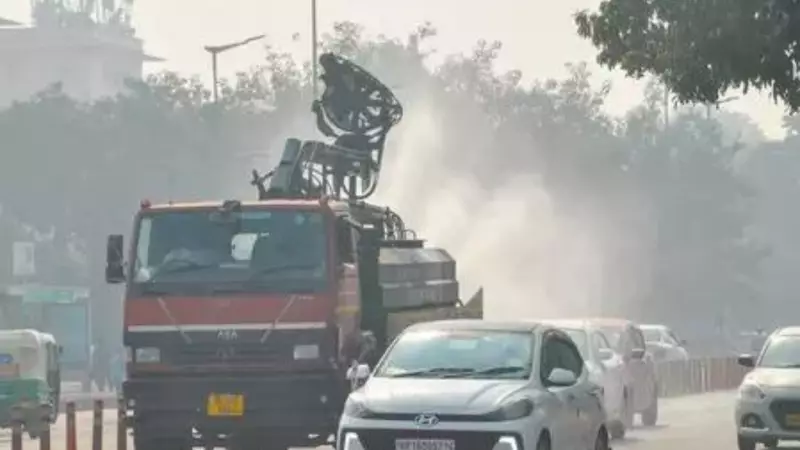
In a significant relief for residents, the Commission for Air Quality Management (CAQM) on Friday revoked the stringent Stage 3 restrictions of the Graded Response Action Plan (GRAP) across the entire National Capital Region (NCR). The decision comes after a marked improvement in the region's air quality, which had been grappling with severe pollution levels.
Sharp Drop in Pollution Triggers Decision
The official order to lift the curbs was issued after the Air Quality Index (AQI) for Delhi showed a consistent improving trend. The AQI, which was recorded at a 'Very Poor' level of 380 on Thursday, dropped significantly to 236 by 4 pm on Friday, placing it in the 'Poor' category. An official quoted by PTI stated that the sub-committee decided to revoke all actions under Stage-3 with immediate effect, citing the prevailing positive trend.
However, the commission emphasized that measures under Stages 1 and 2 of GRAP will continue to be strictly implemented across the NCR to ensure the air quality does not deteriorate again. The region had been placed under Stage 3 in December due to a combination of rising AQI, slow wind speeds, a stable atmosphere, and unfavourable meteorological conditions that trapped pollutants.

What is Now Allowed? A Look at Revoked Bans
The lifting of GRAP Stage 3 restrictions means several activities that were previously halted can now resume. The major bans that have been revoked include:
- Non-essential construction and demolition work, including earthwork, excavation, welding, painting, and plastering.
- Operation of ready-mix concrete (RMC) plants and transportation of construction materials like sand and cement on unpaved roads.
- Functioning of stone crushers and mining activities.
- Plying of BS-III petrol and BS-IV diesel four-wheelers in the region.
- Movement of non-essential diesel-powered medium goods vehicles and most inter-state diesel buses.
- Industrial operations using unapproved or polluting fuels.
Exemptions and Measures That Remain
It is important to note that certain critical projects were always exempted from the Stage 3 bans and continue to operate. These include essential infrastructure and public service projects related to railways, airports, metros, highways, defence, healthcare, and sanitation. Construction on such critical projects is permitted provided they follow strict dust control and waste management norms.
Other ongoing measures under GRAP Stages 1 and 2, such as the emphasis on public transport and the directive for schools to hold hybrid or online classes for students up to Grade 5, will remain in effect. The authorities have urged citizens to remain vigilant and continue using public transport to help maintain the improved air quality.
The decision marks a positive turn in Delhi-NCR's long battle with winter pollution, though officials caution that the situation will be monitored closely and stricter measures could be re-imposed if the AQI shows a declining trend again.