Ancient Cave Cheetahs Force Rethink of Arabian Ecological History
The discovery of naturally mummified cheetahs inside a remote Saudi Arabian cave has completely changed how scientists view the species' history on the Arabian Peninsula. Researchers now understand these big cats used underground caves as long-term homes, not just temporary shelters.
A Surprising Find in the Depths
This remarkable story began in 2022. A research team from Saudi Arabia's National Center for Wildlife was exploring a vast, difficult-to-access cave system. They were documenting bats, insects, and other biodiversity. One particular cave required a challenging descent of about 50 feet down a sinkhole.
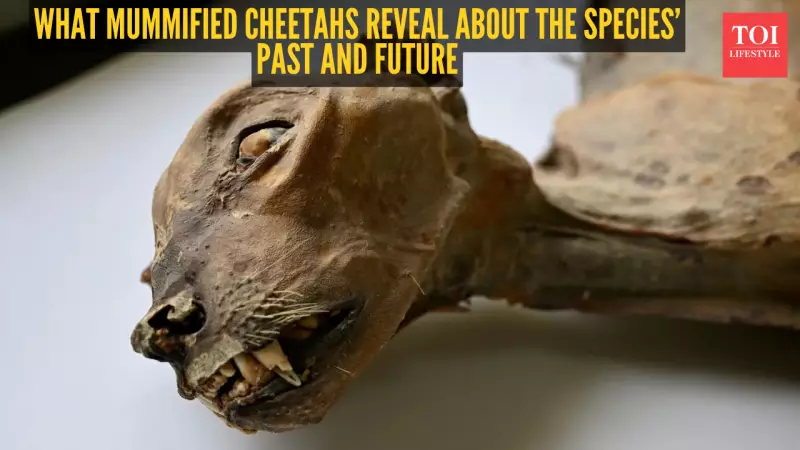
Inside that hidden chamber, the team made an astonishing discovery. They found seven naturally mummified cheetahs. The cave's dry, stable environment had perfectly preserved their skin. Their teeth remained clearly visible through the ages.

"Finding the cheetah remains was a surprise," said Carlos Duarte, an ecologist at King Abdullah University of Science and Technology in Saudi Arabia. "At first, it wasn't clear why there were cheetahs there. They had never been reported to inhabit caves."
Evidence of Generations Living Underground
Further exploration revealed this was no isolated incident. Alongside the mummified animals, researchers identified skeletal remains from more than 50 cheetahs. Some remains dated back nearly 4,000 years. The mummified specimens ranged from about 130 years old to close to 2,000 years old.
As scientists studied the cave environment more carefully, they realized these cheetahs were not accidental visitors. They were permanent residents.
"Many, many generations of cheetahs lived in those caves," Duarte emphasized.
Inside the caves, researchers found:
- Cheetah scat
- Chewed prey bones
These findings clearly showed the animals regularly used the caves as dens. According to Duarte, the caves likely provided crucial protection from the extreme desert heat. They created cooler, more stable conditions than the harsh landscape above.
Perfect Preservation Yields Genetic Treasure
Those same stable conditions proved ideal for preservation. Scientists managed to extract tissue samples from the mummified cheetahs. They successfully obtained a full genome, a rare achievement for ancient big cats in this region.
The genetic analysis revealed fascinating connections. The ancient Arabian cheetahs showed close relations to both:
- Asiatic cheetahs
- Northwest African cheetahs
Both these subspecies still exist today. Cheetahs were declared locally extinct on the Arabian Peninsula in the 1970s. This makes the new findings particularly significant for conservation science.
"This is really exciting work," said Molly Cassatt-Johnstone, a graduate student at the Paleogenomics Lab at the University of California, Santa Cruz. She was not involved in the research. "Recovering these mummified specimens and generating paleogenomic data from them is a huge contribution to our understanding of a critically endangered subspecies."
Historical Significance and Modern Implications
Cheetahs once played a prominent role in Arabian history. They were:
- Gifted to rulers as prestigious presents
- Trained to hunt alongside humans
- Widely associated with status and prestige
Over time, hunting, habitat loss, and declining prey populations led to their disappearance across the peninsula. Globally, the species has suffered a similar dramatic decline. Once spread across Africa, the Middle East, and India, cheetahs now occupy just 9 percent of their historic range. Conservation estimates suggest only about 7,000 individuals remain worldwide.
A New Path for Reintroduction
For decades, scientists believed Saudi Arabia was home only to Asiatic cheetahs. Fewer than 30 of that subspecies survive today, all in Iran. This makes reintroduction from that population unrealistic.
The genetic similarity between the ancient Arabian cheetahs and Northwest African cheetahs offers another possibility. Northwest African cheetahs, while still critically endangered, number around 400. Some are bred in captivity.

Duarte and his colleagues argue this subspecies could be a viable candidate for rewilding efforts in Saudi Arabia. Saudi authorities have already begun preparations by:
- Restoring ecosystems
- Breeding prey species like oryx and antelope
- Establishing protected conservation areas
"There is a great potential that this could be a great place for the cheetah to go back to," said Laurie Marker, executive director of the Cheetah Conservation Fund. "The success won't be overnight. The government will have to be in it for the long term and have the economics to support it."
Unlike leopards, which have subspecies adapted to various environments like snow-covered mountains, forests, and savannas, all five cheetah subspecies are generally suited to open, dry environments. Whether cheetahs can once again thrive in Saudi Arabia's deserts remains an open question. This discovery provides both historical insight and potential hope for the future of these magnificent animals.