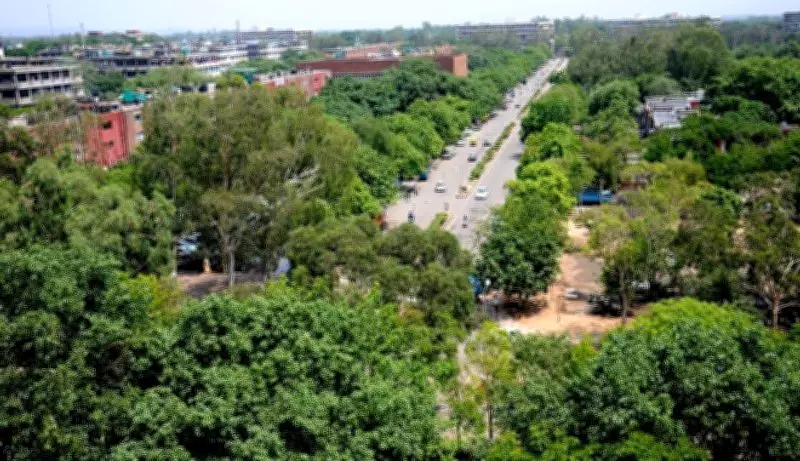
The Chandigarh UT Administration has embarked on a landmark scientific initiative to map the city's environmental health, taking a significant step toward achieving 'Carbon Neutral' status. The Department of Environment has issued an Expression of Interest (EOI) for a comprehensive study on carbon footprint, greenhouse gas (GHG) emissions, and carbon sequestration assessment for the entire Union Territory.
Scope of the Study
The study will cover the full 140 square kilometer area of Chandigarh, including the urban landscape spanning 114 square kilometers. It will assess parks, gardens, avenue plantations, institutional campuses, and the Sukhna Wildlife Sanctuary, which covers 26 square kilometers. Special emphasis will be placed on the sanctuary's dense forest cover to determine its carbon sequestration potential. Carbon sequestration refers to the process by which ecosystems like forests or soils absorb and store carbon dioxide from the atmosphere.
Advanced Methodology
The initiative goes beyond traditional tree counting methods. The selected agency will develop a gridded inventory to pinpoint specific pollution 'hotspots' across the city. This approach will enable targeted interventions for emission reduction. The relevant areas of study include forestry assessment, climate change assessment, mitigation planning, Geographic Information System (GIS) and remote sensing, and soil carbon assessment.

Forward-Looking Strategy
According to officials, the project is not merely a snapshot of current data but a forward-looking strategy. The study will analyze trends over the past five to ten years to create emission projections up to the year 2030. This data will form the backbone of a new carbon neutrality road map, aligning Chandigarh with the State Action Plan on Climate Change (SAPCC 2.0) and guidelines from the Intergovernmental Panel on Climate Change (IPCC).
Timeline and Impact
The entire study is expected to be completed within eight to ten months. By identifying precisely where emissions originate and how much carbon the city's 'green lungs' can absorb, Chandigarh aims to set a national benchmark for evidence-based climate planning. This initiative underscores the UT Administration's commitment to sustainable urban development and environmental stewardship.