

China and Russia Emerge as Strategic Beneficiaries in Fragile US-Iran Ceasefire
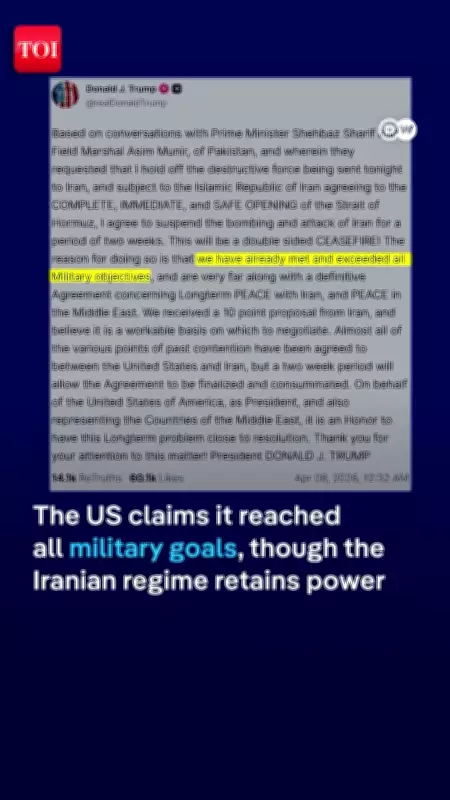
The ceasefire agreement between the United States, Israel, and Iran has temporarily halted hostilities in West Asia, but its instability is revealing significant shifts in the global balance of power. According to geopolitical analysts, China and Russia are increasingly positioned as the strategic winners of this conflict, capitalizing on Washington's reluctance to escalate further.
Shifting Global Dynamics and Power Realignments
The war has starkly exposed the limits of American influence and military reach in the region. As the United States adopts a more cautious stance, avoiding deeper entanglement, rivals like China and Russia are seizing the opportunity to expand their geopolitical footprint. This development marks a pivotal moment in international relations, with long-term implications that could reshape alliances worldwide.
The ceasefire, while a pause in fighting, is far from a stable resolution. Its fragility underscores the complex interplay of forces in West Asia, where regional tensions continue to simmer beneath the surface. The conflict has not only tested U.S. resolve but also highlighted the growing assertiveness of other global powers.

Long-Term Implications for Global Power Structures
As the Middle East undergoes a period of recalibration, the repercussions of this conflict are expected to extend well beyond its immediate borders. The strategic gains by China and Russia could lead to a reconfiguration of global power dynamics, influencing diplomatic, economic, and military alignments for years to come.
This shift represents a critical juncture in contemporary geopolitics, where traditional hegemonies are being challenged and new centers of influence are emerging. The outcome of this ceasefire and the subsequent actions of key players will likely determine the future trajectory of international relations in an increasingly multipolar world.






