

Chinese National Arrested in Kenya for Smuggling Over 2,000 Queen Ants
A Chinese national has been apprehended in Kenya after authorities uncovered more than 2,000 live queen ants concealed within his luggage at Nairobi's primary international airport. This unusual wildlife smuggling incident occurred at Jomo Kenyatta International Airport, where security personnel intercepted the passenger during a standard inspection prior to a flight destined for China.
Queen Ants Hidden in Test Tubes and Tissue Rolls
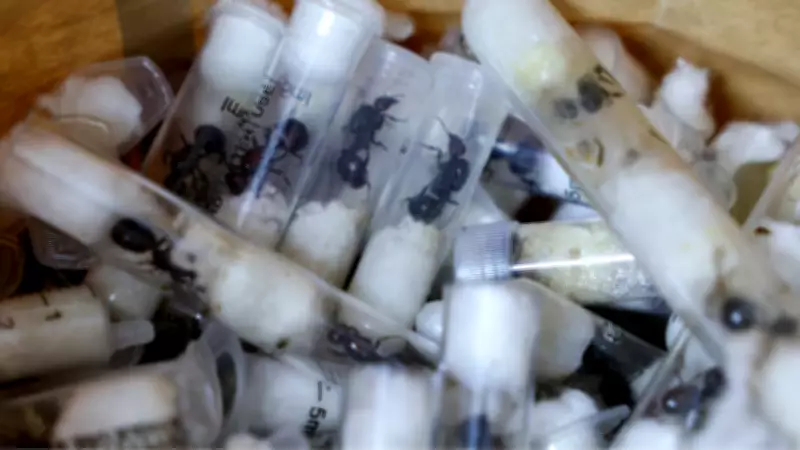
According to prosecutors, the suspect, identified as Zhang Kequn, attempted to transport the ants out of Kenya using specialized packaging inside his suitcase. Authorities detailed that 1,948 queen ants were stored inside test tubes, while approximately 300 others were hidden in three rolls of tissue paper. The containers were meticulously arranged to ensure airflow and maintain humidity, facilitating the insects' survival during the lengthy journey. Officials assert that this packaging method demonstrates advanced planning and expertise in transporting live insects without causing fatalities.
The Species Involved: Giant African Harvester Ants
The ants are believed to be of the species Messor cephalotes, commonly referred to as the giant African harvester ant. Native to regions of East Africa, these ants rank among the largest in their genus and are renowned for their intricate colony structures. In natural habitats, they collect and store seeds underground, playing a vital role in seed dispersal and soil aeration. Their behaviors and substantial colony sizes render them particularly appealing to collectors who maintain ants in artificial nests known as formicariums. Since queen ants can establish entire colonies, they represent the most valuable individuals for collectors and traders.

Why Smugglers Target Queen Ants
Investigators suspect the ants were intended for the expanding international hobby of ant keeping, where enthusiasts cultivate live ant colonies within transparent artificial nests. Queen ants are especially prized because they are the sole individuals capable of founding new colonies. Once established, a single queen can generate thousands of worker ants, allowing collectors to observe the colony's growth and development over time. Rare species like the giant African harvester ant are highly sought after due to their large colony sizes, visible worker differences, and complex seed-harvesting behaviors.
Growing Demand from Exotic Pet Collectors
The popularity of ant keeping has surged in recent years, particularly in parts of Europe and Asia. Collectors frequently acquire queen ants through specialized websites, online forums, and private insect traders. Rare species can command significant prices on the collector market, with a single queen ant potentially selling for €100 to €200 or more, depending on species and demand. With over 2,000 queens discovered in the suitcase, authorities believe the insects could have been sold individually to multiple buyers if they had successfully exited the country.
Possible Links to a Trafficking Network
Kenyan officials suspect this case may be connected to a broader wildlife trafficking network. Investigators are examining the suspect's electronic devices to ascertain whether he had contacts with international buyers or local suppliers. Authorities note that the suspect had spent time in Kenya before his arrest, suggesting the ants might have been collected locally and prepared for export. Officials have not ruled out the involvement of other individuals and indicate that further arrests could follow as the investigation progresses.
Why Removing Ants Can Harm Ecosystems
Although ants are small, scientists emphasize their critical role in sustaining healthy ecosystems. Species such as Messor cephalotes aid in soil aeration through tunneling, seed dispersal, and nutrient cycling in natural habitats. Removing large numbers of queen ants from the wild could disrupt local populations, as each queen has the potential to establish a new colony containing thousands of workers. Conservation authorities warn that repeated harvesting of queens could diminish biodiversity and impair ecological balance in affected regions.

Legal Consequences Under Kenyan Wildlife Law
Wildlife trafficking constitutes a serious offense under Kenya's Wildlife Conservation and Management Act. Individuals found guilty of illegally capturing or exporting protected species face severe penalties, including substantial fines and prison sentences. A Nairobi court has permitted investigators to detain Zhang Kequn for several days while authorities analyze his electronic devices and continue their inquiry into the attempted smuggling operation.





