

Cuba Grapples With Complete Nationwide Blackout Amid Deepening Crises
Officials in Cuba reported a devastating islandwide blackout on Monday, plunging the entire nation of approximately 11 million people into darkness. This catastrophic event marks a severe escalation in the country's ongoing energy and economic crises, highlighting the critical state of its crumbling power infrastructure.
Grid Collapse and Immediate Response
The Ministry of Energy and Mines announced via social media platform X that a "complete disconnection" of Cuba's electrical system had occurred. Authorities confirmed they were actively investigating the cause, noting that no failures were detected in the operational units prior to the grid's collapse.
Lazaro Guerra, the ministry's electricity director, provided updates through state media late Monday, explaining that restoration efforts focused on restarting several thermoelectric plants. "It must be done gradually to avoid setbacks," Guerra cautioned. "Because systems, when very weak, are more susceptible to failure."

Human Impact and Daily Struggles
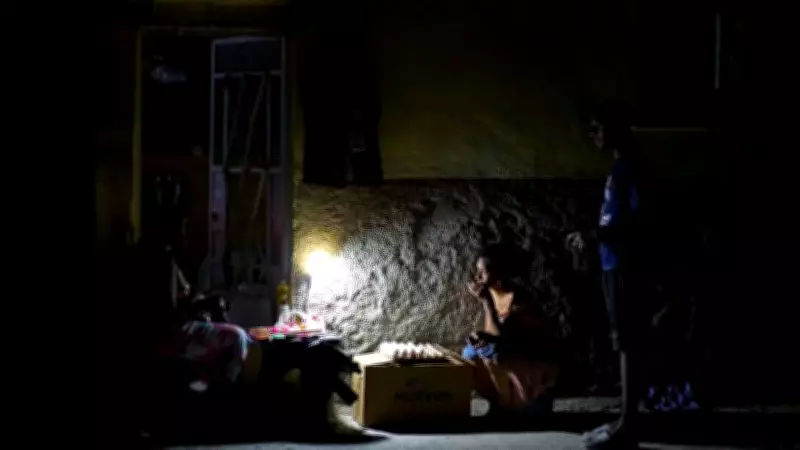
As night descended, the reality of the blackout became painfully evident across Havana. Candles flickered in homes while families adapted to the darkness. In one household, the sounds of children playing and singing with their mother echoed through the unlit rooms.
Yuneici Cecilia Riviaux described her family's predicament: "We have to prepare a mattress for the girls here so that they can sleep here because we have no choice. I don't have a rechargeable fan or a generator."
This represents the third major blackout to strike Cuba within just four months. Tomas David Velazquez Felipe, a 61-year-old Havana resident, expressed profound frustration: "What little we have to eat spoils. Our people are too old to keep suffering." He suggested that Cubans with means should consider leaving the island due to the relentless outages.
Partial Restoration and Ongoing Vulnerabilities
By Monday night, state media reported that power had been restored to approximately 5% of Havana's residents, equivalent to about 42,000 customers. Several hospitals across the island also regained electricity.
Officials announced they would prioritize the communications sector next while issuing warnings that the small circuits already restored remained vulnerable to additional failures. Cuba's aging electrical grid has deteriorated significantly in recent years, resulting in daily outages and an increasing frequency of islandwide blackouts.
Political Dimensions and US Relations
The Cuban government has attributed its energy woes partly to the US energy blockade, particularly following former President Donald Trump's January warning about potential tariffs on countries supplying oil to Cuba. The Trump administration has demanded Cuba release political prisoners and implement political and economic liberalization in exchange for lifting sanctions.
Trump recently commented on Cuba's situation, stating, "I mean, whether I free it, take it. I think I could do anything I want with it," while describing the nation as "very weakened."
According to sources familiar with sensitive discussions between Washington and Havana, the Trump administration seeks the departure of Cuban President Miguel Diaz-Canel from power. These anonymous sources confirmed this position days after Diaz-Canel publicly acknowledged talks with the Trump administration for the first time.
Expert Analysis on Systemic Failures
William LeoGrande, an American University professor with extensive expertise on Cuba, provided stark assessment of the situation. He described Cuba's energy grid as improperly maintained with infrastructure "way past its normal useful life," praising technicians as "magicians" for keeping it operational at all.
LeoGrande warned of dire consequences if current trends continue: "But it would be constant misery for the general population, and eventually, the economy could collapse just completely and then you would have social chaos and probably mass migration."

He identified multiple compounding factors: "And on top of all that, the Cuban government doesn't have the hard currency to import spare parts or upgrade the plant or grid itself. It's just a perfect storm of collapse." The professor noted that thermoelectric plants using heavy oil with high sulfur content have experienced accelerated equipment corrosion.
Economic Measures and International Context
President Diaz-Canel revealed on Friday that Cuba had not received oil shipments for three months and was operating on solar power, natural gas, and thermoelectric plants. The government has postponed tens of thousands of surgeries due to energy constraints.
Oscar Perez-Oliva Fraga, deputy prime minister of the Ministry of Foreign Trade and Foreign Investment, announced new economic measures Monday. These include allowing Cubans residing abroad to partner with or own private companies in Cuba, participate in large-scale infrastructure projects, and open foreign currency bank accounts in Cuban banks to facilitate transactions.
The energy crisis has been exacerbated by halted oil shipments from Venezuela following US actions against that country in early January. While Cuba produces 40% of its petroleum and generates its own power, this has proven insufficient to meet demand as the electrical grid continues to deteriorate.
Personal Stories of Hardship
Yaimisel Sanchez Pena, 48, expressed distress about food spoilage affecting her family: "Every day, she suffers," she said of her 72-year-old mother's experience with the outages.
Mercedes Velazquez, a 71-year-old resident, lamented the recurring blackouts: "We're here waiting to see what happens." She described recently giving away fresh soup to avoid waste, summarizing the pervasive anxiety: "Everything goes bad."
This latest islandwide blackout follows a massive outage affecting western Cuba just over a week ago and another major blackout in early December, underscoring the systemic nature of Cuba's energy emergency.
