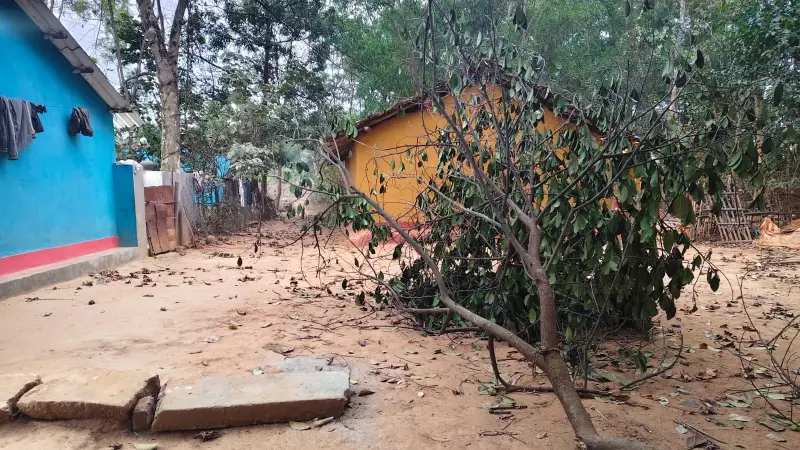
Deadly Elephant Hunt Grips Jharkhand Villages
A massive hunt is underway in Jharkhand for a rogue bull elephant that has claimed twenty human lives. The animal's brutal attacks have left entire villages living in fear and mourning their dead.
Nightly Terror and Empty Homes
Sanju Devi sits wrapped in a black shawl inside her Benisagar village home. Men prepare a bamboo bier nearby. Her husband Prakash Das lies dead, killed by the elephant on January ninth. "I didn't know the photo we received of a man whose head was fifty metres from his body was my husband," she says solemnly.
Prakash Das was a JCB driver and sole breadwinner for his family of five. He becomes one of twenty victims, including four children, believed killed by the same elephant along the Jharkhand-Odisha border.

Authorities describe the attacks as "completely out of the blue and unlike anything seen in recent years." While Jharkhand knows man-animal conflict, these nightly killings stand out for their brutality. They leave trails of panic and empty homes where hundreds have fled.
Armed Villages and Constant Vigilance
People now move only in groups. Children stay home. Watch groups form across villages. The Forest Department provides torches and firecrackers to help keep the elephant away.
"We have been warned not to go into the jungles," says Benisagar village headman Laxman Chatar. "All working men come home before nightfall. Women stopped collecting wood. Now when dogs bark, we wonder if it's the elephant."
Forest teams conduct round-the-clock searches and night-long reconnaissance. "The department activated a local information network involving village heads and community leaders," says Divisional Forest Officer Aditya Narayan. "But after attacks stopped suddenly, no concrete leads emerged."
Personal Tragedies Across Villages
At Sowan village, Manaki Bahanda sits on a thirty-foot-high machan with three other men. They peer into the distance under a yellow tarpaulin. Tension fills the air. Eyes dart at every sound.
Almost all Bahanda's family members died in the elephant's attack on January fifth. His daughter-in-law and four young grandchildren perished. His thirty-year-old son survived but remains hospitalized in critical condition.
"My son and his family were inside their home when the elephant attacked," Bahanda says. "We came here hoping the height will keep us safe."
In Babaria village, eight-year-old Susheela Meral lost most of her family. They slept on a temporary platform when the elephant struck. Severely injured and bleeding, Susheela dragged herself downhill calling for help.
"She was told that if they took her in, the elephant would smell her blood and attack again," says neighbour Maade Purti. "By the time the village stirred, most of her family was dead."
Only Susheela, her brother Jaipal, and a neighbour's son escaped alive.
The Hunt Intensifies
The Forest Department deploys both manpower and technology. Mahouts from West Bengal join the effort. Thermal drones scan the dense greenery. Teams from Odisha and wildlife specialists from Wildlife SOS stand ready with equipment and trained veterinarians.
Officials describe the elephant as "extremely dangerous" and possibly in musth. The animal appears separated from its herd. "Instead of avoiding human settlements, the animal moves directly toward them and attacks," says DFO Narayan. "It continues in a straight path regardless of obstacles."
Pinpointing the elephant's location proves difficult. Elephants travel long distances. The region's dense forests complicate tracking efforts.
Root Causes of Conflict
Experts blame increased human-elephant conflict on habitat fragmentation. Deforestation, mining, industrialization, and rapid urbanization destroy elephant corridors.
A December 2025 research paper highlights these issues. "Mining and industrial development in Jharkhand led to fragmentation of elephant habitats," writes Dr. Bilal Habib's team. "Increased human presence in these areas escalates conflict."

The paper notes severe consequences for both elephants and humans. Elephants forced into fragmented habitats face inbreeding risks and reduced genetic diversity. Local communities suffer crop losses, property damage, and human fatalities.
West Singhbhum becomes the worst-affected district. It contains Jharkhand's most forested areas and mining-intensive regions.
Communities in Mourning
In Haldia village, Damodar Kuldi's family grieves their loss. The eighteen-year-old tractor driver joined an informal watch group tracking the elephant. During one expedition, Damodar moved closer than others when the elephant disappeared into forest.
"He was the closest to the elephant," says neighbour Dinesh Hembram. "It targeted him."
At Damodar's funeral, his pregnant wife Amrita remains inconsolable. Her sobs break the village's hush. "I warned him not to follow the elephant," she cries. "I had a bad feeling something wrong would happen."
Frustrated villagers now take their anger out on officials. At Benisagar village, consultations end in tense huddles. People feel let down by authorities struggling to contain the crisis.
The hunt continues as night falls again over Jharkhand's forests. Twenty families mourn their dead. Hundreds more sleep lightly, listening for any sound that might signal the elephant's return.