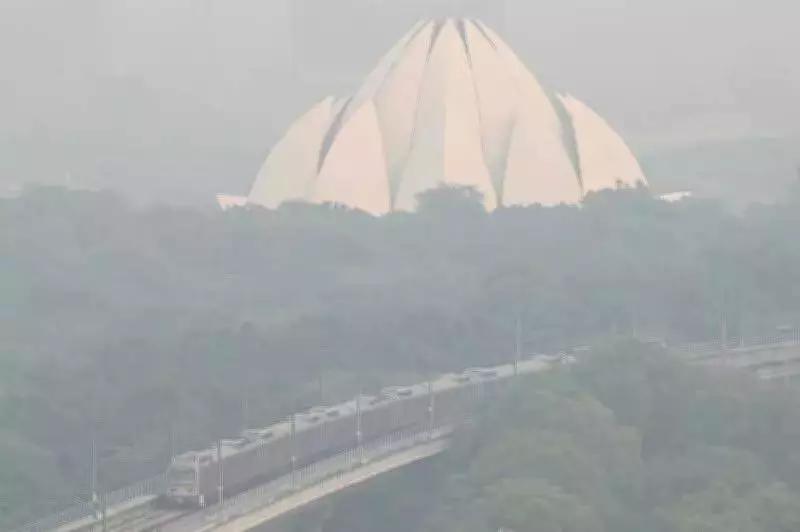
Delhi's Air Quality Reverts to Very Poor After Six-Day Improvement
After a six-day period of relatively better conditions, the air quality in Delhi has once again deteriorated, slipping back into the 'very poor' category on Wednesday. The Air Quality Index (AQI) recorded at 4 pm stood at 305, a significant increase from 271, which was classified as 'poor,' at the same time on Tuesday.
Historical Context and Recent Trends
The last instance when Delhi experienced very poor air quality was on February 4, with an AQI of 339. Since that date, the air quality has fluctuated between the poor and moderate categories, with ozone levels remaining relatively low over the past week. This recent dip marks a setback in the city's ongoing battle against pollution.
Weather Factors Contributing to the Decline
Weather analysts have pointed to several factors that may have contributed to this decline in air quality. Although winds were present on Wednesday, haziness and a change in wind direction likely played a role in the accumulation of pollutants. The Indian Institute of Tropical Meteorology's (IITM) Early Warning System has forecasted that the air quality is expected to remain in the poor category from February 12 to 14, with similar conditions anticipated for the subsequent six days.

Additionally, analysts have noted that back-to-back western disturbances may influence the region around February 17 or 18. Mahesh Palawat of Skymet explained, "A Western Disturbance on February 13 will primarily affect the hills. Another disturbance on the night of February 16 could bring scattered rain to parts of Haryana, Delhi, Rajasthan, Madhya Pradesh, and Uttar Pradesh due to an induced cyclonic circulation over western Rajasthan and a trough extending from Delhi to Gujarat, along with moisture inflow from the Arabian Sea. Light, passing showers are possible, but widespread or prolonged rain is unlikely."
Temperature Readings and Forecasts
On Wednesday, the maximum temperature in Delhi was recorded at 27.5°C, which is four degrees above the normal level, compared to 28.6°C the previous day. The minimum temperature was 13.2°C, three degrees above normal, rising from 9.2°C the day before. The India Meteorological Department (IMD) expects the maximum and minimum temperatures to remain around 25–27°C and 11–13°C, respectively, on Thursday, indicating continued above-average warmth.
Regulatory Measures to Combat Pollution
In response to the ongoing air quality issues, the Commission for Air Quality Management (CAQM) has implemented new measures aimed at reducing pollution levels. The commission has mandated uniform technical and operational standards for mechanised road sweeping across the National Capital Region (NCR). Citing the significant contribution of dust to PM10 and PM2.5 levels, the CAQM highlighted that inconsistent and inadequate road sweeping has aggravated pollution problems.
The new guidelines standardise the deployment of mechanised road sweeping machines (MRSMs) based on road width to ensure measurable dust reduction. These norms apply to all road-owning and maintenance agencies within the NCR, aiming to create a more consistent and effective approach to dust control.
As Delhi continues to grapple with fluctuating air quality, these combined efforts from meteorological forecasts and regulatory actions underscore the complex challenges in managing urban pollution amidst changing weather patterns.