

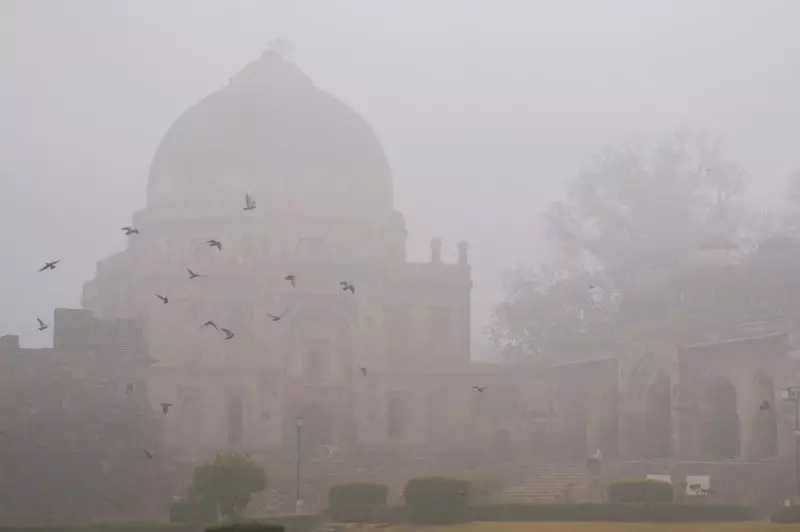
Despite the enforcement of stricter anti-pollution measures under Stage II of the Graded Response Action Plan (GRAP), the national capital's air quality has shown little improvement, remaining firmly in the 'Very Poor' category. On Tuesday, Delhi's average Air Quality Index (AQI) was recorded at 373, a figure that continues to pose significant health risks to its residents.
GRAP Stage II Measures in Full Swing
The Commission for Air Quality Management (CAQM) had proactively implemented Stage II of GRAP on Saturday, anticipating a deterioration in meteorological conditions. This stage mandates a series of actions aimed at curbing pollution sources. Key measures currently in force include a strict ban on the use of coal and firewood in hotels, restaurants, and open eateries. Authorities are also intensifying efforts to manage dust pollution at construction sites and are deploying more frequent mechanized cleaning and water sprinkling on roads.
Furthermore, the directives require relevant agencies to ensure proper disposal of construction and demolition waste and to maintain vigilance against garbage burning. The Central Pollution Control Board (CPCB) has been tasked with closely reviewing the situation and reporting on the implementation and effectiveness of these actions. However, the persistent high AQI reading indicates that these steps have yet to make a substantial dent in the pollution levels.

Monitoring Data Reveals Widespread Poor Air
Data from the Central Pollution Control Board's monitoring network painted a grim picture across the city. Several key locations reported AQI levels deep within the 'Very Poor' zone (301-400), with some nearing the 'Severe' category. Notable readings included:
- Anand Vihar recorded a worrying AQI of 404, breaching into the 'Severe' category.
- Wazirpur and Alipur followed closely with AQIs of 399 and 398, respectively.
- Other major areas like Dwarka Sector 8 (389), Jahangirpuri (382), and RK Puram (374) also suffered from very poor air quality.
The India Meteorological Department (IMD) has forecasted that calm wind conditions are likely to prevail over the next few days. This meteorological pattern is unfavorable for the dispersion of pollutants, suggesting that the air quality is likely to remain in the 'Very Poor' to 'Severe' range for the foreseeable future. Experts have warned that without a significant change in weather or more drastic intervention, relief is unlikely.
Public Health Concerns and the Road Ahead
The continuation of 'Very Poor' air quality raises serious public health alarms. Prolonged exposure to such polluted air can exacerbate respiratory illnesses like asthma and bronchitis, and increase the risk of cardiovascular problems. Health authorities often advise vulnerable groups, including children, the elderly, and those with pre-existing conditions, to limit outdoor exposure when AQI levels are this high.
The current situation underscores the complex challenge Delhi faces every winter. While regulatory measures like GRAP are crucial, their impact can be limited if fundamental pollution sources—such as vehicular emissions, industrial pollution, and regional stubble burning—are not addressed more comprehensively and throughout the year. The data from Tuesday serves as a stark reminder that despite action plans being activated, the battle for clean air in Delhi is far from over and requires sustained, multi-pronged efforts.






