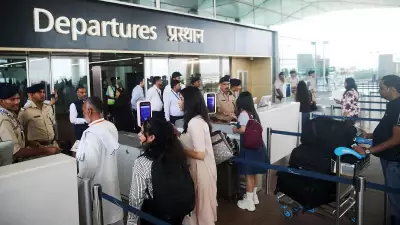
Delhi residents woke up to the chilliest January morning in two years on Friday, as the mercury plunged to a biting 4.6 degrees Celsius. The India Meteorological Department (IMD) has issued a yellow alert for dense fog, compounding the discomfort as the capital's air quality continues to languish in the 'very poor' category.
Record Cold and Dense Fog Grip the Capital
The temperature recorded on Friday morning marked the lowest point of the current winter season and the coldest January day since 2024. The IMD has forecast mainly clear skies but has warned of persistent dense fog conditions over northwest India, including Delhi, in the coming days. Visibility at the Indira Gandhi International (IGI) Airport dropped to around 200 metres due to the fog, with temperatures hovering near 5°C in the early hours.
The weather office predicts below-normal minimum temperatures, likely ranging between 5 to 7 degrees Celsius, while maximums may reach 16 to 18°C. Cold day conditions are also expected in neighbouring states such as Himachal Pradesh, Rajasthan, Punjab, and Haryana. While a cold wave is likely to persist, the IMD has indicated that no severe cold wave conditions are currently anticipated.

Air Quality Deteriorates to 'Very Poor' Levels
Adding to the winter woes, Delhi's air quality has taken a sharp turn for the worse. On Saturday, the 24-hour average Air Quality Index (AQI) was recorded at 361, firmly in the 'very poor' zone. This follows a reading of 345 on Friday, showing a consistent deteriorating trend.
The situation was particularly dire at several monitoring stations across the city. Nehru Nagar registered the worst air quality, falling into the 'severe' category with an AQI of 426. Other locations that reported hazardous 'severe' levels included Anand Vihar, Vivek Vihar, Dwarka Sector 8, and Sirifort. Out of 39 stations, a total of 33 recorded 'very poor' air, with Pusa Road being the only station to report a slightly better, though still 'poor', AQI of 298.
Primary Sources of Pollution Identified
Data from the Decision Support System (DSS) of Pune's Indian Institute of Tropical Meteorology (IITM) pinpointed the main contributors to Delhi's toxic air. Vehicular emissions topped the list, accounting for 16.9% of the pollution load. This was closely followed by emissions from industries within Delhi and its peripheries, contributing 13.1%. Residential emissions made up 4.3%, while other local sources like waste burning (1.6%), construction activities (2.1%), and road dust (1.1%) added to the hazardous mix.
As a dense fog blanket and freezing temperatures continue to envelop the national capital, authorities urge citizens to take necessary precautions against the cold and polluted air, with conditions expected to remain challenging in the short term.