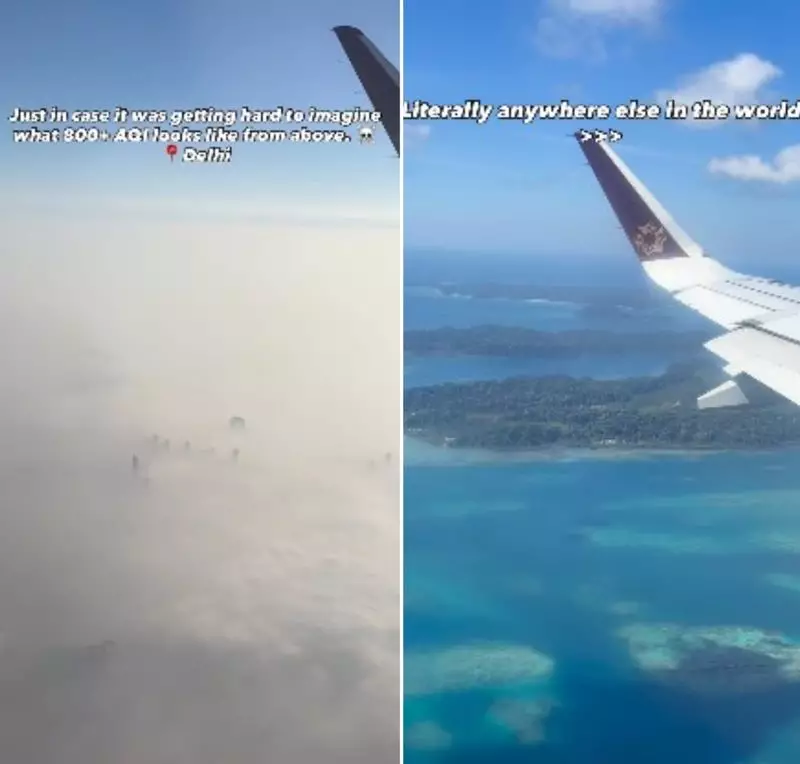
The national capital, Delhi, has been rendered nearly invisible, swallowed by a dense and hazardous mixture of smog and fog. A chilling video capturing this alarming transformation has gone viral, showing the city's iconic landmarks and sprawling urban landscape disappearing into a murky, greyish-white blanket. The visual starkly underscores the severe air quality crisis gripping the city as winter sets in.
A City Vanishes from Sight
The widely circulated footage reveals a dramatic scene. The video begins with a relatively clear view of Delhi's skyline, but within moments, a thick pall of pollution and fog rolls in, drastically reducing visibility. Key landmarks fade away, and the entire cityscape is submerged under the oppressive layer. This is not just typical winter fog; it is a toxic cocktail where fog particles mix with pollutants like particulate matter (PM2.5 and PM10), nitrogen dioxide, and other harmful emissions, creating a persistent smog.
This phenomenon coincides with a sharp deterioration in the city's Air Quality Index (AQI). On the day the video was captured, the AQI in many parts of Delhi breached the 400 mark, entering the 'severe' category. Such levels pose serious health risks even to healthy individuals and warrant emergency measures.

The Culprits Behind the Toxic Blanket
Several factors have converged to create this dangerous situation. The primary drivers of Delhi's winter pollution are well-known but remain critically unaddressed.
Stubble burning in the neighbouring states of Punjab and Haryana is a major contributor, with wind patterns carrying the smoke directly towards the capital. This annual practice fills the air with massive amounts of particulate matter.
Compounding this is the local pollution generated within Delhi and the National Capital Region (NCR). Vehicular emissions, dust from construction sites, industrial pollution, and the burning of waste collectively add to the toxic load. The meteorological conditions typical of late autumn and winter—cool temperatures, low wind speed, and a drop in mixing height—then trap these pollutants close to the ground. The moisture in the air (fog) binds with these particles to form the thick, persistent smog seen in the video.
Health Impacts and Official Response
The consequences of breathing such air are dire. Doctors and health experts have issued warnings about the immediate and long-term effects.
- Immediate irritation of the eyes, nose, and throat.
- Aggravation of asthma and other chronic respiratory diseases.
- Increased risk of heart attacks and strokes.
- Long-term exposure is linked to reduced lung function, lung cancer, and cardiovascular mortality.
In response to the escalating crisis, authorities have reactivated the central government's air pollution control plan, known as the Graded Response Action Plan (GRAP). Measures under the 'severe' category have been enforced, which include:
- A ban on most construction and demolition activities.
- Restrictions on the entry of polluting trucks into Delhi.
- Possible consideration of odd-even vehicle rationing schemes.
- Advice for vulnerable groups to minimize outdoor exposure.
However, the recurring nature of this crisis highlights the gap between temporary emergency measures and the need for sustained, year-round action on key pollution sources. The viral video of Delhi disappearing is more than just a visual spectacle; it is a stark, undeniable reminder of the public health emergency that demands urgent and permanent solutions.