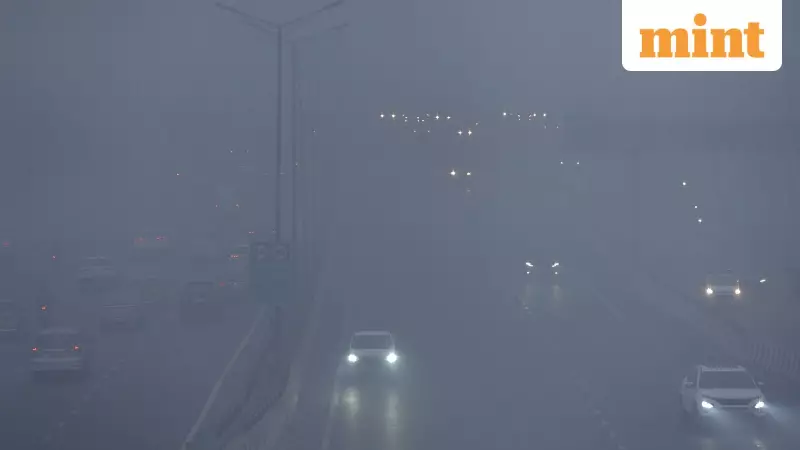
Residents of India's capital were greeted by a thick, dense fog on Tuesday morning, dramatically reducing visibility across the city and posing significant challenges for early commuters. Despite the severe conditions, flight operations at the Indira Gandhi International Airport continued without major disruptions, with no cancellations reported and services running smoothly past midnight.
IMD's Fog Forecast and Widespread Alert
The India Meteorological Department (IMD) had issued a fog alert, accurately predicting the occurrence of "dense to very dense fog" on the morning of 30 December. The warning was not limited to Delhi but extended across several northern and eastern regions of the country. The affected areas included Haryana, Chandigarh, Punjab, Uttar Pradesh, and parts of Northeast, East, and North India.
On-the-Ground Reality and Travel Risks
The visual impact was stark, especially on the Dwarka Express in Delhi, where a dense white blanket engulfed the surroundings in the wee hours. The fog was so intense that it reduced visibility to less than 50 meters, creating hazardous conditions for road and rail travel. The IMD explicitly stated that this weather phenomenon would "reduce visibility severely," making journeys risky.

In light of these dangers, the weather agency issued crucial advisories for the public. Drivers were strongly advised to exercise extreme caution by:
- Driving at slow speeds.
- Using fog lights for better illumination.
- Avoiding any non-essential travel until conditions improve.
Minimal Air Travel Disruption
In a testament to improved airport protocols, Delhi Airport managed its operations effectively despite the challenging weather. The seamless handling of flights past midnight, without cancellations, highlights the preparedness for such annual winter occurrences. However, passengers were likely advised to check their flight status due to potential delays caused by the low visibility.
This intense fog episode is a seasonal reminder of the winter hazards in North India. While it paints a picturesque scene, the severe drop in visibility demands heightened public awareness and adherence to safety guidelines to prevent accidents and ensure safe travel during the early morning hours.