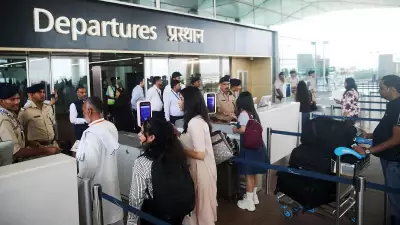
A dense and persistent fog layer engulfed the national capital on Saturday, severely disrupting air travel and maintaining poor air quality levels as a severe cold wave continued to tighten its hold across vast swathes of North India. The intense weather phenomenon led to significant operational challenges at the Indira Gandhi International (IGI) Airport, with passengers facing long delays and cancellations.
Flight Operations Thrown Into Disarray
The blanket of fog drastically reduced visibility, creating hazardous conditions for aviation. Authorities reported that several flights were affected, with many experiencing delays and some being outright cancelled. The situation at the airport terminals was one of confusion and frustration as travelers were left waiting for hours with uncertain information about their departures. The disruption highlights the vulnerability of transport networks to extreme winter weather in the region.
While road and rail traffic also felt the impact of the low visibility, the effect on the aviation sector was the most pronounced. Airport officials and airlines were forced to implement contingency plans, but the sheer intensity of the fog tested the limits of standard operating procedures. Passengers were advised to constantly check with their respective airlines for real-time updates before heading to the airport.

Air Quality Stays in the 'Poor' Zone
Compounding the travel misery was the stagnant air quality. The fog acted as a lid, trapping pollutants close to the ground and preventing their dispersion. As a result, the Air Quality Index (AQI) in Delhi remained firmly in the 'Poor' category. This poses significant health risks, especially for children, the elderly, and those with pre-existing respiratory and cardiovascular conditions.
Experts pointed out that the combination of cold temperatures, calm winds, and fog is a perfect recipe for pollution accumulation. The primary pollutants of concern were fine particulate matter (PM2.5 and PM10), which can penetrate deep into the lungs and enter the bloodstream. Health advisories recommended minimizing outdoor activities, especially during the morning and late evening hours when pollution levels tend to peak.
Cold Wave Intensifies Across Northern States
The fog in Delhi is not an isolated event but part of a larger, intense cold wave gripping North India. Several states, including Punjab, Haryana, Rajasthan, and Uttar Pradesh, have been experiencing a sharp dip in minimum temperatures over the past few days. Dense to very dense fog conditions have been reported from many areas, affecting daily life and transportation on a regional scale.
The India Meteorological Department (IMD) has attributed this spell to prevailing western disturbances and associated weather patterns. The cold day conditions, where maximum temperatures also remain significantly below normal, are expected to persist for the next few days. The IMD has issued alerts for dense fog and cold wave conditions for January 6th and the subsequent days, urging people to take necessary precautions.
The current weather crisis underscores the dual challenge of extreme winter conditions and chronic air pollution faced by North India annually. It disrupts the economy, endangers public health, and exposes the need for more resilient infrastructure and effective, long-term pollution control measures beyond seasonal reactions.