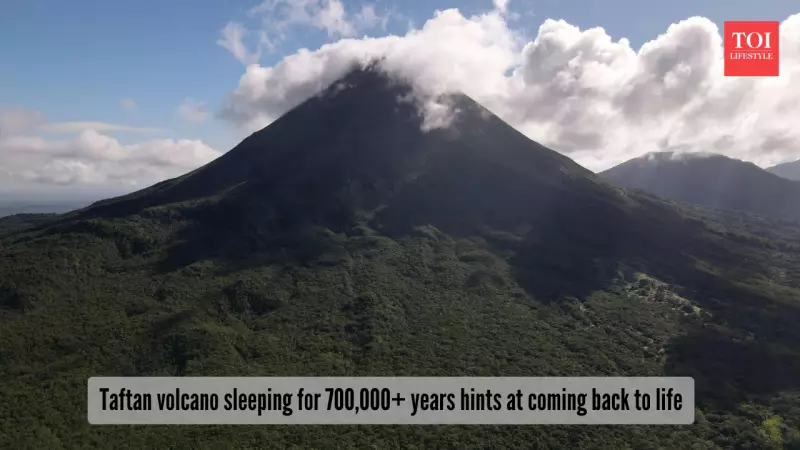
In a significant geological development, a long-slumbering giant in southeastern Iran is showing fresh signs of stirring. The Taftan volcano, a massive stratovolcano that has not erupted in recorded human history, is exhibiting ground movement detected by advanced satellite technology, hinting at active forces deep beneath its surface.
Satellite Eyes Spot Silent Uplift at Summit
Recent analysis of satellite data has uncovered a concerning phenomenon at the summit of Mount Taftan. According to a study published in Geophysical Research Letters, the ground has risen by approximately 3.5 inches (about 9 centimetres) over a mere 10-month period. This uplift was detected using InSAR radar technology from the European Space Agency's Sentinel-1 satellites, a crucial tool for monitoring this remote region where ground-based GPS stations are absent.
The research, led by Pablo J. González from Spain’s IPNA-CSIC Institute of Natural Products and Agrobiology, indicates that pressure is building in a shallow hydrothermal zone located between 1,600 to 2,070 feet (roughly 500 to 630 meters) below the surface. This zone, where hot water and gases circulate, sits above a much deeper magma reservoir about 3.2 kilometres down. The persistent swelling suggests a buildup of gases in the rock or a small pulse of molten material releasing volatiles.

A Colossal Dormant Giant Stirs
Taftan is no ordinary mountain. Towering at 12,976 feet (3,942 meters), this layered stratovolcano is part of the seismically active Makran subduction zone, where tectonic plates collide. Its geological record, though sparse for periods beyond 10,000 years, reveals five major eruptive phases in deep time. Critically, its last confirmed eruption occurred an astonishing 710,000 years ago, meaning it has remained dormant throughout the entire span of human civilization.
Scientists have ruled out other potential causes for the ground deformation. The study confirmed that the uplift was not triggered by heavy rainfall or local seismic activity, pointing squarely to the volcano's internal dynamics as the source. "The source is above the magma chamber," the findings note, emphasising the role of the hydrothermal system.
Why Continuous Monitoring is Non-Negotiable
While the observed uplift is not an immediate precursor to an eruption, it serves as a potent reminder of the volcano's latent power. Hydrothermal activity often signals changes in a volcanic system, making preparedness and vigilant observation essential. The study's authors strongly advocate for sustained and regular satellite surveillance using InSAR to track the evolution of this activity.
Currently, there are no surface hazards such as gas emissions or increased temperatures reported. However, the remote location of Taftan in the Baluchistan region makes satellite-based monitoring the only reliable early-warning system. Tracking these patterns over time is vital for understanding the volcano's behaviour and ensuring the safety of surrounding areas.
The reawakening signs at Taftan underscore a fundamental truth about our planet: geological forces operate on timescales far beyond human memory. This event highlights the indispensable role of modern technology in keeping watch over Earth's silent giants, especially those we have never seen erupt.