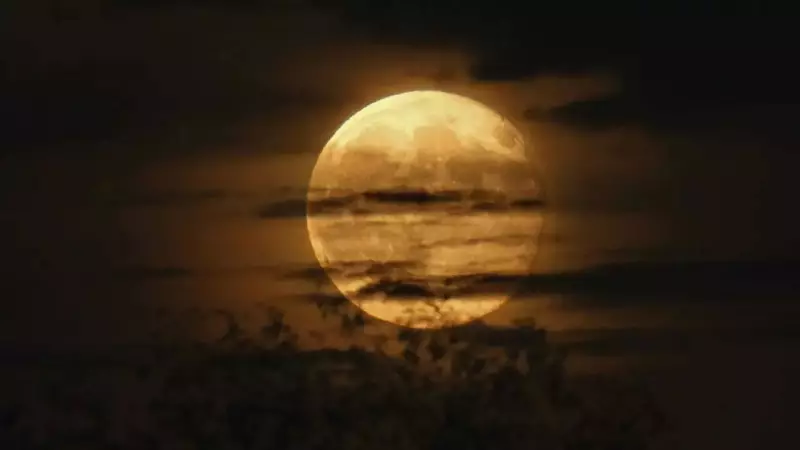
Imagine a night sky permanently devoid of the Moon's gentle glow. While this scenario remains firmly in the realm of scientific hypothesis, a recent study published in JGR Planets has rigorously modelled the consequences of such an event. By removing the Moon from Earth's system, researchers aim to understand just how deeply our planet's processes are intertwined with this single celestial body.
The Unbreakable Bond: Why Earth Won't Lose Its Moon
First, it's crucial to understand that this is a thought experiment, not a prediction. No known physical process could make the Moon vanish within the Solar System's expected lifetime. Laser ranging shows the Moon is slowly drifting away, but the rate is minimal and stable. The gravitational bond between Earth and its Moon is immensely strong, with no plausible mechanism for sudden escape, collapse, or disintegration. A collision powerful enough to eject it would require energies far beyond anything observed in near-Earth space. Thus, the 'missing Moon' scenario serves as a powerful tool in planetary science and Earth system modelling to test our understanding of fundamental forces.
Oceanic Upheaval: The End of Tides as We Know Them
The most immediate and dramatic change would unfold in our oceans. Lunar gravity is the primary driver of Earth's tides, creating the rhythmic bulges of water that sweep across coastlines. Without the Moon, the Sun would still generate tides, but they would be drastically weaker. The difference between high and low tide would shrink significantly.

This reduction would have cascading effects: strong tidal currents in channels and estuaries would weaken, slowing the vital exchange of water between coastal zones and the open ocean. Shorelines shaped by daily tidal erosion would gradually transform as sediment transport diminishes. The daily pulse of the sea would remain, but its intensity would be a faint echo of the present.
Marine Ecosystems in Peril
Marine life is exquisitely tuned to the tidal rhythm. Countless coastal species rely on tides for feeding, reproduction, waste removal, and regulating temperature and oxygen. Weaker tides would alter salinity patterns in estuaries, favouring organisms adapted to stable conditions over those needing flux. Crucially, intertidal habitats—the zones repeatedly exposed to air and water—would shrink dramatically, threatening shellfish, algae, and specialised invertebrates. Reduced mixing in shallow seas would disrupt plankton distribution, destabilising the foundation of marine food webs and ultimately reshaping coastal biodiversity and productivity.
A World Off-Kilter: Climate and Seasonal Chaos
The Moon's influence extends far beyond the shoreline. It acts as a gravitational stabiliser for Earth's axial tilt. Current measurements and simulations confirm that the Moon dampens wobbles caused by the pull of other planets. Without it, Earth's tilt would vary over a much wider range across tens of thousands of years.
This instability would rewrite the rules of climate and seasons. Greater tilt variations would lead to extreme shifts in seasonal intensity. Higher tilt angles could mean brutally contrasting summers and winters, especially at high latitudes, while lower angles would mute seasonal differences, leading to more uniform year-round temperatures. These changes would directly impact ice formation, sea levels, atmospheric circulation, and established climate patterns like monsoons, as inferred from geological records and advanced climate models.
Nocturnal World Turned Upside Down
The disappearance of moonlight would trigger a behavioural revolution in the animal kingdom. Nocturnal predators like owls, big cats, and some fish species that coordinate hunting with lunar brightness would struggle. In a world lit only by starlight and atmospheric glow, visual hunters would find their success rates plummeting, potentially forcing a greater reliance on other senses or a shift toward crepuscular (dawn/dusk) activity.

Conversely, prey animals that limit movement on bright nights to avoid detection would gain new freedom. Increased nocturnal activity could boost feeding and mating, leading to population growth where resources allow. However, this would upset the delicate predator-prey balance, potentially causing overgrazing, vegetation loss, and soil instability in vulnerable ecosystems.
Human Society Forced to Adapt
Human civilisation would face both immediate and long-term challenges. Coastal industries—fishing, shipping, and port operations—would need to adapt to minimal tides and weakened currents. The profound darkness of moonless nights would affect outdoor work, security, and navigation. Culturally, the loss would be deep: lunar calendars guiding agriculture, festivals, and religious observances would lose their celestial anchor.
Over geological timescales, the increased climate variability from an unstable axial tilt would redefine where crops can be grown and where human settlements can sustainably thrive. The study, led by the TOI Science Desk, underscores that while our Moon isn't going anywhere, this hypothetical exercise reveals it as a measurable, foundational factor in the environmental conditions that allowed human societies to develop.