

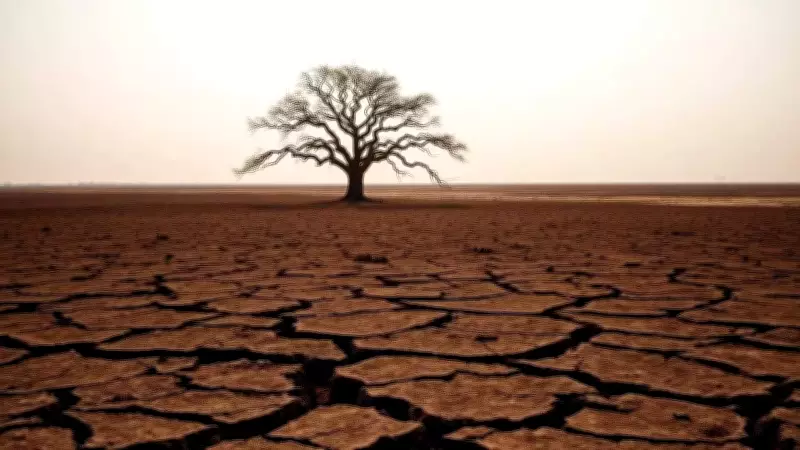
El Nino Forecast Intensifies: 62% Chance by June-August, Threat to Indian Monsoon
The probability of an El Nino weather event forming this year has strengthened significantly, with the latest update from the US National Oceanic and Atmospheric Administration (NOAA) predicting a 62% chance of emergence during the June-August trimester. This period directly coincides with India's crucial summer monsoon season.
Escalating Probability and Seasonal Impact
The update, released by NOAA's Climate Prediction Center on Thursday, marks a substantial increase from its previous forecast on February 12, which had projected a 52% chance of El Nino setting in by July-September. The probability is now expected to rise to over 80% in the subsequent months. This weather phenomenon, characterized by the warming of central-east equatorial Pacific Ocean waters, is strongly linked to changes in global wind patterns and profoundly impacts worldwide weather systems.
"Although a clearer picture will emerge in the next two months, we can be reasonably certain that an El Nino will set in this year, given the consensus among major weather agencies across the world, including the India Meteorological Department (IMD). Given this weather condition's link with depressed monsoon rainfall in India, the government should prepare accordingly," stated veteran meteorologist M Rajeevan, former secretary of the Union earth sciences ministry.

Historical Correlation with Deficient Monsoons
The connection between El Nino events and poor monsoon performance in India is well-documented through historical data:
- Since 1980, there have been 14 El Nino years
- Nine of these years corresponded with deficient monsoons in India, with rainfall at least 10% below the long period average
- In another year, 2018, the monsoon was close to deficient at -9.4%
Rajeevan noted, "The connection between El Nino and poor monsoons in India is strong, although there have been exceptions. The most notable example is 1997, when the monsoon was normal despite a super strong El Nino." In that exceptional year, a strong positive phase of the Indian Ocean Dipole (IOD) is known to have counteracted the El Nino effects.
Counteracting Factors and Forecasting Challenges
The Indian Ocean Dipole, which measures the temperature difference between surface waters in the ocean's east and west regions, is forecast to be positive this monsoon season. However, experts caution about relying too heavily on this potential mitigating factor.
"IOD forecasts are much less reliable and its effect on the Indian monsoon is not robust and consistent. Each season has dynamics that are unique," Rajeevan emphasized, highlighting the complexity of seasonal weather prediction.
Contrasting International Forecasts
The US update presents a somewhat different perspective from predictions by the European Centre for Medium-Range Weather Forecasts, which has suggested the possibility of more rapid Pacific warming that could lead to a very strong or 'super' El Nino later this year. Such an intense event could potentially set the stage for unprecedented heat waves across affected regions.
With a one-in-three chance that the developing El Nino could strengthen into a strong event, and the high historical correlation with deficient rainfall in India, meteorological experts are urging preparedness measures. The timing of the predicted emergence during the critical June-August window makes this forecast particularly significant for agricultural planning, water resource management, and economic preparedness across the Indian subcontinent.






