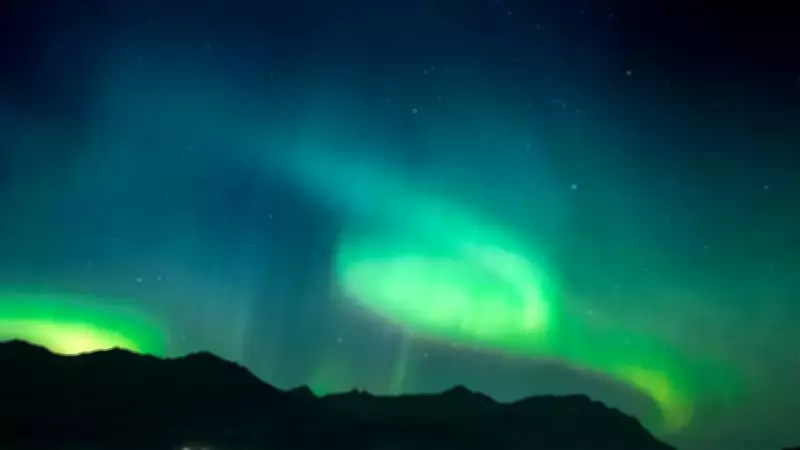
Solar activity continues to remain elevated throughout this week, primarily shaped by one persistent sunspot region and the steady stream of solar material it has been releasing into space. Measurements from the US Space Weather Prediction Center indicate ongoing flare activity and a disturbed solar wind passing by Earth, contributing to a dynamic space environment.
Current Solar Conditions and Geomagnetic Impact
While none of the current solar activity points toward extreme geomagnetic storms, it is sufficient to keep the upper atmosphere active, with effects primarily manifesting near the polar regions. The National Oceanic and Atmospheric Administration (NOAA) describes the situation as fluid rather than dramatic, emphasizing that visibility of auroras depends on precise timing, darkness levels, and clear skies during the long winter nights across northern latitudes.
Aurora Forecast for High-Latitude Regions
Auroras are expected to stay largely confined from February 5th to 7th to high-latitude regions, including Alaska, northern Canada, Greenland, and parts of Scandinavia. These areas sit under the usual auroral oval and tend to respond first when Earth's magnetic field becomes unsettled. Even modest disturbances can produce visible light displays there, though clear skies and darkness remain crucial factors for observation.

Solar Activity Feeding the Auroral System
The present pattern of solar activity traces back to ongoing emissions from a single dominant sunspot group. Over recent days, this region has produced several strong flares and eruptions that sent charged particles outward. Some of this material has already brushed past Earth, slightly stirring the magnetic field. The effects are mild, not the kind that trigger major storms, but enough to keep energy flowing into the upper atmosphere where auroras take shape.
Understanding Aurora Maps and Visibility
Forecast maps typically display auroral activity as a green oval wrapped around Earth's magnetic pole, marking where displays are most likely. When conditions become more active, the oval brightens and can shift in color, sometimes turning red to signal stronger intensity. These maps also highlight daylight areas in lighter tones, reminding observers that auroras are hidden when the Sun is up, with most viewing occurring after sunset or before sunrise.
Extended Visibility Beyond the Auroral Oval
Auroras do not always need to be directly overhead to be visible. When displays brighten significantly, they can sometimes be seen from far outside the main oval, appearing low along the horizon from hundreds of kilometers away. These moments are brief and depend on many small factors aligning perfectly. For now, the activity appears steady rather than expansive, keeping most auroras anchored to far northern skies with occasional hints rather than wide-reaching displays.