

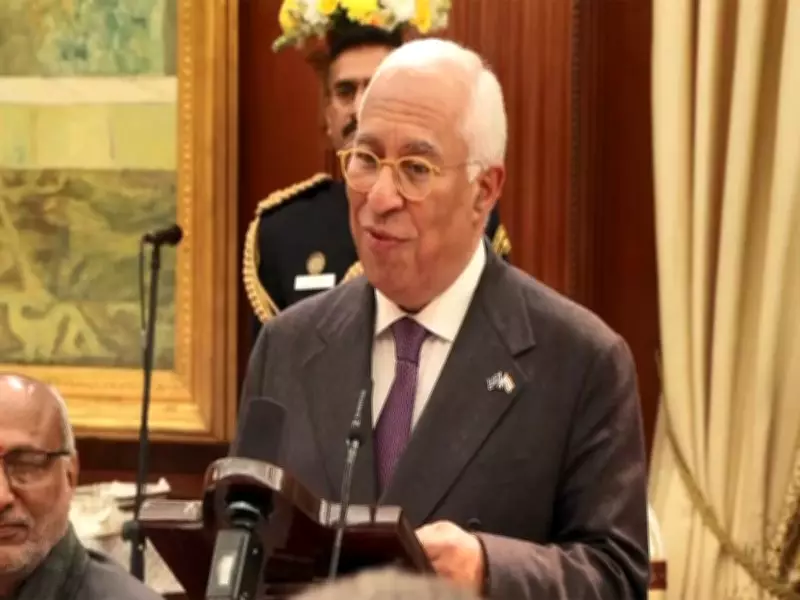
EU Council President António Costa Labels Russia as Sole Winner in Middle East Conflict
In a stark assessment of the geopolitical landscape, European Council President António Costa has declared that Russia stands as the only winner from the ongoing war in the Middle East. This statement underscores growing concerns within the European Union about the broader implications of the conflict and its impact on global power dynamics.
Geopolitical Shifts and Regional Instability
Costa's remarks highlight how the Middle East war has reshaped international relations, with Russia gaining strategic advantages while other nations grapple with the fallout. The EU Council President emphasized that the conflict has diverted attention and resources, allowing Russia to strengthen its influence in the region and beyond.
This development poses significant challenges for European security and foreign policy, as the EU seeks to navigate a complex web of alliances and rivalries. Costa warned that the war's prolongation could further destabilize the Middle East, exacerbating humanitarian crises and economic disruptions.

EU's Response and Future Implications
The European Union is closely monitoring the situation, with Costa calling for a coordinated approach to address the conflict's root causes and mitigate its effects. He stressed the need for diplomatic efforts to restore peace and stability, while acknowledging the difficulties in achieving a swift resolution.
As the war continues, the EU faces mounting pressure to reassess its strategies in the Middle East, balancing humanitarian aid with geopolitical considerations. Costa's comments reflect a broader consensus among European leaders that the conflict has far-reaching consequences, with Russia's gains serving as a wake-up call for renewed engagement.
In summary, António Costa's declaration that Russia is the only winner of the Middle East war underscores the urgent need for international cooperation to address the conflict's complexities and prevent further escalation.






