

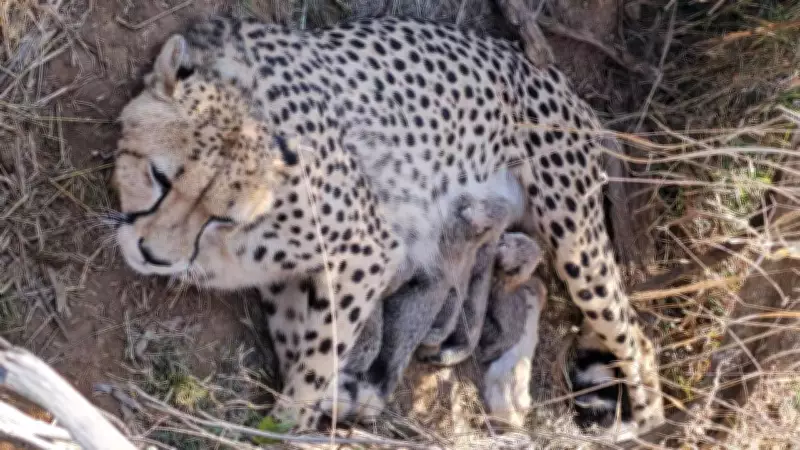
Project Cheetah Achieves Major Milestone with Birth of Five Cubs at Kuno National Park
In a significant boost to India's ambitious Project Cheetah, Kuno National Park has welcomed five new cheetah cubs, marking a pivotal moment in the country's wildlife conservation efforts. The birth occurred on Sunday, March 9, 2026, when Namibian cheetah Jwala, a proven mother in the program, delivered her third litter under close monitoring by veterinary teams and field staff.
Population Crosses Half-Century Mark for First Time
This latest addition has propelled India's cheetah population to 53 individuals, surpassing the half-century mark for the first time since the reintroduction initiative was launched. Forest officials confirmed that the cubs were born inside Kuno's protected habitat, where intensive surveillance ensures their safety and well-being.
With this litter, the number of Indian-born cheetah cubs has risen to 33, representing the tenth successful litter recorded on Indian soil since the translocation program commenced. Officials have hailed this development as a major achievement for the conservation project, which aims to re-establish a viable population of the world's fastest land animal in India after the species was declared extinct in the country in 1952.

Jwala Emerges as a Key Contributor to Conservation Success
Jwala, one of the cheetahs translocated from Namibia in 2022, has now solidified her status as one of the most successful mothers in the program. Her earlier litters have significantly contributed to the growing population at Kuno, demonstrating her adaptability and reproductive success in the new environment.
"This is an encouraging milestone for Project Cheetah," stated a senior forest department official. "The birth of five cubs and the crossing of the 50 mark shows the programme is gradually stabilising and moving in the right direction."
Adaptation and Intensive Management Drive Positive Outcomes
Wildlife experts have noted that these births indicate the animals are successfully adapting to Kuno's landscape, which features grasslands, woodland patches, and prey species such as chital and chinkara that are suitable for cheetah survival. This ecological compatibility is crucial for the long-term viability of the population.
Officials have credited the positive outcome to the intensive monitoring and management carried out by dedicated ground teams. Veterinarians, wildlife biologists, and forest guards have been working round-the-clock to track the animals, monitor health conditions, and ensure safe breeding environments within the park.
Overcoming Challenges and Looking to the Future
The Project Cheetah program has faced its share of challenges in the early years, including cub mortality and the need for adaptive management strategies. However, the steady increase in births over the past two years is being viewed as a positive sign for the long-term success of the project.
With the addition of Jwala's latest litter, India's total cheetah population now stands at 53, comprising both translocated adults from Africa and cubs born in Kuno. The cubs will remain under close observation in the coming weeks, a critical period for their survival in the wild. If they thrive, they could eventually play a role in future plans to expand cheetah populations to other suitable habitats across India.
A Symbolic Moment in Wildlife Restoration
Conservationists emphasize that this milestone represents another step forward in restoring a species that once roamed India's grasslands. "For Project Cheetah, the birth of Jwala's five cubs is both a scientific achievement and a symbolic moment in the country's ongoing wildlife restoration efforts," remarked an officer involved in the project.
The development has also garnered political attention, with Chief Minister Dr. Mohan Yadav taking to social media to share the news, highlighting the broader significance of this achievement for India's environmental and conservation policies.






