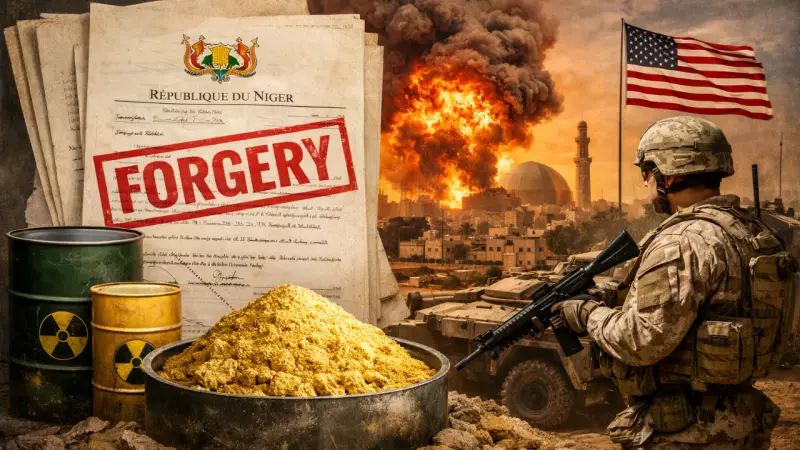
The Niger Uranium Documents That Pushed America Toward War
In the tense months leading up to the Iraq invasion, Western intelligence agencies circulated alarming reports with remarkable speed. These documents claimed Saddam Hussein was actively pursuing nuclear weapons capabilities. The central allegation focused on Iraq seeking uranium from Africa, specifically Niger. This claim became a crucial pillar in the argument for military action.
Officials presented this information with absolute certainty. They suggested Iraq was dangerously close to obtaining nuclear weapons. Yet the evidence supporting these dramatic claims was remarkably thin from the very beginning.
The Dubious Documents That Started It All
The entire controversy began with a set of papers in 2002. These documents supposedly showed Niger agreeing to sell 500 tons of uranium ore to Iraq. People often refer to these as the "Niger letters." Italian military intelligence first circulated them. The Italian magazine Panorama published initial reports.

British and American intelligence services quickly received this information. The UK government referenced these claims in a September 2002 report. They stated intelligence indicated Iraq sought significant uranium quantities from Africa.
Top U.S. officials repeated this allegation publicly throughout late 2002 and early 2003. National Security Adviser Condoleezza Rice mentioned it. Defense Secretary Donald Rumsfeld discussed it. President George W. Bush delivered the most famous reference in his January 2003 State of the Union address.
Bush declared the British government learned Saddam Hussein recently sought significant uranium quantities from Africa. Those sixteen words became central to the administration's case for war. Proponents argued British intelligence had credible information about Iraqi procurement efforts.
Intelligence Experts Raise Immediate Red Flags
Almost immediately, serious problems emerged with the Niger story. Intelligence analysts began questioning the documents' authenticity. The CIA received the forged papers in October 2002. Mission personnel quickly flagged them as likely fakes.
The State Department's intelligence branch shared documents with other agencies while including warnings about their dubious authenticity. By early 2003, the International Atomic Energy Agency examined the materials. Director-General Mohamed ElBaradei reported to the United Nations that the documents were not authentic.
ElBaradei stated the uranium deal allegations were completely unfounded. Within the U.S. intelligence community, skepticism ran deep. A 2002 National Intelligence Estimate included a footnote labeling such claims highly dubious. The report warned that Niger yellowcake sale reports could not be confirmed.
Veteran CIA analysts urged senior officials to drop references to African uranium plots. CIA Director George Tenet successfully persuaded White House staff to remove uranium references from an earlier Bush speech in October 2002.
The Investigation That Contradicted Official Claims
Former ambassador Joseph Wilson traveled to Niger in February 2002 on a CIA mission. His task was investigating the uranium allegations. Wilson had extensive Africa experience. He interviewed local officials including the former prime minister.
Everyone Wilson spoke with denied knowledge of any uranium sales to Iraq. He reported back that the story was baseless. Wilson noted Niger's uranium industry operated under tight French control. Secretly shipping tons of yellowcake would have been impossible.
Upon returning, Wilson told the CIA the entire affair was bogus and unrealistic. Other American officials reached identical conclusions. General Carlton Fulford visited Niger. Ambassador Barbro Owens-Kirkpatrick conducted her own assessment. Both determined the uranium deal was implausible given French oversight of Niger's mines.
Despite these negative findings, the administration continued using the allegation publicly. Wilson's report did not alter the official narrative as war preparations intensified.

The Sixteen Words That Defined a Controversy
President Bush's State of the Union address crystallized the controversy on January 28, 2003. His reference to British intelligence about Iraqi uranium seeking became instantly famous. Critics immediately noted no public evidence supported the claim.
The White House defended the assertion as reflecting allied intelligence. They insisted it was based on British reports and other sources. Later revelations showed administration staff had serious reservations.
Press reports indicated CIA Director Tenet and other analysts warned the Niger evidence was single-sourced and uncorroborated. Deputy National Security Adviser Steve Hadley disclosed that speechwriters removed uranium references from earlier drafts after CIA objections.
Yet by January 2003, the reference reappeared citing only the British government. National Security Adviser Condoleezza Rice later claimed she did not recall knowing about October warnings during speech drafting.
Congressional Investigations and Official Admissions
Congressional investigators examined the sixteen words extensively. A U.S. Senate Intelligence Committee report in July 2004 found British intelligence assessed Iraq attempted Niger uranium negotiations. However, the CIA privately told lawmakers the claim remained unverified.
A British review, the 2004 Butler Report, concluded there were credible indications dating to a 1999 Iraqi visit to Niger. The report suggested discussions over uranium might have occurred. Still, the Butler report admitted overall evidence was inconclusive.
CIA Director Tenet publicly acknowledged the error on July 11, 2003. He stated those sixteen words should never have been included in the president's text. Tenet called this a mistake that should not have happened.
The Aftermath and Sobering Realities
With the Niger claim among other weapons accusations, the United States and allies invaded Iraq on March 20, 2003. The stated goal was eliminating Saddam's alleged nuclear, biological and chemical arsenal.
In subsequent months, no stockpiles of nuclear material or actual weapons of mass destruction were found. U.S. forces discovered Iraq had large sealed yellowcake stores from the 1980s. These were locked under IAEA supervision. The Niger paperwork was never substantiated.
International inspectors noted the purported 500-ton deal would have been nearly impossible to conceal. This quantity represented one-sixth of Niger's total annual uranium output. By mid-2003, the IAEA publicly declared the Niger documents were forgeries.
On March 7, 2003, ElBaradei told the UN Security Council the papers were not authentic. The uranium deal allegation was unfounded. Secretary of State Colin Powell avoided mentioning African uranium claims in his subsequent UN presentation.
In April 2003, coalition troops found no evidence of active Iraqi nuclear or WMD programs. Iraq's declared nuclear reactor and centrifuge projects had been dismantled in the 1990s. The White House conceded in July 2003 it was wrong to include the Niger reference.
The Staggering Human and Financial Costs
The Iraq war exacted a devastating human toll. Approximately 4,500 American service members died in Iraq, with about 32,000 wounded. Britain lost around 179 soldiers. Hundreds more troops from coalition partners were killed.
Civilian deaths are harder to quantify precisely. The Iraq Body Count project estimates at least 150,000-200,000 Iraqi civilians died from violence during the war and occupation. A 2013 Brown University study put the total death toll, including combatants and security forces, at roughly 176,000-189,000.
Financial costs reached astronomical levels. Direct U.S. government spending on the war has been estimated at $1.7 trillion. An additional $0.5 trillion covered veterans' care. When including future obligations like lifetime health benefits, some analysts estimate total costs exceed $6 trillion in present value.
These enormous sums were borrowed, creating interest burdens that diverted resources from other national needs. Beyond dollars and deaths, the Iraq war created widespread regional instability. It fueled a costly insurgency and sectarian conflict that continues affecting the Middle East today.
Enduring Lessons About Intelligence and Policy
The Niger uranium affair exposed multiple systemic failures. Dubious documents circulated through intelligence channels despite early warnings. Professional analysts' concerns were discounted repeatedly. Uncertainty gradually transformed into political certainty through selective presentation.
Safeguards meant to separate analysis from advocacy proved fragile under war pressure. The invasion proceeded based on a broader WMD narrative that did not withstand scrutiny. Governments quietly retracted their most dramatic assertions after military action concluded.
Two decades later, the lessons remain sobering and relevant. Intelligence is inherently imperfect by nature. Policy built upon intelligence must therefore exercise caution and transparency. Officials must honestly acknowledge limitations when making fateful decisions affecting millions of lives.
The chain of failures surrounding the Niger documents demonstrates what happens when these principles are disregarded. It serves as a powerful reminder about the grave consequences when intelligence assessment becomes subordinate to political objectives.