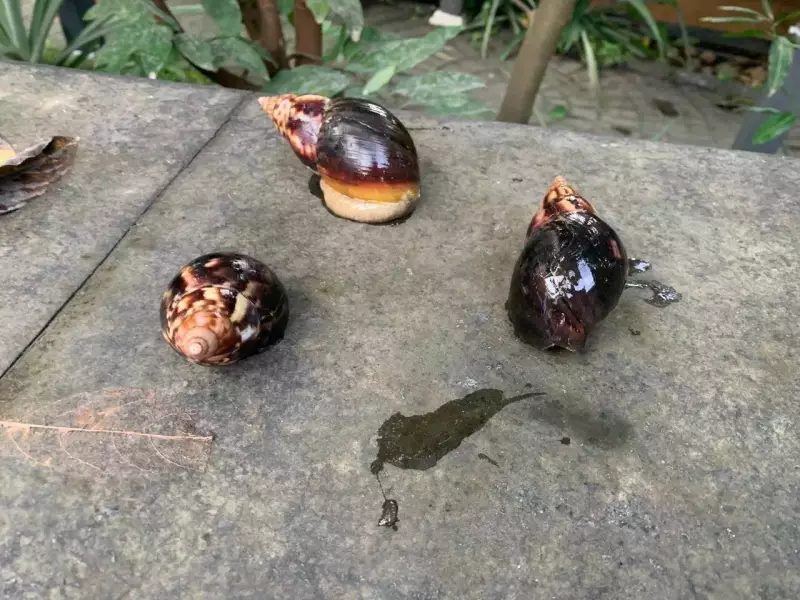
Alien Snails Spotted Across Goa, Raising Ecological Alarm
A silent invasion is creeping across Goa, one giant shell at a time. The Giant African Land Snail (GALS), ranked among the world's most invasive species, is being randomly spotted across the state. Experts now fear these sightings are not isolated incidents but a clear indication that a local population is entrenching itself in Goa's landscape, posing a significant threat to agriculture and native ecology.
From Curious Sightings to Widespread Concern
The species, scientifically known as Achatina fulica, is believed to have first hitched a ride into Goa through various transport routes. The first official specimen of this agricultural pest was reported by scientist Nandkumar Kamat near the Goa University main office back in 2015, followed by two more 4.3-inch-long specimens found nearby in 2016.
While stray cases were reported over the years, recent weeks have seen a surge. These oversized gastropods are now popping up in odd places, from hospital compound walls to residential areas. Their sheer size and unusual colour have prompted many finders to turn to social media for answers.

Andrea Costa, a lab technician from Margao, was one such person. "I saw it climbing the compound wall near a drain and initially mistook it for a water snail," Costa recounted. Photos have since surfaced online from locations including Bogmalo, Varca, and Chicalim, with some even spotted near the chapel at Maquinez Palace in Panaji.
For Eddie Viegas, a ship consultant based in Bogmalo, the encounter was a first. "I saw them for the first time and I wasn't aware that they were pests," he admitted. It was his grandson, kindergarten student Romero Viegas, who first noticed them. "I saw many snails on our compound wall after the first rains. Though there are fewer now, I still see them on our glass window," Romero said.
A Grave Threat to Goa's Environment and Farms
The increasing presence of GALS is more than just a curiosity; it's a grave environmental concern. Manoj Borkar, a member of the Goa State Biodiversity Board (GSBB), explained the core of the problem: "This snail is a hermaphrodite, having both male and female reproductive organs in the same body. Their recruitment dynamics are unbelievable, as they breed fast."
Borkar witnessed the devastating potential of a GALS infestation over a decade ago during a survey in Mysuru. "There were so many snails that they were getting crushed under the wheels on the roads," he recalled. The threat is stark when compared to Goa's native field snails (Pila globosa), which are barely thumb-sized and have seen their population deplete over the years. The exotic invaders, however, can grow up to a staggering 8.6 inches and are voracious eaters, capable of destroying crops within days.
Containing the Invasion: From Salt to Surveillance
So, how can this slimy invasion be stopped? For small numbers, experts suggest a simple remedy: using salt to destroy the snails. However, for a larger population, a more potent solution like a tobacco decoction copper sulphate (TDCS) solution is recommended, as stated by a researcher from the forest entomology department at the Kerala Forest Research Institute.
Borkar advocates for a cautious approach, highlighting an indigenous herbal paste used in Mysuru. "Chemicals are definitely a 'no-no' as they can enter the food chain," he warned. The most critical step, however, is preemptive action. Experts are calling for an urgent state-wide surveillance program to map the spread and prevent a catastrophic infestation.
This effort will require close coordination between the GSBB and the agriculture department, with the active involvement of citizens. A GSBB official confirmed that the gradual spread of the snails is being noted and will be included as a formal concern in Goa's State Biodiversity Strategy and Action Plan. Citizens are urged to report any sightings to help authorities track and manage this new ecological challenge.