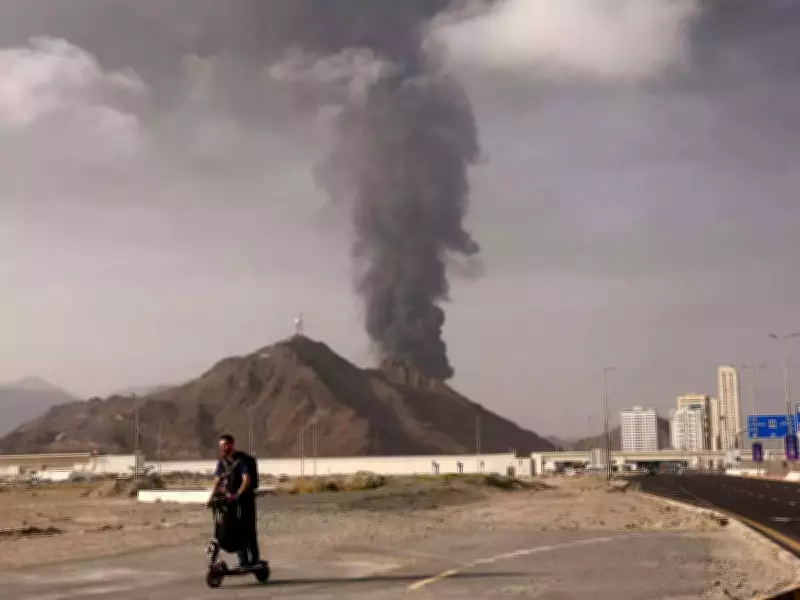
Middle East Conflict's Global Ripple Effects: From Supply Chains to Daily Life
The ongoing Middle East conflict has now surpassed the one-month mark, with its repercussions extending far beyond regional borders and significantly impacting everyday life across the globe. What originated as a confrontation between Iran and Israel is increasingly disrupting international supply chains, driving up costs, and compelling both governments and individuals to adapt to new economic realities.
Expanding Conflict and Immediate Consequences
The war entered a dangerous new phase over the weekend as Yemen's Houthi rebels launched their first direct strike on Israel since hostilities began. This development opens a fresh front in a crisis that has already spread across multiple nations, unsettling global trade and energy markets. As geopolitical tensions intensify, the conflict's impact is being felt across continents, from agricultural production cuts to government-mandated energy conservation measures.
Agricultural Impacts: Australia's Wheat Production
In Australia, farmers are being forced to plant less wheat as fertilizer prices skyrocket. The agricultural sector has urgently called on the federal government for tax relief and support in fertilizer purchases to cope with escalating fuel costs. With the national cabinet preparing to consider additional business assistance, state premiers have emphasized the need for stronger national coordination. While details remain confidential, the government is not expected to implement petrol rationing, with Health Minister Mark Butler advocating for minimal intervention despite growing fuel supply concerns.

The fertilizer crisis has intensified globally, as approximately one-third of the world's fertilizer shipments pass through the Strait of Hormuz, which is currently under Iran's strategic control. In response to this bottleneck, the United States has temporarily lifted sanctions on Venezuela to facilitate fertilizer exports.
Energy Conservation Measures Across Asia
South Korea's Nationwide CampaignSouth Korean citizens are being asked to reduce bathing time and limit appliance usage as the country implements a comprehensive nationwide energy conservation campaign. The government is encouraging shorter showers, bicycle use for short journeys, and avoiding nighttime charging of phones and electric vehicles. This push comes amid growing concerns over oil and gas supply disruptions linked to the broader Middle East conflict.
South Korea's vulnerability is particularly acute, as the country relies entirely on imports for its energy needs. Nearly 70% of its crude oil supply previously moved through the Strait of Hormuz, where tanker traffic has nearly halted since the conflict began. Surging oil prices combined with a weakening won against the dollar are placing significant pressure on South Korea's energy-dependent manufacturing industries.
Thailand's Symbolic and Practical ApproachesThailand has implemented both symbolic and practical energy-saving measures. The prime minister has begun wearing short-sleeved shirts to work, encouraging public emulation, while government offices have been instructed to reduce air conditioning usage. Civil servants have received directives to use stairs instead of elevators and opt for lighter attire over formal suits to decrease overall energy consumption.
Philippines' Energy EmergencyThe Philippines has escalated its energy conservation efforts, with civil servants being asked to avoid elevator use. President Ferdinand Marcos has declared a state of "national energy emergency," warning that the Middle East war poses "an imminent danger of a critically low energy supply." This emergency declaration, set to last for an initial year, was announced shortly after the country's energy secretary revealed plans to increase output from coal-fired power plants to stabilize electricity costs as conflict disrupts gas shipments.

Middle Eastern Nations Adapt to Crisis
Egypt's Comprehensive RestrictionsEgypt has implemented sweeping energy conservation measures, reducing shopping days to five per week amid broader restrictions introduced in response to rising fuel costs. Retail outlets, restaurants, and cafes must now close by 21:00 each night, accompanied by reduced street lighting and limits on remote working. The government describes these as "exceptional measures" to alleviate mounting pressure on energy supplies.
Egyptian Prime Minister Mostafa Madbouly revealed that the country's petrol expenditure has more than doubled in recent months. While tourism-related businesses have received exemptions, the broader economy continues to experience strain due to heavy reliance on imported fuel.
UAE and Qatar: Medical and Commercial DisruptionsConcerns are mounting over delays in critical medical supplies, with cancer drugs at risk of missing delivery timelines as cargo movement slows in key hubs such as Dubai and Doha. Simultaneously, tightening fuel supplies are driving up everyday goods costs. Products like track suits made from petrochemicals could become more expensive, while party balloons may become harder to source as disruptions affect Qatar, which produces approximately one-third of the world's helium as a natural gas by-product.
Global Economic and Logistical Challenges
Bangladesh's Export CrisisIn Bangladesh, cancelled flights have disrupted textile exports, causing significant build-ups of garments at airports. The country exports nearly $50 billion annually, with ready-made garments constituting more than 80% of total shipments. Dhaka faces particularly high risks, as nearly 90% of its fuel imports originate from the Middle East. Concurrently, its primary markets—the European Union and the United States—rely heavily on shipping routes now experiencing disruptions.
Event Cancellations and Regional ImpactsThe conflict has begun disrupting global events, with Formula 1 races in Bahrain and Saudi Arabia cancelled due to missile threats targeting Gulf nations. This represents just one example of how geopolitical tensions are affecting international activities beyond traditional economic sectors.
United States: Inflation and Housing ConcernsIn the United States, rising oil prices are fueling inflation fears, driving up mortgage rates and making home purchases more expensive. Consumers are likely to feel strain through both domestic commerce and interconnected global trade networks. With supply chains stretching across regions—where raw materials are sourced in one location, manufactured in another, and shipped to consumers—disruptions are expected to filter through to everyday goods and services.
Agricultural and Energy Adjustments Worldwide
Brazil's Sugar Production ShiftsSugar prices are experiencing mixed trends as Brazil's mills adjust production strategies. While high energy prices are pushing some operations toward biofuel production, supply disruptions linked to the Strait of Hormuz are providing some support to sugar prices. However, prices fell recently due to increased production in Brazil, where mills are using more cane for sugar instead of ethanol. Data from Unica shows that 2025–26 Centre-South sugar output increased 0.7% year-on-year to 40.25 million metric tons, with 50.61% of cane used for sugar compared to 48.08% last year.
Stringent Government MeasuresSome governments have implemented more drastic measures to manage the crisis. Sri Lanka has declared Wednesdays as public holidays to reduce commuting and conserve fuel, while Laos has moved to a three-day school week. Sri Lanka remains particularly vulnerable, importing approximately 60% of its energy needs and maintaining reserves lasting only about one month.
In response, Sri Lankan authorities have reintroduced a QR-based fuel rationing system similar to that used during the 2022 economic collapse. Under this system, motorbikes receive eight liters of petrol weekly, three-wheelers receive 20 liters, cars receive 25 liters, buses receive 100 liters of diesel, and lorries receive 200 liters.
Conclusion: A Widening Global Crisis
As the conflict persists, its effects are becoming increasingly difficult to contain, cutting across borders and economic sectors with growing intensity. What began as a regional crisis is now fundamentally reshaping global trade flows, energy consumption patterns, and daily life worldwide. Countries are navigating an expanding web of economic and logistical challenges, demonstrating how interconnected the modern global economy has become and how vulnerable it remains to geopolitical disruptions in critical regions.