EIA Report Greenlights Goa Bridge Construction in CRZ Zones
The Environment Impact Assessment (EIA) report for the proposed Salvador do Mundo to Chorao bridge in Goa has concluded that constructing the bridge is a permissible activity within Coastal Regulation Zone (CRZ) I-A and CRZ-III, also known as the no-development zone. This finding was submitted to the Goa Coastal Zone Management Authority (GCZMA), marking a significant step forward for the long-awaited infrastructure project.
Key Recommendations and Environmental Concerns
Despite the approval, the EIA report has strongly recommended that a public hearing be conducted for all stakeholders and residents of the two villages. This hearing aims to address their concerns and suggestions regarding the bridge, which has already evoked mixed reactions from the local community. Some villagers oppose the project, while others support it due to the perceived need for improved connectivity.
A major environmental concern highlighted in the report is the removal of 621 mangrove trees required for the bridge's construction. Mangroves play a crucial role in coastal ecosystems, and their loss could impact local biodiversity and erosion control.

Project Specifications and Regulatory Hurdles
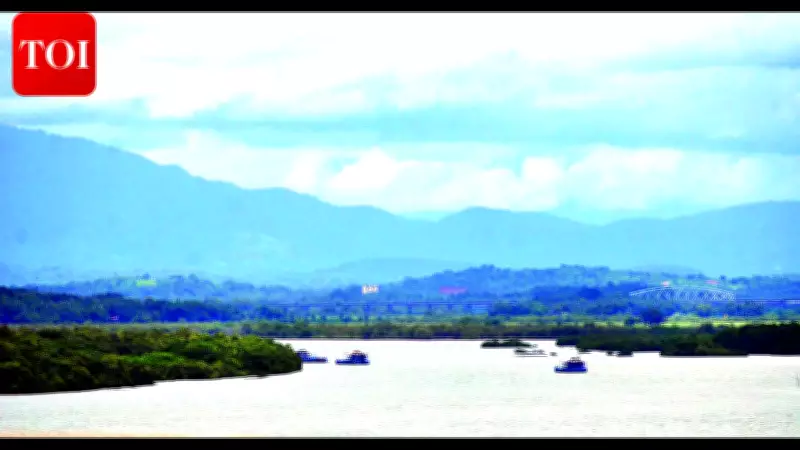
The bridge, which will span the Mapusa river to connect Salvador do Mundo and Chorao, is being developed by the Goa State Infrastructure Development Corporation (GSIDC). The proposed design features an arch structure with a total bridge length of 1.6 kilometers. Additionally, it includes 429 meters of approach road on the Salvador do Mundo side and 234 meters on the Chorao end.
The GCZMA has noted that the bridge will comprise 20 pillars, with pillars P13 and P14 serving as the main supports. These pillars will be constructed in a riverine area adjacent to the river banks, where mangroves are present. This location falls under CRZ III river/creek NDZ as per the Coastal Zone Management Plan of 2011.
In response to the EIA findings, the GCZMA has sought a detailed presentation on the project from GSIDC. The corporation has applied for a No Objection Certificate (NoC) from the coastal authority, as the project area lies within the CRZ, necessitating strict regulatory oversight.
Environmental Safeguards and Project History
The EIA report emphasizes several environmental safeguards to mitigate the project's impact. It states that no construction debris should be disposed of in the CRZ area, and the bridge must not affect the natural flow of the river water. Furthermore, the report calls for the effective implementation of an environment management plan.
Specifically, it recommends that mangrove plantation activities be carried out in consultation with the biodiversity board and the forest department to compensate for the loss of trees. These measures are critical to ensuring the project aligns with sustainable development goals.
The Salvador do Mundo-Chorao bridge has a long history, with proposals dating back over three decades. The first tender for the project was issued in late 2013 at an estimated cost of Rs 141 crore. In the 2023 state budget, Rs 250 crore were earmarked for its construction. Recently, GSIDC invited bids for the project at a revised cost of Rs 274.8 crore, reflecting updated financial projections and potential inflationary adjustments.
As the project moves forward, balancing infrastructure development with environmental protection and community engagement remains a key challenge for authorities in Goa.