

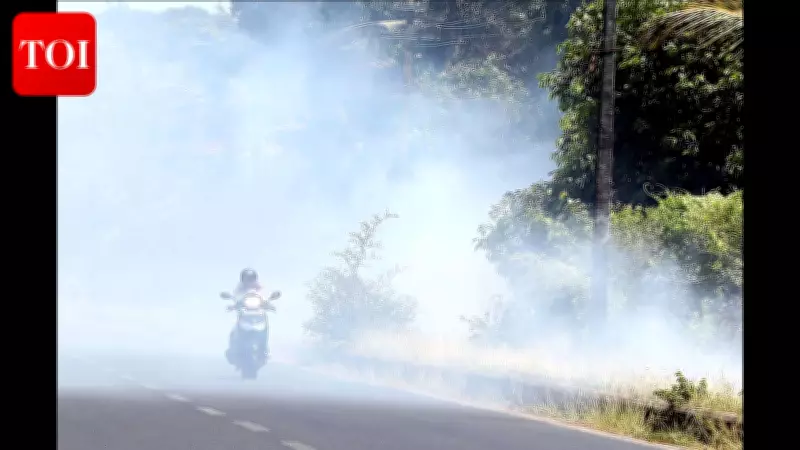
Goa Fire Department Battles 709 Dry Grass Fire Incidents in First Quarter of 2026
The Goa Fire Department has reported a significant surge in dry grass fire incidents, receiving a total of 709 emergency calls between January and March 2026. This alarming trend highlights the growing vulnerability of the state's green cover due to increasingly unpredictable weather patterns.
Primary Causes and Official Concerns
According to fire department officials, these fires are predominantly triggered by a combination of prolonged dry spells, soaring temperatures, and critically low humidity levels. An official from the department emphasized the severe impact, stating, "The green cover in Goa has become highly vulnerable because of erratic weather patterns throughout the year. Raging fires not only destroy crops and plantations but also devastate the livelihoods of many."
Fortunately, amidst these hundreds of incidents, there were no reports of injuries or fatalities. However, the environmental and economic damage remains substantial.

District-Wise Breakdown: Bicholim Tops the List
A detailed analysis of the calls reveals a clear geographic pattern:
- Bicholim recorded the highest number of incidents with 92 calls. The region's extensive vegetation on its plateau, often covered in dry grass during the arid season, makes areas like Bordem, Amona, and Karapur particularly prone to frequent blazes.
- Pernem followed with 79 emergency calls.
- Mapusa reported 67 dry grass fire incidents.
Monthly Trends and Escalating Risks
The data shows a concerning monthly escalation:
- February 2026 witnessed the peak, with 337 reported cases.
- January 2026 followed closely with 287 calls.
An official heading the state fire control room noted, "Traditionally, this is the season for higher dry grass fire calls. However, with shifting climate patterns, we are now witnessing these incidents throughout the year. The intense heat causes these fires to spread rapidly, often destroying valuable crops, especially cashew plantations."
Human Negligence and Assessment of Losses
Beyond natural factors, human carelessness plays a significant role. The official pointed out that improperly discarded cigarette butts and matchsticks are major contributors to igniting these blazes.
Regarding the aftermath, the official explained the protocol for damage assessment: "In cases of dry grass fires, financial losses are calculated only when the affected plantations or areas are privately owned. Otherwise, the destruction of green cover and associated plantations in public spaces is recorded as an ecological loss." This distinction underscores the broader environmental cost borne by the community when public lands are ravaged by fire.






