

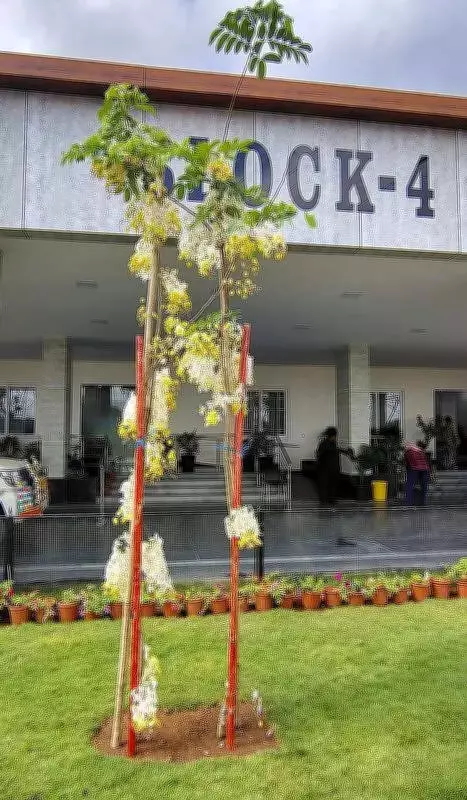
Golden Flower Trees Transform Amaravati's Landscape in Green Initiative Success
A thoughtful environmental project in Andhra Pradesh's capital region is delivering spectacular visual and ecological results, with the ornamental Cassia fistula tree—commonly called Rela or the golden flower tree—demonstrating exceptional adaptability to Amaravati's climate conditions. The initiative, which began as a modest pilot, has blossomed into a promising model for sustainable urban greening.
Pilot Project Yields Vibrant Results
Originally planted in front of Block-4 at the Amaravati Development Corporation office in Rayapudi, the Cassia fistula specimens have flourished remarkably quickly. Within a short timeframe, these trees have produced dense clusters of white-yellow blossoms extending from their base to canopy. While globally recognized for their striking yellow flowers, the variation observed in Amaravati presents a unique aesthetic appeal that has captured official attention.
"The success of this pilot has been truly encouraging," noted officials involved in the project. "We're seeing how climate-resilient species can simultaneously enhance beauty and environmental value."

Expansion Aligns with Broader Capital Vision
This green initiative directly supports Chief Minister N Chandrababu Naidu's comprehensive vision for developing Amaravati as a world-class capital city adorned with diverse flora from across India and internationally. Inspired by the pilot's positive outcomes, greenery officials have significantly expanded the plantation effort, adding more than 40 additional Cassia fistula saplings in and around the Secretariat complex.
The cultivation approach emphasizes sustainability, with plants being nurtured using organic inputs like Jeevamrutam rather than chemical alternatives. This methodology ensures environmentally responsible growth while maintaining the trees' health and vitality.
Beyond Aesthetics: Ecological and Medicinal Benefits
ADCL CMD Lakshmi Parthasarathy Bhaskar highlighted the multifaceted advantages of incorporating Cassia fistula into Amaravati's urban landscape. "Beyond their visual appeal, these trees offer significant ecological and medicinal value," she explained. "Cassia fistula is known to release higher oxygen levels than many other species, directly contributing to improved urban air quality."
She has directed officials to integrate such species into broader plans for enhancing green cover and promoting healthier living conditions throughout the capital region.
The tree holds substantial cultural and medicinal importance across India. Widely utilized in Ayurvedic formulations, Cassia fistula is valued for its therapeutic properties, including applications in certain anti-aging treatments. In Kerala, its flowers are celebrated as the "Vishu flower," symbolizing prosperity and renewal during the Vishu festival.
Flowering Patterns Create Seasonal Spectacles
One of the tree's most appealing characteristics is its flowering pattern. Cassia fistula typically blooms twice annually, with peak flowering occurring between March and May, followed by a secondary phase during October and November. During peak bloom periods, the tree sheds most of its leaves, allowing the flowers to dominate the entire structure in cascading clusters.
Each mature tree can produce between 500 and 1,000 flower bunches, creating visually striking landscapes that transform urban spaces into seasonal attractions.
Future Directions for Sustainable Urban Development
With Cassia fistula's successful adaptation in Amaravati, city planners are now exploring opportunities to scale up similar experiments. The approach blends urban infrastructure development with sustainable, aesthetically rich greenery to shape the emerging capital's distinctive identity.
This initiative represents a forward-thinking model for how cities can integrate environmental considerations with urban planning, creating spaces that are both functional and beautiful while supporting ecological health and community wellbeing.






