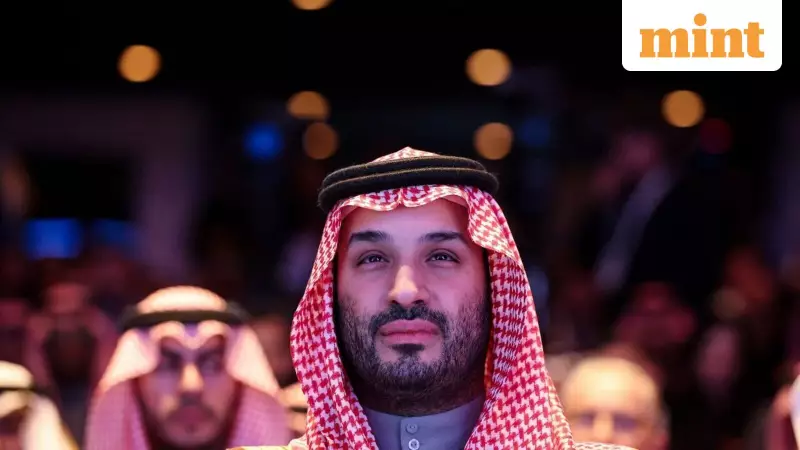
In a significant diplomatic development, key Gulf allies Saudi Arabia and the United Arab Emirates have explicitly stated they will not assist the United States in any potential military strike against Iran, creating substantial limitations for the Trump administration's strategic options.
Gulf States Take Firm Stance Against Military Involvement
Saudi Arabia officially ruled out on Tuesday the use of its airspace and territory for any potential U.S. attack targeting Iran. This decisive move followed a similar declaration made on Monday by the United Arab Emirates' foreign ministry, creating a unified front of resistance against American military planning in the region.
The statements from these two crucial Gulf nations represent a notable foreign policy setback for the Trump administration as it attempts to increase pressure on Tehran. Iran has consistently defied Washington's demands to cease uranium enrichment activities and end the violent suppression of protesters within its borders.

Crown Prince's Direct Communication with Iran
Crown Prince Mohammed bin Salman, Saudi Arabia's de facto ruler, clearly articulated his country's position during a telephone conversation with Iranian President Masoud Pezeshkian. According to an official Saudi readout of the Tuesday call, the crown prince emphasized that the kingdom "will not allow its airspace or territory to be used for any military actions against Iran."
This diplomatic communication highlights Saudi Arabia's deep concerns about being drawn into a direct conflict with Iran, particularly following Tehran's 2019 attacks on Saudi oil facilities during President Trump's first term in office.
Strategic Calculations Behind Gulf States' Decisions
Karim Sadjadpour of the Carnegie Endowment for International Peace provided analysis on the complex motivations behind the Gulf states' positions. "Both Saudi Arabia and the UAE have been targets of attacks by Iran and their proxies. While a degraded and less threatening Iranian regime aligns with their strategic interests, they remain deeply worried about regional unrest and potential Iranian retribution. They clearly do not want to serve as the tip of the American spear in any military confrontation," Sadjadpour explained.
When questioned about these developments, a White House spokesperson stated that President Trump "is watching the situation in Iran very seriously and all options remain on the table if the regime executes protesters."
Military Implications and Operational Challenges
Former high-ranking American military officers acknowledged that the Saudi and UAE decisions would significantly complicate the Trump administration's planning for potential military action, though they noted it wouldn't completely prevent operations if Washington remained determined to proceed.
Retired Air Force Lieutenant General David Deptula, who played a crucial role in the 1991 Desert Storm air campaign against Iraq, offered his perspective. "From a military standpoint, these restrictions increase operational complexity and costs for any U.S. action against Iran, but they won't necessarily stop it," Deptula stated. He further noted that the Gulf states' statements would likely reduce "the political cost for Tehran of resisting external pressures."
Alternative Military Options for United States
The Trump administration has already deployed significant military assets to the region, including the aircraft carrier USS Abraham Lincoln with accompanying warships equipped with cruise missiles. Additionally, several squadrons of F-15E fighters remain stationed in Jordan.
Despite the Gulf allies' restrictions, the United States retains alternative military capabilities. These include potential strikes utilizing B-2 stealth bombers and other long-range bombers that could operate from the continental United States or be positioned at strategic locations like the Diego Garcia base in the Indian Ocean.
Retired Army General Joseph Votel, who led U.S. Central Command from 2016 to 2019, elaborated on these alternatives. "This development could force greater reliance on carrier-based aviation or long-range assets originating from CONUS or bases such as Diego Garcia," Votel explained, using the military acronym for the continental United States.

Votel added that the Gulf states' position "places pressure on other regional states who might be considering support for U.S. operations" and ultimately means that "any military action would carry more of a distinctly U.S. character rather than representing a robust regional coalition against Iran."
Complex U.S.-Saudi Relationship Context
President Trump has cultivated particularly close ties with Crown Prince Mohammed bin Salman, who visited the White House in November. During that visit, Trump promised to sell advanced F-35 fighter jets to Saudi Arabia and publicly defended the crown prince against allegations regarding the killing of Washington Post journalist Jamal Khashoggi.
In a defense cooperation agreement, Saudi Arabia confirmed the United States as its "primary strategic partner," and both nations announced an arrangement providing Riyadh with enhanced access to American artificial intelligence technologies, highlighting the multifaceted nature of their relationship despite current disagreements over Iran policy.