

Haryana Forest Department Takes Action Against Illegal Dumping in Aravalis
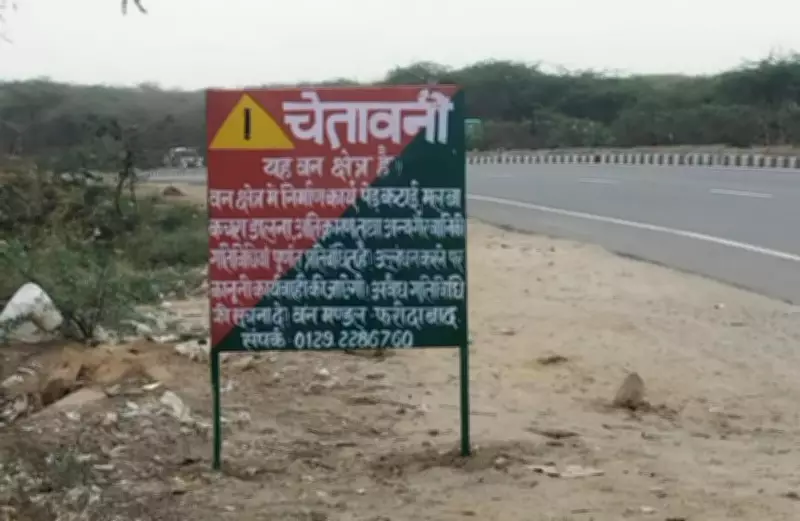
The Haryana forest department has launched a comprehensive initiative to tackle the persistent problem of illegal waste dumping in the ecologically sensitive Aravali forest regions. In response to ongoing violations, the department has installed multiple warning signboards across vulnerable stretches in Faridabad and introduced a dedicated helpline to encourage citizen participation in reporting environmental offenses.
Warning Signboards and Helpline Implementation
The newly installed signboards have been strategically placed along key roadside patches and entry points leading into forest areas throughout Faridabad. These boards clearly state that the land falls under protected forest zones and explicitly prohibit any form of waste dumping. The warnings emphasize that violators will face legal action under both forest conservation and environmental protection laws. Each signboard prominently displays a contact number specifically designated for reporting dumping incidents and other violations.
With the helpline now operational, forest department officials are actively seeking public cooperation to address enforcement gaps. Department representatives have confirmed that patrolling has been intensified in identified vulnerable areas. All information received through the helpline will undergo thorough on-ground verification, followed by appropriate action including penalties and immediate waste removal operations.

Background and Ecological Impact
This proactive measure follows recent clearance operations at six identified dumping hotspots where construction debris and municipal waste had accumulated within Faridabad's forest lands. Officials noted that these locations had become repeated targets for illegal disposal due to their easy accessibility from nearby roads.
Faridabad divisional forest officer Jhalkar Uyake explained the severity of the situation: "Dumping represents one of the most significant threats to these forest ecosystems. We urgently need citizens to immediately report such activities so our response teams can intervene quickly. Waste dumping fundamentally alters natural habitats, contaminates soil and water resources, and destroys native vegetation. Additionally, garbage, particularly food waste, attracts wildlife toward human settlements, dramatically changing their natural behavioral patterns."
Wildlife and Road Safety Concerns
The altered movement patterns of wildlife have created serious road safety implications along critical corridors including the Gurgaon-Faridabad Road and Pali Road, where forest patches run parallel to high-speed traffic routes. Animals drawn to dumped waste frequently stray onto roadways, significantly increasing the risk of vehicle collisions.
Wildlife expert and ecologist Sunil Harsana provided critical context: "Despite repeated clean-up campaigns, illegal dumping continues to resurface because forest edges are perceived as convenient disposal points. This practice is not merely illegal—it poses genuine dangers. Garbage accumulation within forest areas actively attracts wildlife toward roads, and we have already lost numerous animals, including multiple leopards, to vehicle collisions along the Gurgaon-Faridabad and Pali road networks. The newly installed signboards clearly communicate that this is protected forest land, while the helpline ensures citizens can report dumping incidents immediately, allowing authorities to intervene before further habitat degradation or wildlife fatalities occur."
Documented Wildlife Casualties
The region has already experienced multiple wildlife fatalities, with leopards being particularly affected. Official records and reports indicate that at least seven leopards have been killed in vehicle collisions on the Gurgaon-Faridabad Road and adjoining highways since 2015. Recent incidents include a two-year-old female leopard found dead in a suspected hit-and-run case in 2025, while earlier casualties include leopard cub deaths recorded in 2015 and 2019 along the same stretch.

Wildlife specialists attribute these repeated roadkill incidents to fragmented habitats and increasing human interference. The Aravali forests in Gurgaon and Faridabad constitute a crucial leopard corridor, but highways cutting through these ecosystems, combined with persistent dumping and habitat degradation, are forcing animals into closer proximity with roadways.
Legal and Ecological Implications
Forest department officials have underscored that dumping in notified forest areas constitutes illegal activity amounting to both encroachment and degradation of forest land, violating provisions of the Indian Forest Act and established environmental norms. Beyond legal violations, they emphasize that the ecological damage caused by such dumping is severe and long-lasting, affecting biodiversity, soil health, water quality, and overall ecosystem balance in one of northern India's most important forest regions.





