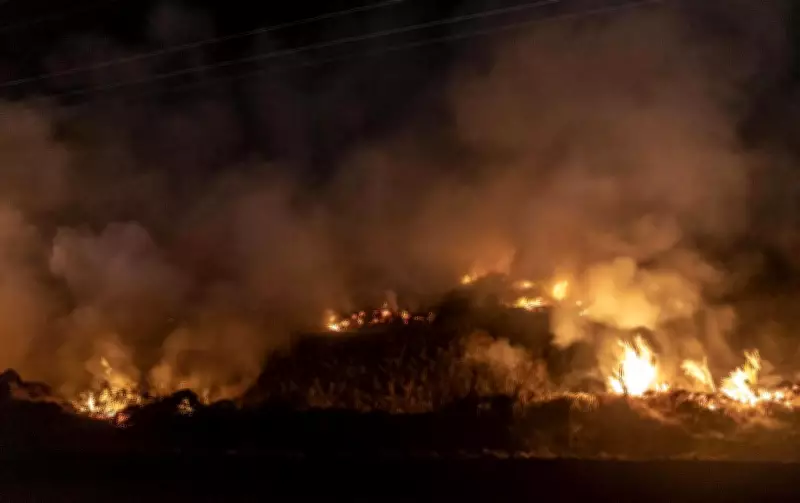
Gurgaon: Wheat residue burning in Haryana saw a dramatic spike this April, with 1,565 farm fire incidents recorded between April 1 and 30, according to the Indian Council of Agricultural Research (ICAR). This marks a 157% increase over the 608 cases reported during the same period last year.
Rebound after controlled seasons
While the count remains below the 2,033 cases recorded in April 2022, this year's surge signals a rebound in open-field residue burning after two relatively controlled seasons — 266 cases in 2023 and 177 in 2024. Fire activity was moderate through most of April before a dramatic late-month spike, particularly after April 24, suggesting accelerated post-harvest field clearing as wheat harvesting peaked across districts. The steepest escalation came in the final five days, when incidents rose rapidly from around 500 to more than 1,500.
Top hotspots identified
Jind emerged as the biggest hotspot with 264 incidents, followed by Rohtak (241), Jhajjar (183), Sonipat (127), Kaithal (115), Karnal (114), Sirsa (98), Panipat (85), and Hisar (81). These districts, largely concentrated in the agrarian belt, accounted for the bulk of the state's fire burden. Mahendragarh reported zero incidents for the fifth straight year, while Panchkula and Rewari remained among the lowest. The city recorded 19 incidents — higher than zero cases last year but low compared with major farming districts. Faridabad logged 20 cases and Palwal 38.

Year-round threat to air quality
Experts warned that this summer's fire counts surpassing even the 2025 paddy season figures is a significant red flag. "The amount of smoke produced doesn't change with the season, but how our atmosphere handles it does. In winter, the air is heavy and stagnant, trapping pollution at the surface. In summer, while it disperses better, it travels farther to haunt downwind cities. Stubble burning is no longer just a winter crisis — it's an escalating, year-round threat to air quality," said Sunil Dahiya, founder and lead analyst at Enviro Catalysts.
The rise is significant because wheat stubble burning, though less extensive than paddy-season fires, contributes to localised pollution, soil nutrient loss, and regional air quality deterioration. The spike is also likely to draw attention from pollution control agencies, as NCR authorities increasingly monitor year-round biomass burning rather than focusing solely on winter paddy fires.
Government response
Officials said district teams are actively monitoring the situation and coordinating with farmers to promote in-situ and ex-situ crop residue management. "Our focus remains on awareness, machinery support, and timely intervention to discourage burning. Wheat residue burning is being closely reviewed at the district level, and corrective measures will be strengthened ahead of the paddy season," said an official from the state agriculture department.
Check AP SSC 10th Result 2026 on TOI. You can also check Gold Rate in Gurgaon, Silver Rate in Gurgaon, Bank Holidays in Gurgaon, Public Holidays in Gurgaon, Gurgaon AQI, and Weather in Gurgaon.
About the Author: Ipsita Pati is an environment journalist with over a decade of experience, currently reporting for The Times of India. She covers climate change, land use, and green laws, with a focus on regulatory accountability. Her work highlights the environmental implications of policy decisions and development on ground.