

Hidden Sewage Stream Threatens Nagpur's Vital Gorewada Lake
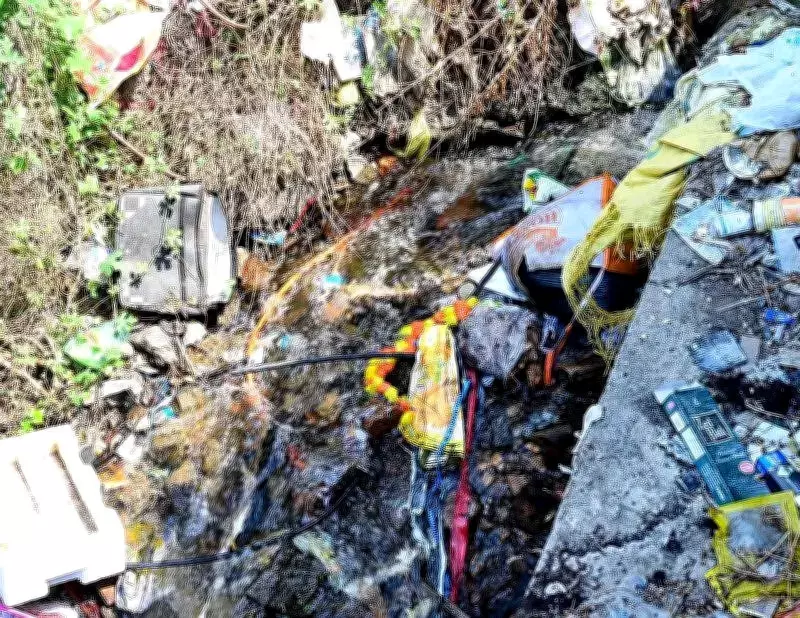
A comprehensive ground investigation conducted on Saturday has exposed a concealed pollution pathway endangering Gorewada Lake in Nagpur. The probe revealed a continuous flow of untreated sewage originating from the forested rear section of Gorewada International Zoo, carrying substantial plastic waste and urban debris deep into the surrounding woodland before ultimately draining into the lake.
Contradicting Official Narratives
The discovery directly challenges previous assertions by the Nagpur Municipal Corporation that sewage from the Dabha area was primarily responsible for contaminating Gorewada Lake. A parallel examination of sewage treatment facilities operated by the Nagpur Improvement Trust in Dabha demonstrated that the 5 MLD plant managed by Vishwaraj Enviro Private Limited is currently processing approximately 1.5 MLD of sewage, which is redirected into a nullah toward Friends Colony.
At Hazaripahad, an additional 4 MLD facility further treats wastewater before releasing it into a channel that eventually joins the Pili River near Vincent Pallotti School. "There is no direct flow of Dabha sewage into Gorewada," emphasized local corporator Shailesh Pandey, who participated in the inspection, effectively disputing the official account and redirecting attention toward an unidentified source within or adjacent to the forest zone.

The Alarming Pollution Pathway
The sewage stream begins its journey from the forested backside of the zoo, crosses Katol Road through a culvert, and enters the lake from its western boundary. The discharge was observed to be continuous, grey in color, and emitted a foul odor, raising serious concerns about unmonitored sewage infiltrating one of Nagpur's crucial water reservoirs.
What renders this finding particularly disturbing extends beyond the mere presence of sewage to what it transports. The stream meanders through the forest, leaving behind a trail of:
- Plastic waste and polythene bags
- Torn clothing and fabric materials
- Various household debris and urban refuse
Garbage is dispersed across the forest floor, trapped between rocks, entangled in root systems, and buried beneath vegetation. This pattern provides clear evidence that waste is being conveyed by flowing sewage rather than being manually dumped within the protected forest area.
Severe Ecological Consequences
The environmental impact is both visible and substantial. Natural drainage channels are becoming obstructed, while soil quality is deteriorating, transforming sections of the forest floor into zones of accumulated waste. In multiple locations, stagnant greenish water with algal growth indicates prolonged contamination and nutrient accumulation—classic indicators of sewage-induced ecological stress.
The stream's origin behind the zoo and its uninterrupted flow into the lake raises critical questions:
- Where is this sewage actually originating?
- Why is it circumventing existing treatment infrastructure?
- How has such significant discharge remained undetected by authorities?
Systemic Monitoring Failures Exposed
This development highlights substantial gaps in surveillance and coordination among civic agencies. While functional sewage treatment plants exist in Dabha, the actual pollution appears to be entering through a completely different and untracked route.
Gorewada Lake, which serves as an essential backup water source for Nagpur, has historically been vulnerable to contamination. However, the emergence of this concealed inflow channel within the forest, combined with visible garbage accumulation, suggests a more complex and deeply entrenched problem than previously acknowledged.
Sewage Transforms Forest into Dumping Corridor
The investigation confirmed that the sewage stream entering Gorewada transports considerable quantities of plastic and household waste into the forest ecosystem. Polythene bags, food packaging, torn fabrics, and other debris were discovered scattered along the stream's path, wedged between rocks and vegetation.

This distribution pattern unequivocally demonstrates that garbage is being transported through flowing sewage rather than being locally discarded. As the stream progresses toward the lake, it deposits layers of waste, effectively converting portions of the forest into a dumping corridor. This accumulation is obstructing natural channels, degrading soil integrity, and posing significant threats to wildlife, underscoring a serious failure in intercepting waste upstream.
With conflicting claims and mounting on-ground evidence, the necessity for a comprehensive audit of all inflow points into Gorewada Lake has become urgent. Until the actual source is identified and effectively sealed, untreated sewage and the waste it carries will continue to silently degrade both the lake and its surrounding forest ecosystem.





