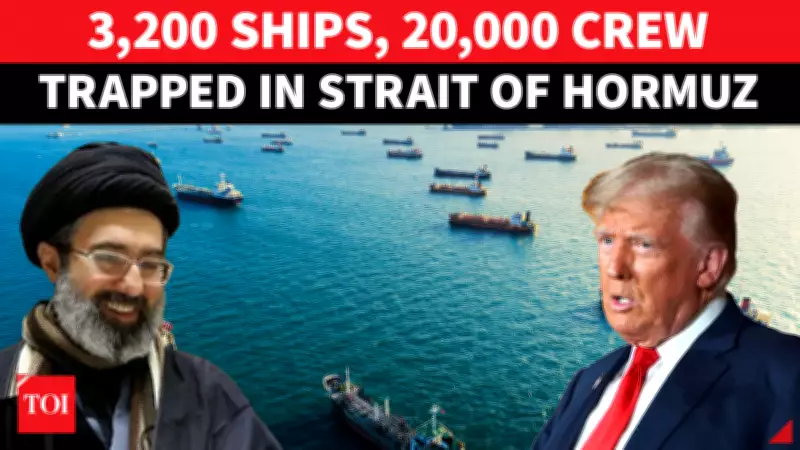
Strait of Hormuz Crisis: 3,200 Ships, 2,000 Crews Stranded Amid Iran Tensions
Maritime movement through the strategic Strait of Hormuz has dramatically slowed under heightened regional tensions, with commercial tankers, cargo ships, and naval patrols navigating one of the world's most sensitive waterways with extreme caution. Shipping trackers reveal that over 3,200 vessels and approximately 2,000 seafarers are currently stuck or facing significant delays, contradicting recent claims from Iran about the strait's reopening.
Altered Routes and Escalating Fears
As fears of escalation between Iran and Western forces intensify, shipping companies have been forced to alter their routes and delay passages through the chokepoint. This critical waterway handles a substantial share of global oil flow, making any disruption a major concern for international energy markets. The situation has turned the strait into a live barometer of geopolitical risk, with ripple effects being felt worldwide.
Surge in Insurance Premiums and Naval Presence
In response to the heightened tensions, insurance premiums for vessels passing through the Strait of Hormuz have surged significantly. Simultaneously, naval escorts have increased their presence near the chokepoint to protect commercial shipping interests. The combination of altered shipping patterns, increased insurance costs, and enhanced naval patrols underscores the severity of the current crisis.

Global Energy Market Impact
The disruption at the Strait of Hormuz is having profound effects on global energy markets. As one of the world's most important oil transit routes, any slowdown or blockage can lead to:
- Increased oil prices due to supply concerns
- Market volatility as traders react to geopolitical developments
- Potential supply chain disruptions for energy-dependent industries
- Long-term strategic reassessments of global shipping routes
The current situation highlights the fragile nature of global energy security when geopolitical tensions flare in critical maritime corridors.
Contradiction with Iranian Claims
Despite recent statements from Iranian officials suggesting normal operations in the Strait of Hormuz, the reality on the water tells a different story. The significant number of stranded vessels and delayed passages directly contradicts claims of smooth reopening, indicating that the geopolitical standoff continues to impact commercial shipping operations substantially.
The ongoing crisis serves as a stark reminder of how geopolitical tensions can quickly translate into real-world economic consequences, particularly when they affect vital global trade arteries like the Strait of Hormuz.