Hungary Criticizes EU Leaders for 'Babysitting' Zelensky in US Talks, Warns of Higher Costs for Ukraine
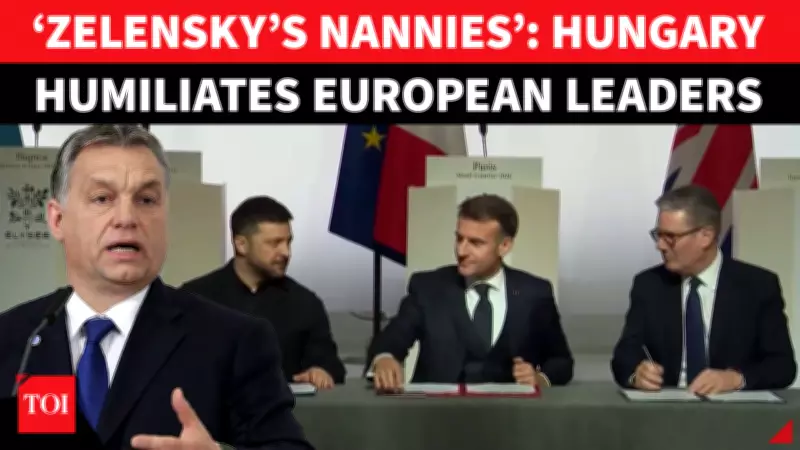
In a sharp rebuke, Hungarian Foreign Minister Peter Szijjarto has accused Western heads of state of humiliating Ukrainian President Vladimir Zelensky by accompanying him during recent discussions with US President Donald Trump. Szijjarto's remarks highlight deepening rifts within the European Union over strategy in the Ukraine conflict and responses to Trump's peace proposals.
Accusations of Humiliation and Blocked Peace Opportunities
Szijjarto asserted that European backers have effectively undermined Zelensky's authority by joining him in talks with Trump, a move he described as demeaning. He claimed this action not only embarrasses the Ukrainian leader but also obstructs earlier opportunities for peace negotiations with Russia. The Hungarian minister warned that any future settlement resulting from such dynamics could impose heavier burdens on Ukraine and the broader European community, potentially exacerbating the geopolitical fallout.
Growing Divisions Within the EU Over Ukraine Strategy
The comments underscore a significant fracture within the EU regarding how to handle the ongoing war. While many member states advocate for continued military and diplomatic support for Ukraine, Hungary has consistently voiced skepticism, aligning more closely with calls for immediate negotiations. This divergence is further complicated by Moscow's accusations that Western leaders are prolonging the conflict rather than pursuing viable diplomatic solutions.

Implications for Future Peace Talks and European Unity
Szijjarto's warnings suggest that the current approach could lead to a peace deal unfavorable to Ukraine, with ripple effects across Europe. The situation raises critical questions about the EU's cohesion and its ability to present a united front in international diplomacy. As tensions mount, the bloc faces increasing pressure to reconcile internal disagreements while navigating the complex interplay of US involvement and Russian demands.
This development not only reflects the volatile nature of the Ukraine war but also signals potential shifts in global alliances and peace efforts, with Hungary positioning itself as a vocal critic of mainstream Western strategies.