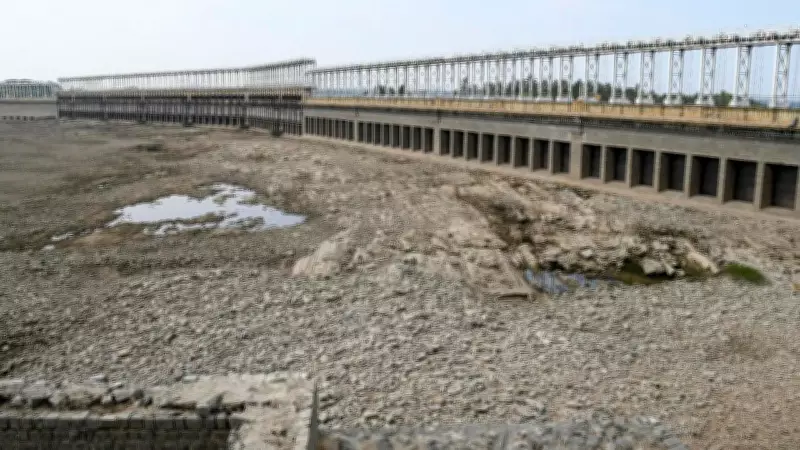
New Delhi: India's 40% deficit in cumulative monsoon rainfall has significantly impacted live water storage in the country's 166 major reservoirs, which has dropped to nearly 27.5% of their total storage capacity. Although the overall storage level remains better than the average of the last ten years for this period, the decline linked to depressed rainfall due to El Nino is a cause for concern. The functional efficiency of these reservoirs is critical for irrigation, domestic use, and industrial requirements, including hydro-electric power generation. The slow progress of the monsoon could lead to further declines, posing risks to farming operations and other uses.
Hydro-Electric Projects Affected
Twenty of these 166 major reservoirs are associated with hydro-electric projects, including Gobind Sagar in Himachal Pradesh, Thein Dam in Punjab, Rana Pratap Sagar in Rajasthan, Hirakud in Odisha, Panchet Hill in Jharkhand, Ukai and Sardar Sarovar in Gujarat, and Pench in Maharashtra, among others.
Regional Storage Variations
Data from the Central Water Commission on live storage shows that 11 reservoirs in the northern region and 28 in the central region have better storage than the same period last year. However, the situation in the eastern (27 reservoirs), southern (47), and western (53) regions is worrisome. The total live storage capacity of these 166 reservoirs is approximately 183.6 billion cubic metres (BCM), which is over 71% of the estimated 257.8 BCM created nationwide.

State-Wise Comparison
Reservoirs in Assam, Bihar, Chhattisgarh, Gujarat, Himachal Pradesh, Madhya Pradesh, Nagaland, Odisha, Punjab, Uttar Pradesh, and Uttarakhand have better storage percentages than last year. In contrast, reservoirs in Andhra Pradesh, Goa, Jharkhand, Karnataka, Kerala, Maharashtra, Meghalaya, Mizoram, Rajasthan, Tamil Nadu, Telangana, Tripura, and West Bengal have lower storage levels.
Monsoon Progress Comparison
In 2025, the monsoon arrived over Kerala eight days early and progressed well, filling reservoirs in June. This year, the monsoon onset was three days late, and its progress remains weak.