New Delhi: The Indian government has announced a major expansion of its weather monitoring network. Minister of Earth Sciences Jitendra Singh revealed plans on Thursday to install 200 new Automatic Weather Stations across four major metropolitan areas. The cities set to receive these advanced systems are Delhi, Mumbai, Chennai, and Pune. The installations are scheduled for completion in 2026.
Focus on Micro-Climate Variations
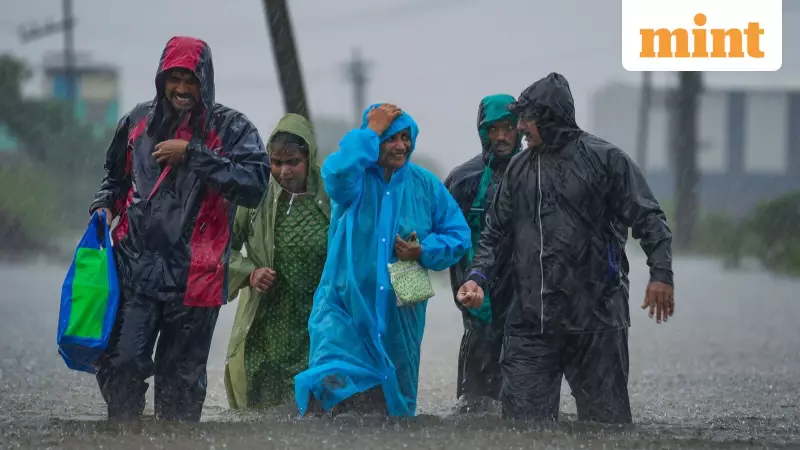
The new stations will specifically target micro-climate variations that often trigger extreme weather events. These include dangerous heatwaves, sudden cloudbursts, and severe urban flooding. By capturing localized data, the network aims to provide more precise warnings for such phenomena.
Jitendra Singh made this announcement during the 151st anniversary celebrations of the India Meteorological Department. He emphasized that a denser network of AWS units will deliver granular, high-resolution spatial data. This data is crucial for predicting sudden downpours, thunderstorms, extreme heat events, and rapid atmospheric pressure changes with greater accuracy.

How Automatic Weather Stations Work
Automatic Weather Stations are self-operating systems equipped with various sensors. These sensors continuously measure key atmospheric parameters. They track temperature, humidity, barometric pressure, wind speed and direction, and rainfall amounts.
The collected data transmits in real-time to forecasting centers. Meteorologists use this information for immediate weather predictions, scientific research, and disaster management planning. The automated nature of these stations reduces human error and allows for high-frequency observations, significantly improving network reliability and forecast precision.
Current Infrastructure and Future Goals
India currently operates 1,008 Automatic Weather Stations nationwide. The addition of 200 new units represents a substantial boost, particularly for urban monitoring. This expansion comes at a critical time. Indian cities have recently experienced a spate of extreme weather events, underscoring the urgent need for high-resolution forecasting.
Accurate urban weather data supports multiple vital sectors. It aids agriculture, aviation safety, and urban planning efforts. The initiative aims to manage climate risks more effectively by providing timely, localized information.
Broader Meteorological Enhancements
The AWS expansion is part of a larger strategy to strengthen India's meteorological capabilities. The IMD also plans to establish 10 new Centers of Excellence dedicated to meteorology. These centers will focus on enhancing research, improving forecasting techniques, and building technical capacity.
Government officials state the overarching goal is to enhance scientific expertise. They aim to improve forecast accuracy and support evidence-based policymaking. A key component involves developing a skilled workforce to tackle the growing challenges posed by climate variability and extreme weather.
Notable Improvements in Forecast Accuracy
Minister Singh highlighted significant advancements in India's forecasting performance. Overall forecast accuracy has improved by 40 to 50 percent compared to previous decades. Specific gains are even more impressive in certain areas.
Cyclone track prediction accuracy has increased by nearly 35 to 40 percent. Meanwhile, errors in monthly and seasonal forecasts have dramatically declined. These errors have dropped from approximately 7.5 percent to just about 2.5 percent.
Singh credited these gains to sustained government investment, continuous technological upgrades, and strong institutional support over the past ten years.
Expansion of Doppler Radar Network
The minister also provided an update on India's Doppler weather radar network. The number of these advanced radars has nearly tripled in recent years. They now cover about 87 percent of India's total geographical area.
The IMD currently operates 46 Doppler radars across the country. There are plans to add 50 more units by 2026. This expansion will further enhance the nation's ability to monitor and predict severe weather patterns.