India's struggle with toxic air has become a perennial crisis, with the National Capital Region (NCR) once again choking this winter. The alarming reality, however, extends far beyond Delhi. Most urban centers across the country are witnessing a dangerous decline in air quality, where days categorized as 'good' are rapidly disappearing. This persistent emergency underscores a critical failure: the absence of a coherent, long-term strategy to protect millions of citizens from a silent, deadly threat.
The Illusion of Solutions and Distracting Narratives
Instead of implementing robust solutions, the government's response has often been characterized by shallow fixes and public distractions. Authorities have attempted to shift focus by stirring sentiments around nationalism, such as rejecting World Health Organization (WHO) air quality standards, and around religion and culture, like permitting 'green' crackers during festivals. These moves, critics argue, only serve to muddy the air further, deflecting from systemic inaction.
Similarly, end-of-pipe solutions like cloud-seeding or large-scale water spraying are advocated without thorough evaluation. These measures not only fail to address the root causes but could worsen environmental and health impacts. For instance, the use of precious water for sprinklers in a water-scarce region like Delhi raises serious questions about resource equity and the quality of water being used.

Lax Standards and a False Sense of Well-being
A fundamental part of the problem lies in India's own air quality benchmarks. The country's annual average standard for PM2.5—the most harmful fine particulate matter—is eight times more lenient than the WHO guideline, and four times for PM10. The government justifies this by citing India's unique geography and climate. However, WHO standards are based solely on scientific evidence of what pollution levels harm human health, irrespective of location.
This laxity creates a dangerous illusion. In mid-December, the environment minister highlighted that 'good to moderate' air days (AQI up to 200) had increased. Yet, India's 'moderate' category overlaps with what the WHO defines as 'unhealthy.' By its own definition, this means NCR residents breathe unhealthy to hazardous air for about 165 days a year. For perspective, the WHO advises that short-term exposure to PM2.5 above its guideline should not exceed 3-4 days.
Beyond Farm Fires: The Complex Web of Pollution
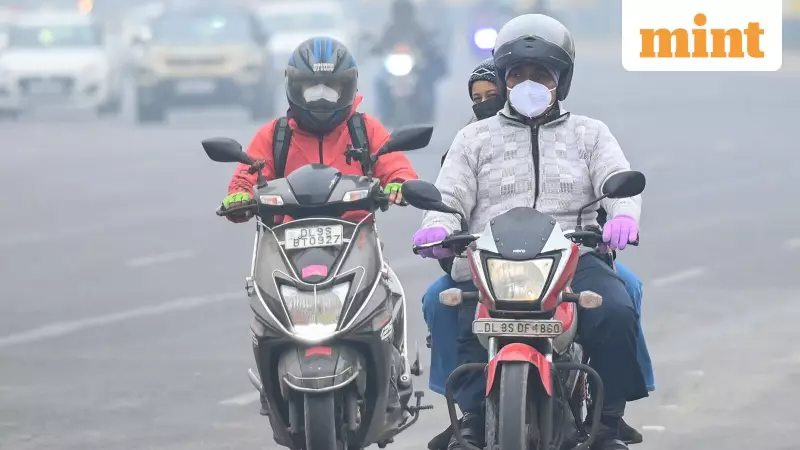
While seasonal farm fires in Punjab and Haryana are a significant contributor, they are not the sole villain. December 2025 recorded the poorest air quality in 7-8 years, long after the stubble-burning season ended. This has rightly shifted the debate to other major sources. The Union Transport Minister has acknowledged that vehicles contribute to 40% of Delhi's pollution, highlighting the urgent need for traffic and transport reforms.
The current Graded Response Action Plan (GRAP) is largely reactive. While scientific modeling of interventions takes time, decision-makers cannot hide behind these emergency measures. A proactive, multi-pronged strategy is non-negotiable.
Five Immediate Measures for Cleaner Air
Expert Leena Srivastava proposes a set of actionable steps that can be initiated immediately to create a meaningful impact:

- Reinforce Power Plant Regulations: Mandate the use of electro-static precipitators in thermal power plants while charting a definitive path to phase out coal.
- Rethink Public Expenditure: Shift focus from expanding highways, especially those damaging fragile ecosystems like the Aravallis, to sustainable urban mobility projects.
- Decongest and Electrify Transport: Implement year-round measures to regulate vehicle numbers, strictly manage traffic disruptions (including from religious processions), and accelerate the transition to electric vehicles.
- Expand Urban Green Cover: Prioritize increasing green spaces in cities and re-evaluate urban development models to integrate nature.
- Hold Businesses Accountable: Engage with industrial, commercial, and service sectors in urban areas to make them responsible for their environmental externalities.
These measures represent a starting point for an immediate systemic response that can yield long-term benefits, even as more sustainable solutions are planned. The health of millions hangs in the balance, demanding administrative will and decisive action, not just headlines and distractions.