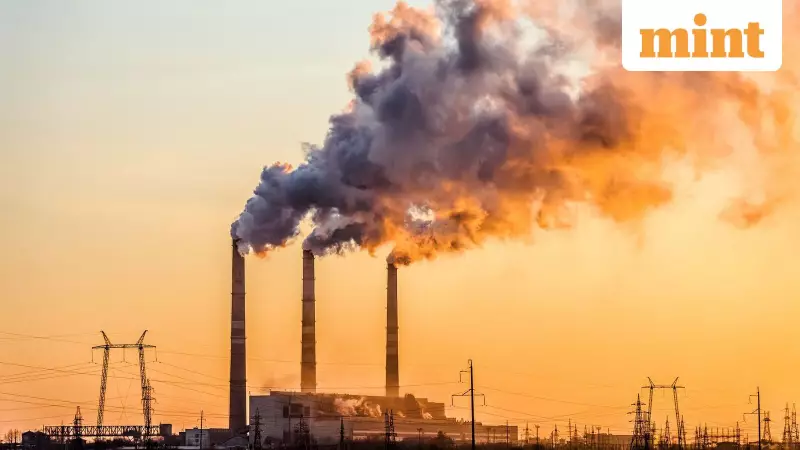
India's Energy Transition: Renewables Gain Momentum as Coal Expansion Slows
India's energy landscape is undergoing a significant transformation as renewable energy sources gain substantial ground while thermal power expansion plans face mounting challenges. According to recent data, coal-fired power generation in both China and India experienced a decline last year, even as electricity demand continued to rise across these major economies.
A Historic Shift in Carbon Emissions
From a carbon emission perspective, 2025 marked a historic turning point. For the first time in half a century, coal-fired power generation dropped simultaneously in both China and India. This development suggests we may be witnessing the beginning of the end for coal's dominance in Asia's energy mix.
The global coal consumption pattern reveals a clear trend:

- Rich countries peaked their coal consumption two decades ago and have since reduced it by approximately half
- China absorbed much of the coal spurned by developed nations but is now seeing its own consumption decline
- Despite a 5% increase in electricity usage, China's coal-fired power fell by about 1% last year
India's Coal Expansion Plans Face Reality Check
While India remains the last major bright spot for coal consumption growth, even here the traditional energy source is facing significant headwinds. The International Energy Agency projects India's coal consumption will increase by about 200 million tonnes through 2030, essentially offsetting China's expected decline during the same period.
The Indian government has ambitious plans to add 97 gigawatts of coal power capacity by 2035, representing nearly a 50% increase over current levels. Some proposals even suggest expansions continuing as late as 2047. However, the implementation of these plans is encountering substantial obstacles.
Implementation Challenges for Thermal Power
The primary argument for coal's continued relevance in India—its relative ease of construction compared to renewable alternatives—is becoming increasingly questionable. Of the proposed 97GW of new coal capacity:
- Only 35.5GW has received financial approval so far
- Just 16.3GW has actually broken ground on construction
- Approximately 22GW has been abandoned entirely
- The remainder faces regulatory, political, or financing hurdles
Non-power applications of coal are facing similar delays. The Talcher coal-gasification plant in Odisha, originally scheduled for completion in 2024, remains only two-thirds built eleven years after its announcement.
Renewables Outpace Fossil Fuel Development
In stark contrast to coal's struggles, renewable energy development is accelerating at an impressive pace. Solar power installations are expected to reach 50GW this year alone, putting India on track to meet Prime Minister Narendra Modi's commitment of 500GW of clean energy capacity by 2030.
The current rate of clean power development is so robust that it could cover approximately 97% of India's electricity demand growth between now and 2030. Any additional requirements could potentially be met by increasing utilization rates of existing fossil fuel generators, many of which currently operate below capacity and profitability.
Market Forces and Investment Patterns
Private capital has grown increasingly wary of investing in India's coal sector, which remains heavily dependent on stimulus from a debt-laden state sector. Approximately 80% of coal plants currently under construction are government-owned, reflecting the private sector's reluctance to commit to long-term fossil fuel investments.
SBI Capital Markets recently noted that India is unlikely to meet its new coal capacity targets, while simultaneously projecting that solar installations will easily reach their ambitious goals. This divergence highlights the changing economics of energy generation in India.
The Path Forward
While it's too early to declare victory in the transition away from fossil fuels, the momentum clearly favors renewable energy sources. The decline in India's coal power generation last year—approximately 3% according to the Centre for Research on Energy and Clean Air—can be attributed to multiple factors:

- 44% from growing clean energy generation
- 36% from unusually cool and wet weather conditions
- 20% from economic slowdown effects
Renewable energy projects are proving more nimble than their fossil fuel counterparts in delivering new electricity to the grid. As emerging economies continue to experience rapid growth in power consumption, renewable energy sources must maintain their breakneck development pace to not only keep up with demand but also gradually displace fossil fuels from the energy mix.
The transformation of India's energy sector represents a crucial component of global efforts to address climate change while meeting growing energy needs. The simultaneous decline in coal power generation in both China and India suggests that the mega-trend of Asian emissions growth may finally be heading into reverse.