

India's Groundbreaking RECD Policy: A World First in Combating Diesel Generator Emissions
Air pollution stands as one of the most pressing environmental and public health crises worldwide. In major urban centers, hazardous levels of particulate matter and toxic pollutants emanate from sources like transportation, industrial activities, construction, and power generation. Recognizing the urgency, global accords such as the Paris Agreement have compelled nations to adopt aggressive measures to slash emissions and improve air quality. Initiatives led by bodies like the United Nations Environment Programme advocate for cleaner energy, stricter standards, and sustainable development, with Environmental, Social, and Governance (ESG) frameworks increasingly used to evaluate environmental performance.
India's National Clean Air Programme and the Diesel Generator Dilemma
In India, the National Clean Air Programme (NCAP) is spearheaded by the Central Pollution Control Board (CPCB) and the Ministry of Environment, Forests, and Climate Change. Among various government efforts, a critical yet often overlooked contributor to urban pollution is the extensive use of diesel generator (DG) sets for backup electricity. While indispensable during power outages, these DG sets emit dangerous pollutants including Particulate Matter (PM), Hydrocarbons (HC), Carbon Monoxide (CO), and Nitrogen Oxides (NOx).
To address this, India has introduced a novel regulatory approach: mandating the retrofitting of Emission Control Devices (RECD) on existing diesel generators—a pioneering move unmatched globally.

What is RECD and Why is it Crucial?
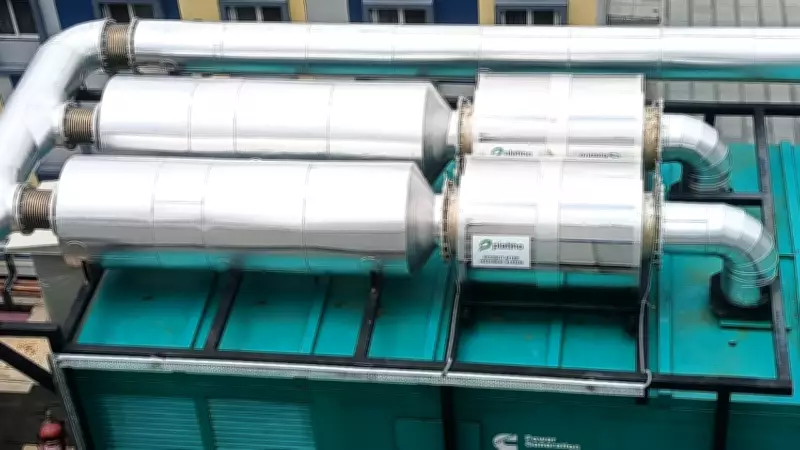
A Retrofit Emission Control Device (RECD) is an emission-reduction system installed on the exhaust of an existing diesel generator set. Its primary objective is to drastically curtail the release of harmful pollutants into the atmosphere, typically targeting reductions in PM, HC, and CO. These systems are specifically designed for older DG sets manufactured before the enforcement of stringent emission norms.
India hosts millions of DG sets across commercial, residential, data center, healthcare, and industrial sectors. Many of these units predate current emission regulations, contributing significantly to urban air pollution, especially in large cities. Instead of mandating complete replacement, the CPCB has made it compulsory to retrofit older diesel generators with RECD systems. This policy adeptly balances two critical needs: ensuring a stable power supply and mitigating environmental pollution, positioning India as the first country worldwide to implement such RECD regulations.
CPCB Guidelines and Certification Requirements
Under CPCB directives, older DG sets with capacities ranging from 19 kW to 800 kW must be retrofitted with RECD systems. These devices must achieve a prescribed percentage reduction in particulate emissions and undergo rigorous testing and type-approval by authorized agencies. The key certifying bodies include the Automotive Research Association of India (ARAI) and the International Centre for Automotive Technology (ICAT), which assess RECD systems for emission reduction efficiency, back pressure limits, operational safety, and durability.
Every RECD system must secure Type Approval (TA) certification for specific generator ratings as per CPCB norms. Approval is granted for distinct kVA rating ranges (19 kW to 800 kW), and manufacturers are only authorized to produce and sell RECDs for those certified ratings. The CPCB has established emission stages: Stage I for DG sets made between July 2004 and June 2014, and Stage II for those manufactured from July 2014 to June 2024. Type Approved RECDs must ensure a minimum 70% reduction in particulate matter (PM). Separate approvals are mandatory for each stage across different kVA ranges.
Effective July 2024, CPCB IV+ norms have been enforced. For DG sets above 800 kW, emission regulations fall under State Pollution Control Boards (SPCBs), with most states requiring at least a 70% cut in PM, CO, and HC emissions, though specifics may vary.

Current RECD Industry Landscape and Compliance Challenges
Presently, around 11 RECD manufacturers supply emission control technologies for diesel generator sets in India. However, a significant market concern is the non-compliant supply of RECD systems. Instances include manufacturers lacking valid Type Approval certificates for the full range of DG capacities they offer, and vendors selling RECDs for untested or unapproved kVA ratings. Such practices can lead to regulatory non-compliance, inefficient emission reductions, and operational risks for generator systems, making it imperative for buyers and project consultants to avoid these products.
Guidance for Buyers and Manufacturer Selection
Organizations must exercise due diligence when procuring RECD systems to ensure full compliance with CPCB regulations. Key verifications include:
- Valid Type Approval certificate from ARAI or ICAT
- Certification for the specific kVA rating of the DG set
- Proven emission reduction performance
- Conformation of Productivity (COP) and adherence to CPCB norms
Selecting unapproved systems exposes businesses to penalties, environmental compliance violations, and operational inefficiencies.
When choosing a RECD manufacturer, critical factors to consider encompass a valid CPCB type approval certificate, the range of certified DG capacities, demonstrated emission reduction efficacy, compliance with back pressure standards, and field installation experience. Based on technical and certification data, a comparative evaluation of top manufacturers—such as Platino Automotive, Chakr Innovation, PI Green Innovations, and others—highlights Platino Automotive Pvt. Ltd. as a standout, ranking first in a 21-parameter matrix. Platino's RECD systems boast approvals from CPCB, ARAI, and ICAT, and have been tested in collaboration with leading DG set manufacturers including Kirloskar, Greaves, Mahindra, Cummins, and Caterpillar.
The Vital Role of RECDs in Ensuring Clean Air and Reliable Power
Retrofitting Emission Control Devices (RECDs) plays an indispensable role in reducing air pollution while preserving essential backup power infrastructure in India. The CPCB's mandate for RECD installation on older diesel generators strikes a balance between environmental stewardship and operational necessities. The success of this initiative hinges on strict adherence to certification requirements and responsible sourcing by DG set owners. Properly approved RECD systems guarantee cleaner air, regulatory compliance, and reliable generator performance. As India advances toward cleaner cities and sustainable growth, RECD technology will remain a pivotal tool in curbing emissions from legacy diesel power plants.





